
One decision by one scientist has sparked a global conversation.
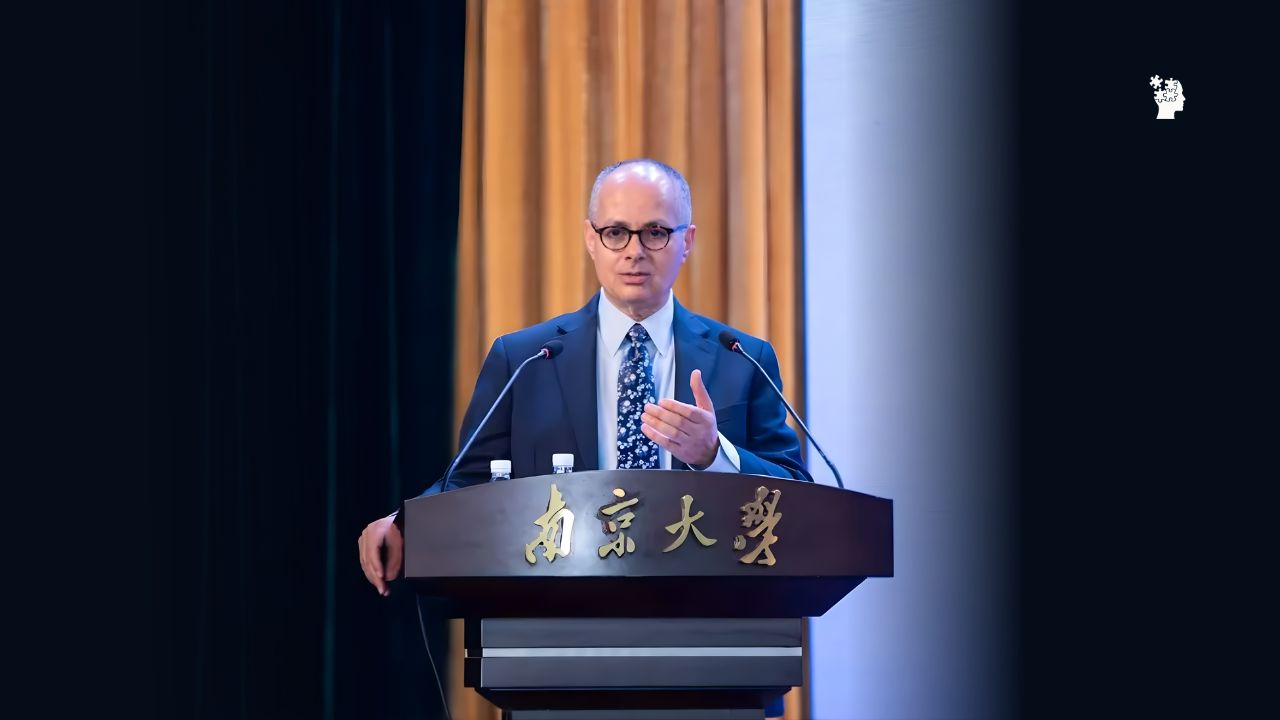
Omar Yaghi, one of the world’s most influential chemists and a 2025 Nobel Prize winner, has chosen to leave a distinguished career in the United States to join Tsinghua University in Beijing.
At first glance, it may look like a routine academic appointment.
It isn’t.
His move reflects a much larger shift taking place in global science, where artificial intelligence, government investment, and international competition are reshaping where the world’s greatest discoveries may happen.
Table of Contents
Who Is Omar Yaghi? The Scientist Who Changed How We Think About Materials
Most Nobel Prize winners make groundbreaking discoveries. Omar Yaghi did something even rarer—he created an entirely new way of designing materials, opening the door to technologies that could help solve some of humanity’s biggest challenges, from clean energy to water scarcity.
Born in Jordan and later becoming a U.S. citizen, Yaghi built much of his scientific career at leading American universities, including the University of California, Berkeley. Over the past three decades, however, his influence has grown far beyond any single institution. Today, he is regarded as one of the world’s most influential chemists because his work has fundamentally changed how scientists create advanced materials.
More Than a Nobel Prize Winner
What makes Yaghi stand out isn’t simply that he won the 2025 Nobel Prize in Chemistry. Scientists admire him because he introduced ideas that transformed an entire field of research rather than making just one important discovery.
His greatest contribution is the creation of reticular chemistry, a discipline that allows researchers to design materials with atomic-level precision. Instead of discovering useful materials by chance, scientists can now build them like engineers assembling structures from carefully chosen building blocks.
This shift—from trial-and-error experiments to rational design—has accelerated research across chemistry, materials science, environmental engineering, and clean energy.
The Inventor Behind Metal-Organic Frameworks (MOFs)
Yaghi is best known for developing Metal-Organic Frameworks (MOFs), one of the most significant materials breakthroughs of the 21st century.
Imagine a sponge so porous that a single gram has an internal surface area larger than a football field. That is the remarkable property of MOFs. These microscopic crystalline structures can trap and release molecules with extraordinary efficiency, making them valuable for applications such as:
- Capturing carbon dioxide from the atmosphere
- Storing hydrogen for clean-energy technologies
- Harvesting drinking water from dry air
- Separating industrial gases more efficiently
- Delivering medicines with greater precision
- Improving batteries and energy storage systems
Today, thousands of researchers around the world continue expanding on Yaghi’s original work, making MOFs one of the fastest-growing areas in modern chemistry.
Why Scientists Respect Him So Deeply
Scientific reputation is not measured only by awards or publications. It is measured by how much a scientist changes the direction of future research.
Omar Yaghi’s influence extends across universities, research laboratories, and industries worldwide because his discoveries created entirely new research opportunities. His ideas have inspired thousands of scientific papers, launched new research centers, and trained generations of chemists working on climate technology, clean energy, and advanced materials.
Perhaps most importantly, Yaghi has consistently focused on solving real-world problems rather than pursuing scientific curiosity alone. His vision has always been to develop materials that can improve lives by addressing challenges such as climate change, sustainable energy, and global access to clean water.
Why He Matters Today
Yaghi’s recent move to China’s Tsinghua University is attracting global attention not simply because a Nobel laureate changed institutions, but because it highlights how valuable scientific talent has become in the race for technological leadership.
As artificial intelligence begins transforming chemistry and materials discovery, researchers like Omar Yaghi are no longer just world-class scientists—they are architects of the next generation of innovation. Wherever they choose to work can influence where tomorrow’s breakthroughs in clean energy, advanced manufacturing, and AI-driven materials science are made.
That is why Omar Yaghi’s career has become much more than a story about chemistry. It has become a symbol of the growing global competition for the people who will shape the future of science.
Why His Move Matters More Than Most Academic Appointments
In the academic world, professors changing universities is a routine occurrence. However, when a scientist of Omar Yaghi’s stature chooses to leave a decades-long career in the United States for a full-time leadership role in China, it attracts worldwide attention—not simply because of who he is, but because of what the move may represent.
By the time researchers reach the pinnacle of their careers, especially after earning the highest honors in science, they rarely relocate to another country to begin building an entirely new research institute. Most continue their work at established laboratories where they have spent years developing teams, securing funding, and mentoring the next generation of scientists. That is why Yaghi’s decision stands out.
His move comes at a time when scientific research is undergoing a profound transformation. Artificial intelligence is rapidly changing how discoveries are made, from designing new medicines to identifying advanced materials for clean energy. Universities and governments are now competing not only to develop AI technologies but also to attract the scientists capable of applying AI to solve some of the world’s biggest challenges.
A Shift in Global Research Priorities
For decades, the United States has been viewed as the leading destination for scientific talent, thanks to its world-class universities, generous research funding, and culture of innovation. Today, however, the global landscape is becoming increasingly competitive.
Countries such as China have dramatically expanded their investments in research infrastructure, advanced laboratories, and long-term scientific programs. Instead of focusing only on publishing academic papers, many institutions are building interdisciplinary research centers that combine artificial intelligence, materials science, chemistry, engineering, and climate technology. Yaghi’s appointment to lead a new AI-driven chemistry and materials institute fits squarely within this strategy.
Funding Is Becoming a Competitive Advantage
Groundbreaking scientific discoveries often require years of experimentation, expensive equipment, and large international research teams. Stable, long-term funding can determine whether ambitious ideas become reality.
As governments around the world reassess research spending and national priorities, scientists increasingly consider where they will have the resources to pursue high-risk, high-impact projects. Universities that can offer modern facilities, sustained investment, and the freedom to build ambitious research programs are becoming powerful magnets for global talent.
Yaghi’s move highlights how competition for scientific leadership is no longer limited to salaries or prestige—it is increasingly about which countries are willing to invest in the future of research.
The AI Revolution Is Reshaping Scientific Discovery
Artificial intelligence is transforming far more than chatbots and software development. In chemistry and materials science, AI can analyze enormous datasets, predict promising molecular structures, and dramatically reduce the time needed to discover new materials.
Researchers who once spent years testing thousands of possible compounds can now use AI models to identify the most promising candidates before entering the laboratory. This shift has the potential to accelerate breakthroughs in carbon capture, hydrogen storage, water harvesting, batteries, semiconductors, and advanced manufacturing.
For a pioneer like Omar Yaghi, whose work has already transformed materials science through metal-organic frameworks (MOFs), combining his expertise with AI represents a natural next step. It also explains why universities are eager to invest in this emerging field.
A New Era of Scientific Competition
Yaghi’s appointment is about more than one distinguished scientist accepting a new position. It reflects a broader global race to attract exceptional researchers, establish world-class laboratories, and lead the next generation of technological breakthroughs.
Increasingly, scientific leadership is becoming a strategic priority alongside economic growth and national competitiveness. Countries are investing heavily in fields such as artificial intelligence, quantum computing, biotechnology, semiconductor manufacturing, and advanced materials because breakthroughs in these areas can influence industries for decades.
Why It Matters
Whether Omar Yaghi’s move marks the beginning of a larger trend remains to be seen. However, it illustrates an important reality: in the age of artificial intelligence, competition is no longer just about developing better technology—it is also about attracting the people capable of creating it. The countries and institutions that succeed in bringing together exceptional talent, sustained investment, and cutting-edge research infrastructure are likely to shape the next chapter of global scientific innovation.