
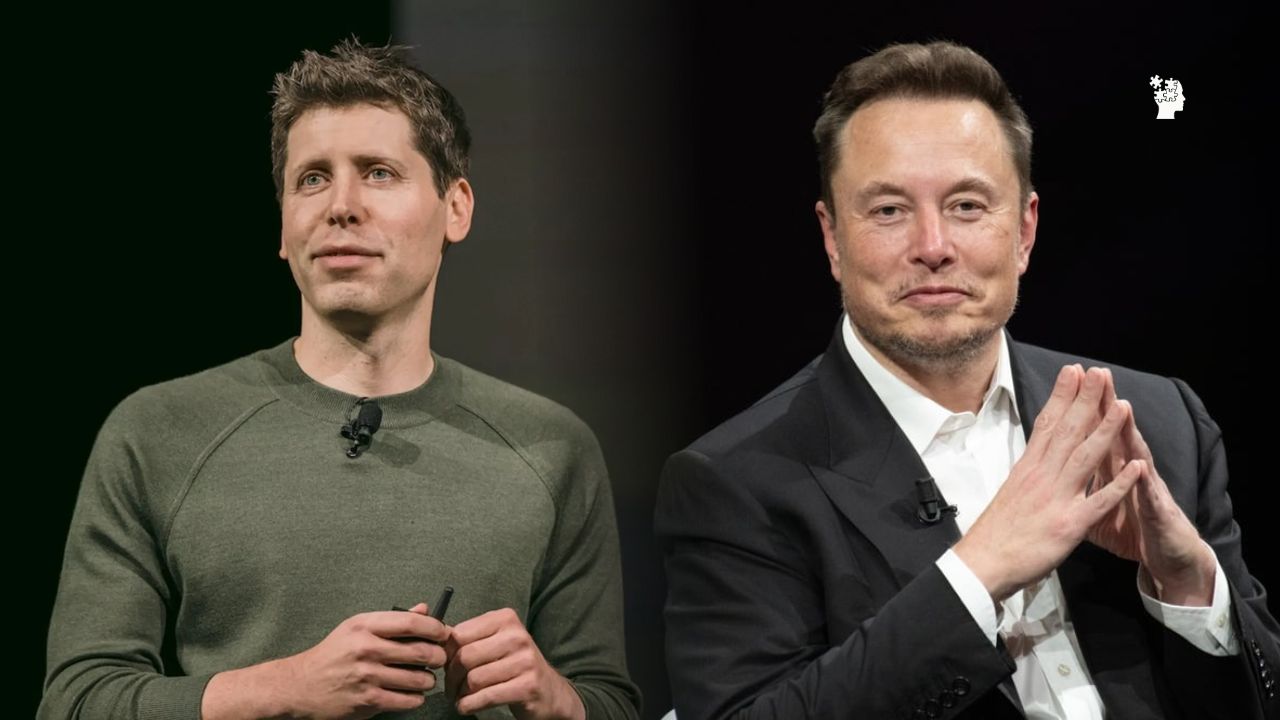
The rivalry between OpenAI CEO Sam Altman and Elon Musk has entered a new phase.
This time, the debate isn’t only about artificial intelligence.
It’s about where AI will live in the future.
After Elon Musk criticized Altman on X, Altman responded with an accusation that Musk is convincing investors to believe in space-based data centers long before the technology is commercially practical.
While social media focused on the insults, investors were asking a much bigger question:
Could orbital data centers really become the future of AI—or is the technology decades away?
This debate matters because it could influence billions of dollars in AI investments and shape how future AI models are trained.
Table of Contents
Why Are Sam Altman and Elon Musk Fighting Again?
The disagreement isn’t new.
Both men helped establish OpenAI years ago before their relationship deteriorated over disagreements about the company’s direction.
Since then:
- Musk launched xAI.
- Altman expanded OpenAI.
- Both companies now compete directly.
The latest argument simply reflects a larger competition for:
- AI leadership
- enterprise customers
- investor confidence
- future infrastructure
Unlike previous disagreements over AI safety, this dispute focuses on something even bigger:
Who will build the computers powering future AI?
What Are Space Data Centers?
Imagine placing enormous AI supercomputers in orbit instead of building them on Earth.
Supporters believe orbital data centers could eventually offer advantages like:
- unlimited solar energy
- reduced land usage
- lower cooling requirements
- global connectivity
In theory, satellites could process AI workloads while communicating with Earth.
It sounds futuristic—and exciting.
But many engineers argue the technology faces enormous obstacles.
Why Sam Altman Is Skeptical
Altman’s criticism appears to focus on timing rather than imagination.
Building orbital computing infrastructure would require solving problems that today’s industry hasn’t fully addressed.
These include:
Launch Costs
Although rocket launches have become cheaper, sending thousands of servers into space remains extremely expensive.
Hardware Maintenance
Earth-based servers can be repaired within hours.
Space-based servers cannot.
Replacing damaged hardware could require additional launches.
Heat Management
Ironically, space is extremely cold—but cooling electronics isn’t simple.
Without air, heat cannot dissipate the same way it does on Earth.
Special cooling systems would be necessary.
Latency
Most AI applications require extremely fast communication with users.
Signals traveling between Earth and orbit introduce additional delays.
For real-time AI systems, every millisecond matters.
Why Elon Musk May Still Believe It Can Work
Elon Musk has built multiple businesses around technologies critics once considered impossible.
Examples include:
- reusable rockets
- commercial electric vehicles
- satellite internet
- autonomous robotics
From Musk’s perspective, today’s impossible project may become tomorrow’s trillion-dollar industry.
If launch costs continue falling and Starship reaches full operational capability, orbital infrastructure becomes significantly more realistic than it appears today.
This is likely why many investors remain optimistic despite current skepticism.
The Bigger Picture: AI Needs More Computing Power Than Ever
The debate isn’t really about space.
It’s about computation.
Modern AI models require enormous amounts of:
- GPUs
- electricity
- cooling
- networking
- storage
Training one frontier AI model now consumes resources that were unimaginable only a few years ago.
As AI becomes more powerful, companies must find new ways to expand computing capacity.
Possible solutions include:
- nuclear-powered data centers
- underwater facilities
- modular AI campuses
- orbital computing
Space is simply one possible answer.
Why Investors Care
The conversation comes at a sensitive time.
Technology investors are closely watching whether companies can justify massive AI spending.
Questions include:
- Will AI revenue grow fast enough?
- Are trillion-dollar infrastructure plans realistic?
- Which company will dominate enterprise AI?
Any public disagreement between two influential AI leaders naturally attracts investor attention.
What This Means for OpenAI
OpenAI continues focusing on:
- increasingly capable AI models
- enterprise software
- developer platforms
- large-scale cloud partnerships
Rather than investing in orbital infrastructure today, OpenAI appears more focused on improving model intelligence and accessibility.
What This Means for Musk’s AI Vision
Musk’s strategy combines several technologies under one long-term vision:
- rockets
- satellites
- AI
- robotics
- high-performance computing
If successful, these businesses could reinforce each other.
If orbital computing proves commercially viable decades from now, SpaceX could already own much of the required infrastructure.
Could Space Data Centers Actually Become Reality?
Experts generally agree on one point:
Not anytime soon.
Current technology still faces significant engineering and economic barriers.
However, history shows many ideas initially dismissed eventually become practical.
Reusable rockets were once considered unrealistic.
Satellite internet faced years of skepticism.
Artificial intelligence itself was repeatedly declared overhyped.
Whether orbital data centers follow the same path remains uncertain.
The Real Battle Isn’t Personal
The headlines focus on social media exchanges.
The real competition is much larger.
This is a race to determine:
- where AI runs,
- who owns the infrastructure,
- who attracts developers,
- who wins enterprise customers,
- and who earns investor trust.
The argument between Musk and Altman is ultimately about competing visions of AI’s future—not merely personal disagreements.
Final Thoughts
The latest clash between Sam Altman and Elon Musk highlights one of the biggest questions facing the AI industry:
Where will tomorrow’s artificial intelligence actually run?
While Altman argues that space-based data centers remain too speculative for today’s investors, Musk continues pushing a future in which AI, satellites, rockets, and orbital infrastructure work together.
Whether either vision proves correct may not be known for years.
What is certain is that the competition between OpenAI and Musk’s AI ambitions is no longer just about building better chatbots—it is becoming a contest over the very foundation of the next generation of computing.
FAQ
Why did Sam Altman criticize Elon Musk?
Altman questioned whether space-based AI data centers are commercially realistic in the near future, suggesting investors should be cautious about overly optimistic timelines.
What are space data centers?
They are computing facilities placed in orbit that would theoretically use space-based infrastructure to power future AI systems.
Is the feud between Musk and Altman new?
No. Their disagreements date back to OpenAI’s early years and have expanded as both now lead competing AI companies.
Why are AI companies investing so much in infrastructure?
Training advanced AI models requires enormous computing power, electricity, cooling, and networking capacity, making infrastructure a major competitive advantage.
Recommended for you: