
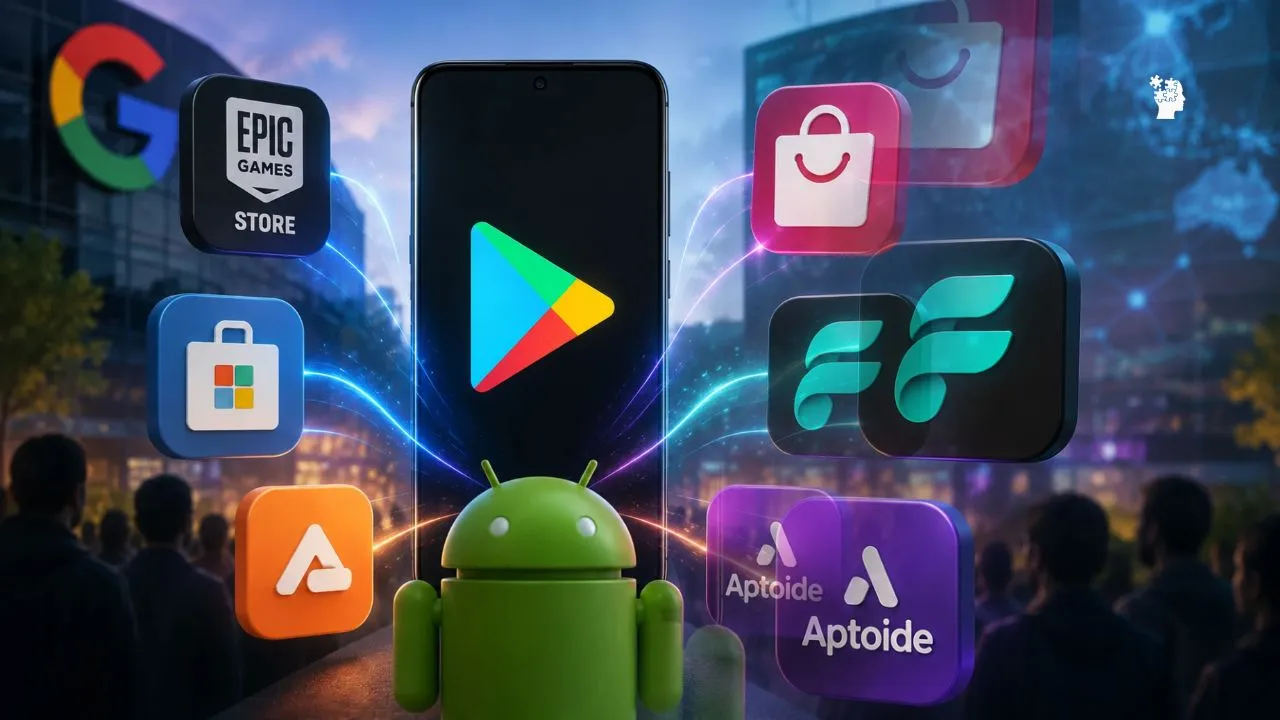
For more than a decade, the Google Play Store has been the default gateway for Android apps. That is about to change in one of the biggest shifts in Android’s history.
Starting July 22, Google will begin allowing competing app stores to appear directly inside Google Play in the United States. The move follows the end of a six-year legal battle between Google and Epic Games and could fundamentally reshape how Android users download apps and games.
While the headlines focus on Google’s courtroom defeat, the bigger story is what happens next. This change could introduce more competition, lower developer fees, and give users new ways to discover apps beyond Google’s own marketplace.
Table of Contents
Why Is Google Making This Change?
Google isn’t making this move voluntarily.
The company is complying with a federal court injunction that requires major changes to how the Play Store operates. After years of appeals, settlement discussions, and legal challenges, Google and Epic Games have withdrawn their proposal to modify the court’s order.
As a result, the original injunction remains in force.
Beginning July 22:
- Rival Android app stores can be listed inside Google Play.
- Developers can distribute apps through competing marketplaces.
- Developers can direct users toward alternative payment methods.
- Google cannot force developers to use Google Play Billing.
This marks one of the most significant regulatory changes the Android ecosystem has ever seen.
Why This Is Bigger Than Just Epic Games
Many people assume this story is only about Fortnite.
It isn’t.
The decision could reshape the economics of the Android app industry.
For years, Google collected commissions that could reach 30% on digital purchases made through Google Play. Smaller developers have long argued that those fees reduce profits and make it harder to compete.
With rival stores gaining easier access to Android users, developers may finally have real alternatives.
More competition often means:
- Lower platform fees
- Better revenue sharing
- Exclusive promotions
- New subscription models
- Increased innovation
The real winners may be developers who have been waiting for a viable alternative to Google Play.
What Changes for Android Users?
For most Android owners, nothing dramatic will happen overnight.
Google Play will continue to exist exactly as before.
However, users could begin seeing trusted third-party app stores available through Google Play itself instead of downloading them from external websites.
That could make installing alternative marketplaces significantly easier and safer than it has been in the past.
Potential benefits include:
- More discounts on apps and games
- Exclusive content
- Better loyalty programs
- More payment options
- Greater choice
Instead of one dominant marketplace, Android could gradually become a platform with multiple competing stores.
Microsoft Could Be One of the Biggest Winners
One company watching closely is Microsoft.
The company has discussed launching its Xbox mobile game store for years.
Previous Android restrictions made that plan difficult.
Now that Google must allow competing stores inside Play, Microsoft’s mobile gaming ambitions suddenly become much more realistic.
If Microsoft launches successfully, Android gamers could eventually install Xbox’s mobile storefront almost as easily as downloading any other app.
What About Epic Games?
Epic Games has spent years fighting Google over app store rules after Fortnite was removed from Google Play.
Although Fortnite became the public face of the dispute, Epic’s larger goal was changing how Android app distribution works.
With Google now opening Play Store to competitors, Epic has largely achieved what it originally sought.
Whether Epic launches an expanded Android marketplace remains to be seen, but the legal victory already changes the competitive landscape.
Will Google Lose Its Dominance?
The short answer is: probably not—at least not anytime soon.
Even though Google is now required to allow rival app stores inside Google Play, it doesn’t mean people will suddenly stop using the Play Store. Google Play has been Android’s default app marketplace for years, and changing user habits takes time.
Think of it like this:
Imagine a shopping mall
Suppose there’s a huge shopping mall where almost everyone buys clothes, electronics, and groceries. One day, the government says the mall must allow other smaller shops to open inside the same building.
Does that mean everyone immediately abandons the main stores?
No.
Many shoppers will continue visiting the stores they already trust because they’re familiar, convenient, and reliable. But some people may start exploring the new shops if they offer lower prices, better products, or exclusive deals.
That’s exactly what’s happening with Google Play.
Why Google Play Still Has a Big Advantage
Google Play remains the most trusted app store for Android users because it offers:
- Billions of users worldwide, making it the largest Android app marketplace.
- Built into almost every Android phone, so users don’t need to install anything extra.
- Automatic app updates, keeping apps current without manual effort.
- Google Play Protect, which scans apps for malware and other security threats.
- Strong relationships with app developers, who already publish and update their apps on Play Store.
For most people, Google Play will continue to be the easiest and safest place to download apps.
So, What’s Actually Changing?
The biggest change is that developers and users now have more choices.
Before, Google Play was like the only major supermarket in town. If you wanted an Android app, you usually had to get it there.
Now, it’s more like a city with multiple supermarkets competing for customers. Each store may try to attract users by offering:
- Lower prices on apps and games
- Exclusive content
- Better reward programs
- More flexible payment options
- Special discounts that aren’t available elsewhere
Competition encourages companies to improve their services instead of relying on their dominant position.
A Real-World Example
Think about web browsers.
Years ago, Microsoft Internet Explorer dominated the market because it came pre-installed on Windows. But once browsers like Google Chrome, Mozilla Firefox, and Microsoft Edge offered faster performance and better features, millions of users switched.
Internet Explorer didn’t disappear overnight—but competition pushed the entire browser industry to improve.
The same could happen with Android app stores.
Google Play is unlikely to lose its leadership anytime soon, but if competing app stores provide better deals, unique apps, or a smoother experience, some users and developers may gradually choose those alternatives.
History suggests that once competition begins, innovation usually follows.
Could This Mean Lower App Prices?
Possibly.
Developers paying lower commissions may choose to:
- Offer cheaper subscriptions
- Provide exclusive discounts
- Sell directly to users
- Run promotional pricing unavailable on Google Play
Competition doesn’t guarantee lower prices, but it creates stronger incentives for stores to attract users with better deals.
Security Remains an Important Question
More app stores also create new challenges.
Google has spent years promoting Play Protect and automated malware detection.
Third-party stores will need to earn similar trust by demonstrating strong security standards and careful app review processes.
Users should continue downloading apps only from reputable marketplaces.
Why This Matters Beyond Android
This case could influence digital marketplaces far beyond smartphones.
Regulators around the world are increasingly examining how large technology companies control app distribution, digital payments, and software marketplaces.
If Google’s ecosystem becomes more open, similar pressure could affect other technology platforms in the coming years.
For developers, this represents a shift toward greater flexibility.
For consumers, it introduces more choice.
For the technology industry, it signals that the era of tightly controlled mobile app ecosystems may be evolving.
Final Analysis
July 22 may not dramatically change Android overnight, but it could become one of the most important milestones in the platform’s history.
Google Play isn’t disappearing.
Instead, Android is moving toward a more competitive future where multiple app stores can coexist.
Whether that leads to lower prices, better services, or entirely new app ecosystems will depend on how developers and competing marketplaces respond over the coming months.
One thing is already clear: after six years of legal battles, the Android app marketplace is entering a new chapter.
FAQ
Why is Google allowing rival app stores?
Google is complying with a federal court injunction requiring it to allow competing app stores inside Google Play.
When will rival app stores appear?
Google is expected to begin allowing eligible third-party app stores from July 22.
Will Google Play disappear?
No. Google Play remains the primary Android app marketplace but will now coexist with competing stores.
Can developers avoid Google Play Billing?
Yes. Developers can now offer alternative payment options under the court’s requirements.
Could app prices become cheaper?
Potentially. Lower platform fees may allow developers to offer discounts or alternative pricing.