
For years, experts have warned that artificial intelligence would make it nearly impossible to distinguish real images from fake ones.
That future may already be here.
This week, a widely shared image claiming to show Senator Mitch McConnell seriously ill in a hospital spread rapidly across social media before fact-checkers revealed it wasn’t real. The breakthrough wasn’t simply that the image was identified as fake—it was how investigators discovered the truth.
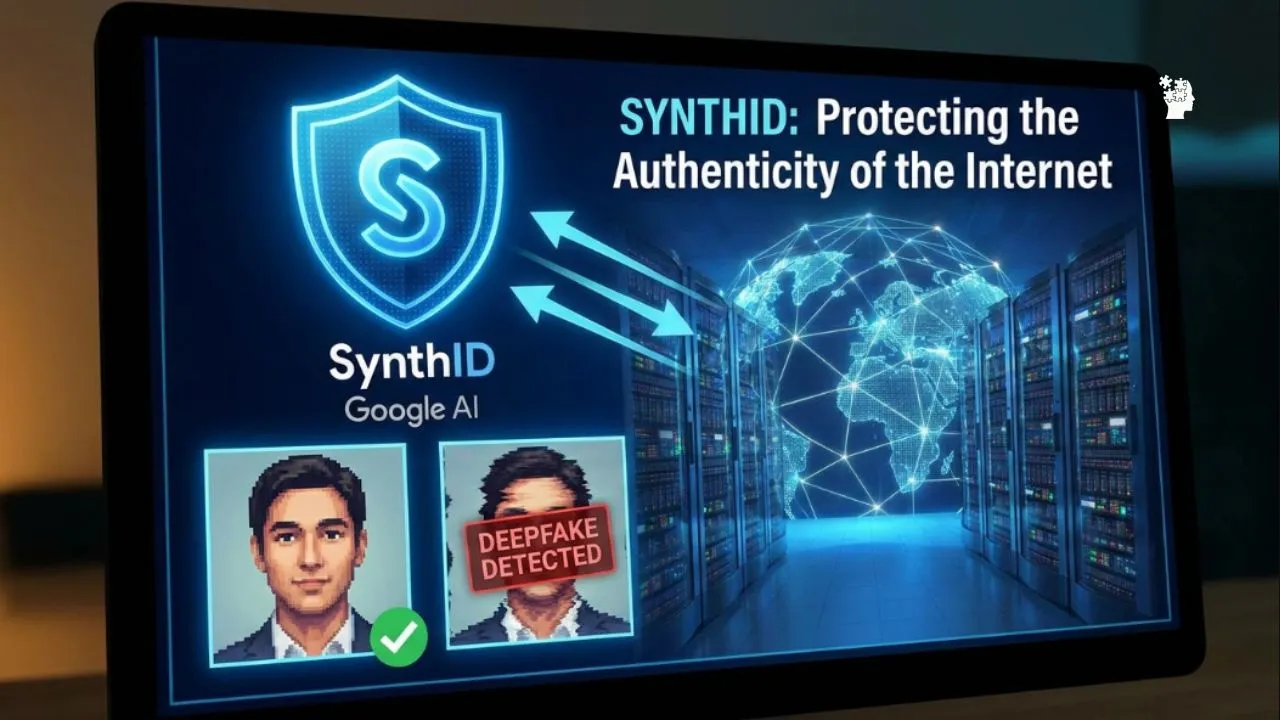
Instead of relying solely on visual clues, they detected an invisible digital fingerprint embedded inside the image.
The technology responsible is Google’s SynthID, and its successful detection of one of the internet’s most talked-about AI-generated images could become a turning point in the fight against deepfakes.
But while this victory is encouraging, it also highlights an important reality: no single technology can solve the deepfake problem alone.
Table of Contents
The Deepfake That Fooled Thousands
The fabricated hospital image spread quickly across Reddit, X, and other platforms.
At first glance, nothing seemed obviously wrong.
The lighting looked realistic.
The medical equipment appeared convincing.
Even experienced users questioned whether it was authentic.
Only after digital verification did investigators discover that the image carried an invisible SynthID watermark, confirming it had been generated or modified using AI systems participating in Google’s watermarking program.
Unlike visible logos, SynthID leaves no obvious marks on the image, making it invisible to viewers while remaining detectable by specialized software.
Why This Detection Matters More Than the Image Itself
The McConnell image will eventually disappear from social feeds.
The technology behind detecting it won’t.
AI-generated images are improving faster than human ability to recognize them.
Traditional signs—extra fingers, distorted faces, strange backgrounds—are becoming less reliable every month.
That means future verification cannot depend on human observation alone.
Invisible cryptographic-style watermarking may become one of the most important tools for preserving trust online.
What Is Google’s SynthID?
SynthID is a watermarking technology developed by Google DeepMind.
Instead of placing a visible logo on an image, SynthID subtly adjusts pixel patterns during image generation.
These tiny modifications are nearly impossible for people to notice but can later be detected by verification tools.
Google has expanded the technology beyond images to include:
- AI-generated videos
- Audio
- Text
- Images created through participating AI models
The company says billions of AI-generated files have already been watermarked using this system.
Why Screenshots Didn’t Remove the Watermark
Perhaps the most surprising part of this incident is that the watermark reportedly survived screenshots and reposts.
Normally, metadata disappears when users take screenshots.
SynthID works differently.
Because the watermark exists within the image itself—not in attached metadata—it can often survive:
- screenshots
- resizing
- compression
- social media uploads
- minor editing
This resilience is one of the biggest reasons experts believe watermarking could become an industry standard.
Does This Mean AI Deepfakes Are Finally Solved?
Not even close.
SynthID only works when AI companies choose to embed these watermarks during image creation.
If someone uses an image generator that doesn’t participate, the watermark won’t exist.
Similarly, determined attackers may still attempt to heavily edit or manipulate images enough to weaken detection.
In other words:
SynthID improves verification—but it doesn’t eliminate misinformation.
The Bigger Question: Will Every AI Company Participate?
This is where the debate becomes more interesting.
Watermarking only becomes truly effective if most AI companies adopt compatible standards.
If every major image generator embeds secure identifiers, platforms could automatically warn users when synthetic media is uploaded.
If adoption remains fragmented, bad actors may simply move to tools without watermarking.
The future of AI authenticity may depend less on the technology itself and more on industry cooperation.
Why This Matters Ahead of Elections
Political misinformation is one of the fastest-growing uses of generative AI.
Realistic fake images can influence public opinion within hours.
Even if fact-checkers eventually debunk them, millions of people may have already seen—and believed—the content.
That’s why faster verification matters.
Instead of relying on manual investigations that can take days, watermark detection allows analysts to identify many AI-generated images much sooner.
What Users Should Do Before Sharing Viral Images
No technology replaces healthy skepticism.
Before sharing emotionally charged images online:
- Check whether trusted news organizations have reported the event.
- Reverse-search the image.
- Look for inconsistencies.
- Use available AI detection tools when possible.
- Be cautious of images designed to provoke immediate emotional reactions.
The easiest deepfake to stop is the one that never gets shared.
The Future of Trust on the Internet
The McConnell deepfake may be remembered less for the image itself than for what happened afterward.
For one of the first times, an invisible AI watermark successfully helped expose a viral synthetic image in a real-world news event.
As AI-generated content becomes nearly indistinguishable from reality, technologies like SynthID may become as important as antivirus software once became for the internet.
Still, watermarking is only one layer of defense.
The long-term battle against misinformation will require cooperation between AI companies, social platforms, journalists, and everyday users.
The internet isn’t becoming less visual.
It’s becoming harder to know which visuals deserve our trust.
FAQ
What is Google’s SynthID?
SynthID is an AI watermarking technology developed by Google DeepMind that embeds an invisible digital signature into AI-generated content, allowing compatible tools to verify whether an image, video, audio clip, or text was created with participating AI systems.
Can SynthID detect every AI-generated image?
No. It only detects images created or edited by AI systems that actively embed SynthID watermarks. Images from non-participating tools won’t carry the watermark.
Can screenshots remove a SynthID watermark?
Not necessarily. Because the watermark is embedded into the image’s pixel patterns rather than stored as metadata, it can often survive screenshots, compression, and reposting.
Is SynthID available to the public?
Users can verify supported AI-generated images using compatible verification tools, including services offered by participating AI providers.
Recommended for you: