
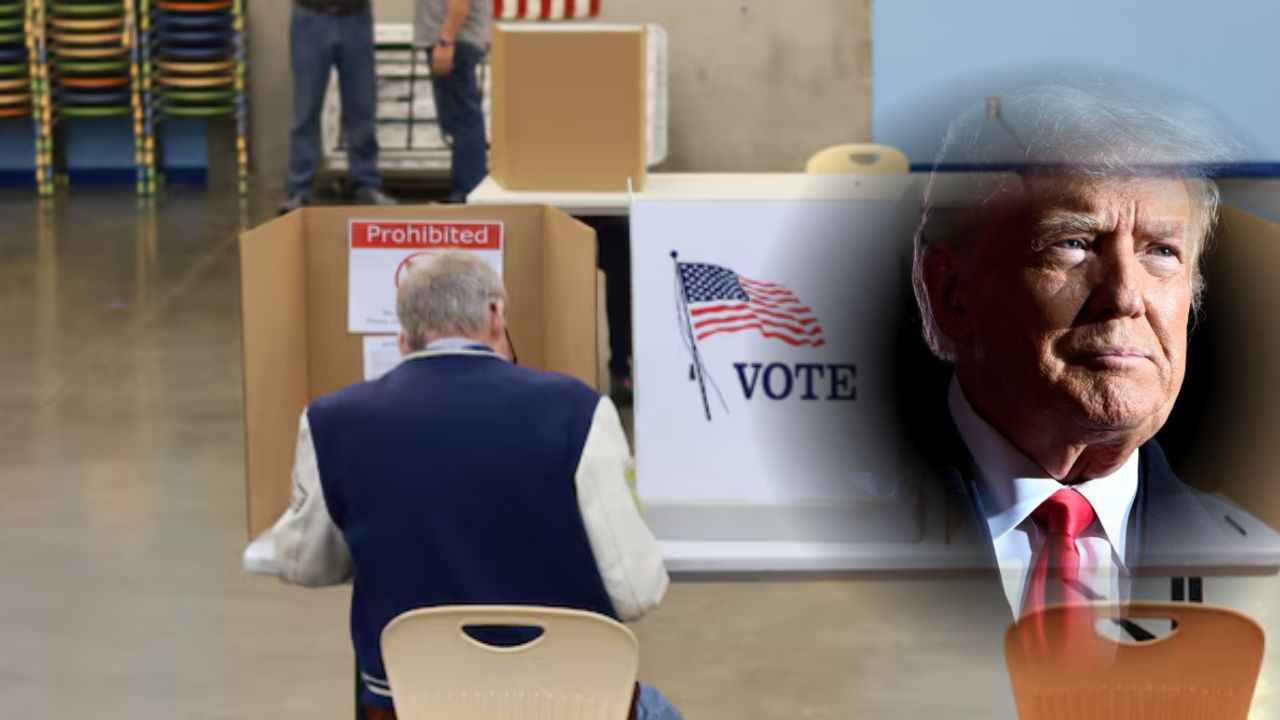
WASHINGTON, D.C., Oct. 31 — In a decisive rebuke to executive overreach, a federal judge in Washington, D.C., issued a permanent injunction Friday against a key provision of President Donald Trump’s March executive order, which sought to impose strict citizenship verification requirements on federal voters.
U.S. District Judge Colleen Kollar-Kotelly ruled that the citizenship-proof mandate — requiring voters to present documents like passports — exceeds presidential authority and violates the Constitution’s allocation of election oversight to the states. This marks the first permanent nationwide block against the controversial order, following a series of temporary halts from other courts.
The ruling stems from consolidated lawsuits brought by voting rights advocates, including the Democratic National Committee (DNC), the League of United Latin American Citizens (LULAC), and the League of Women Voters Education Fund. These groups argued that the federal intervention would disenfranchise millions of eligible citizens, particularly those from marginalized communities who may lack easy access to such documents.
“This is a clear win for democracy and the rule of law,” said Sophia Lin Lakin, director of the ACLU’s Voting Rights Project, which represented the League of Women Voters. “No administration should be allowed to rewrite election rules on a whim. We’re thrilled but watchful — the fight to protect every vote continues.”
Background on the Executive Order
Signed on March 25, 2025, Trump’s order aimed to “restore integrity” to federal elections by creating a nonpartisan federal body to revise the national voter registration form. Central to it was the demand for documentary proof of U.S. citizenship, a move Trump framed as a safeguard against alleged non-citizen voting — claims that experts and prior investigations have repeatedly debunked as unfounded.
The president’s directive echoed his persistent assertions of fraud in the 2020 election, which he lost to Joe Biden. Despite lacking evidence, Trump and Republican allies have leveraged these narratives to push for tighter voting controls ahead of the 2026 midterms.
Notably, Judge Kollar-Kotelly had earlier refused to enjoin another aspect of the order: a provision prohibiting states from accepting mail-in ballots postmarked by Election Day but arriving later. That element remains in effect, potentially complicating vote counting in high-volume states.
Legal Rationale and Broader Implications
In her 45-page opinion, Kollar-Kotelly emphasized the Tenth Amendment’s reservation of powers to the states, stating that “the Framers entrusted elections to the laboratories of democracy, not to unilateral presidential fiat.” She dismissed arguments that the order merely standardized existing federal forms, calling it an “unprecedented intrusion” into state voter rolls.
Civil liberties groups hailed the decision as a bulwark against politicized election reforms. “Requiring a passport to vote isn’t security — it’s a barrier,” LULAC President Domingo Garcia said in a statement. “This ruling ensures that hardworking Americans, including our Latino communities, aren’t shut out of the ballot box.”
The White House offered no immediate comment on the injunction. Legal observers anticipate an appeal to the U.S. Court of Appeals for the D.C. Circuit, where the administration could argue national security interests in uniform standards.
This case underscores ongoing tensions in U.S. election law, where battles over access versus integrity have intensified since 2020. With the 2026 cycle looming, the decision could embolden states to resist federal mandates while highlighting the judiciary’s role as a check on executive power.