
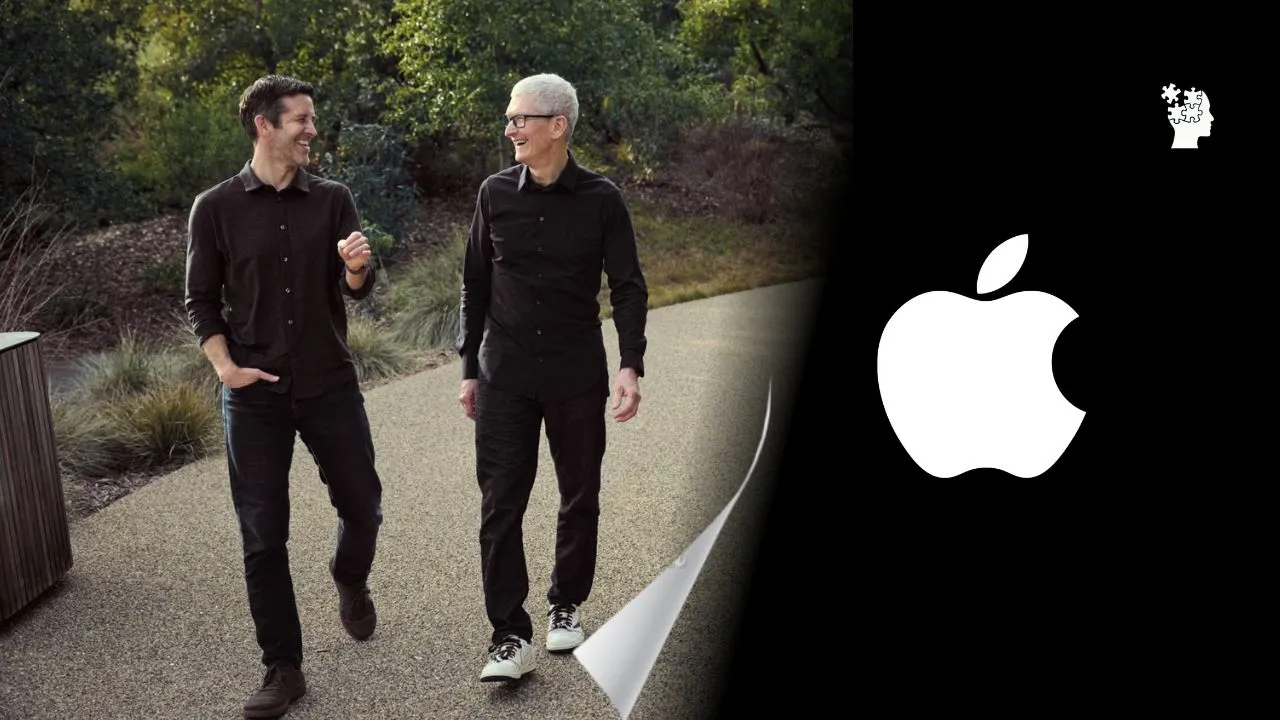
On September 1, 2026, Apple will undergo its most significant leadership transition in 15 years. Tim Cook is stepping into the role of Executive Chairman, handing the CEO reins to John Ternus, the company’s former Senior Vice President of Hardware Engineering.
Wisdom Imbibe Insight:
Apple will shift leadership on Sept 1, 2026, as John Ternus replaces Tim Cook. Cook, known for operational excellence and massive financial growth, hands over to Ternus, an engineer focused on product innovation. The transition signals a move back to hardware-driven creativity, with Cook staying as executive chairman while Ternus leads Apple’s next innovation phase.
While Cook’s tenure was defined by massive financial growth and operational mastery, Ternus represents a return to Apple’s roots as a “product-first” company. Here is how the two leaders compare across the most critical categories.
Table of Contents
1. Product Focus vs. Operational Excellence
The most glaring difference between the two leaders lies in their professional DNA.
- Tim Cook (The Operations Expert): Before becoming CEO, Cook was Apple’s Chief Operating Officer. He is a master of the supply chain, credited with streamlining Apple’s manufacturing to achieve legendary profit margins. While he oversaw the launch of the Apple Watch and Vision Pro, critics—including Steve Jobs’ biographer Walter Isaacson—noted that Cook was never a “product person” at heart.
- John Ternus (The Engineer): Ternus is an engineer through and through. With a degree in Mechanical Engineering, he spent over 25 years at Apple leading hardware teams for the iPad, Mac, and AirPods. He is often described as having “the mind of an engineer and the soul of an innovator.” His leadership signals a shift toward technical breakthroughs and hardware craftsmanship.
2. Leadership and Decision-Making Style
Internal reports suggest a “contrasting” vibe between the outgoing and incoming CEOs.
| Feature | Tim Cook | John Ternus |
| Philosophy | Consensus-based; relies on deep deliberation. | Assertive; focused on technical viability. |
| Approach | Asks a series of questions to find concerns. | Decisive; willing to pick “Option A” or “B” quickly. |
| Involvement | High-level strategic oversight. | Hands-on with product development and engineering. |
3. Financial Legacy vs. Future Innovation
Tim Cook leaves behind a nearly impossible act to follow in terms of raw numbers.
- The $4 Trillion Milestone: Under Cook, Apple’s market cap grew from $350 billion in 2011 to a staggering $4 trillion by 2026. He successfully transitioned Apple into a services giant, with the Services division alone becoming a $100 billion business.
- The Hardware Renaissance: Ternus inherits a stable empire but faces the “innovation fatigue” of the late 2020s. His challenge is to revitalize hardware. Already, he is credited with the “Mac Silicon” transition and the launch of the MacBook Neo, which has redefined the laptop experience for a new generation.
4. Public Policy and Values
While Ternus takes over the day-to-day operations, Cook isn’t leaving the building. As Executive Chairman, Cook will focus on global policy and government relations—an area where his diplomatic skills are unmatched.
Ternus, meanwhile, has championed Apple’s environmental initiatives. He led the push for recycled aluminum and 3D-printed titanium in the Apple Watch Ultra, showing that he intends to keep Cook’s “values-driven” mission alive, but through the lens of material science and engineering.
Final Verdict: Is Ternus the “Next Steve Jobs”?
While it’s too early to call Ternus the next Jobs, his background mirrors the late founder’s obsession with the “how” and “why” of a product. If Tim Cook was the architect who built the skyscraper, John Ternus is the master craftsman tasked with ensuring everything inside remains cutting-edge and revolutionary.
Tim Cook and John Ternus leadership transition
This video discusses the official announcement of John Ternus as the next CEO and what his engineering background means for the future of Apple products.