
For years, the global AI race has been measured by who builds the most powerful models, the fastest chips, or the smartest AI assistants.
That competition has now entered a new phase.
Instead of competing only in technology, countries are beginning to compete over who writes the rules of AI.
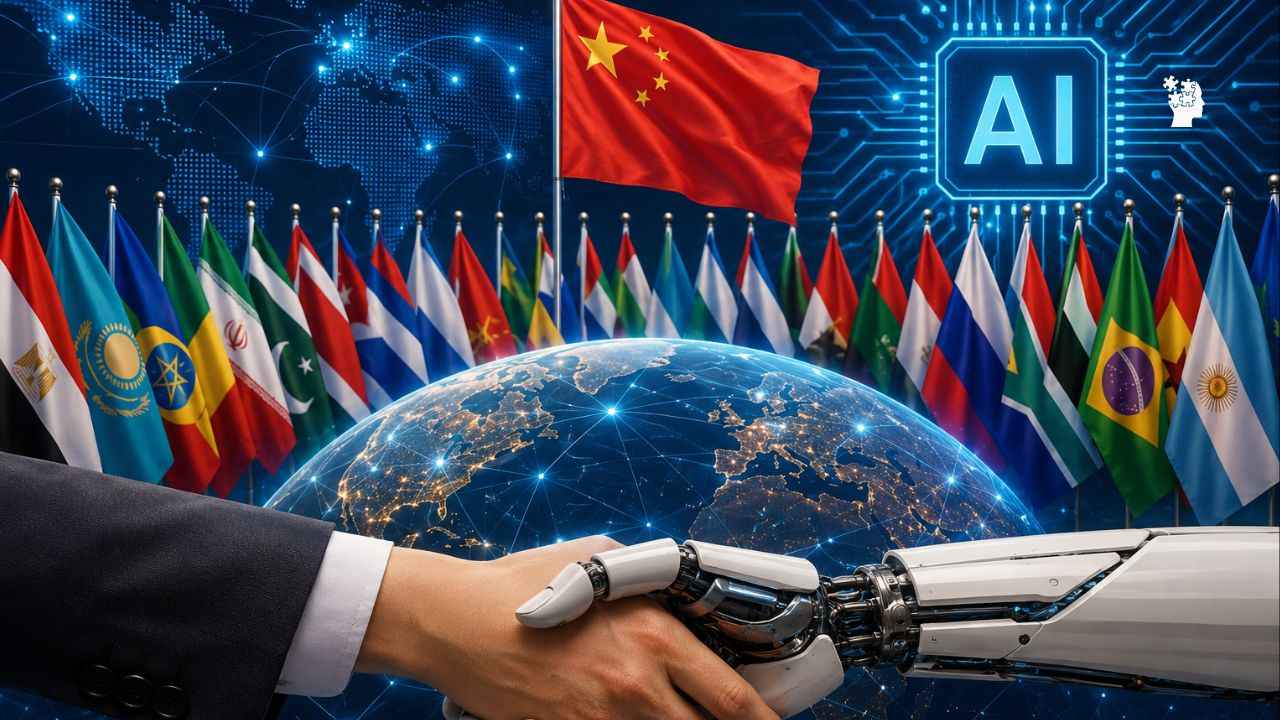
This week, China took one of its boldest steps yet by launching the World Artificial Intelligence Cooperation Organization (WAICO) with support from 29 countries, creating what could become the world’s largest AI-focused intergovernmental organization outside Western-led initiatives.
The announcement isn’t just another diplomatic event.
It signals a growing battle over who will define the future of artificial intelligence.
Table of Contents
Why This Announcement Matters More Than It Seems
Most headlines focus on AI models like ChatGPT, Gemini, Claude, or DeepSeek.
But history shows that technologies become truly powerful only after international standards are established.
The internet had global standards.
Telecommunications had global standards.
Aviation has international organizations.
China now wants AI to have one too.
If WAICO grows into a major international institution, it could influence everything from:
- AI regulations
- Technical standards
- Cross-border AI cooperation
- AI infrastructure investments
- Talent development
- AI adoption in developing countries
Rather than asking “Who builds the smartest AI?”, the conversation becomes:
“Who decides how AI should be used across the world?”
That is a much bigger geopolitical question.
What Is WAICO?
WAICO, short for the World Artificial Intelligence Cooperation Organization, is a newly created international body headquartered in Shanghai.
Unlike many existing AI partnerships, it focuses less on restricting AI development and more on expanding access to AI technologies.
Its stated goals include:
- Sharing AI expertise between countries
- Helping nations build AI infrastructure
- Reducing the global “AI divide”
- Coordinating AI governance
- Encouraging international research collaboration
China describes the initiative as making AI more inclusive rather than concentrating advanced technology in only a few countries.
A Different Philosophy From the West
Perhaps the biggest difference lies in how China and Western governments define AI governance.
Western approach
The United States, European Union, and G7 generally emphasize:
- AI safety
- Ethical guardrails
- Security risks
- Human rights
- Responsible AI deployment
- Export controls on advanced AI technology
China’s approach
China presents AI primarily as an engine for:
- Economic development
- Industrial modernization
- Infrastructure
- International cooperation
- Technology sharing
Instead of beginning with restrictions, China argues that more countries should first gain access to AI capabilities.
This difference could shape global AI policy for years.
Why the Global South Is Central to WAICO
One of the most notable aspects of WAICO is its focus on developing economies.
Many countries still lack:
- Large AI data centers
- High-performance computing
- AI research institutions
- Skilled AI engineers
- Access to advanced AI tools
China sees this as an opportunity.
Rather than limiting participation, WAICO allows virtually any sovereign nation to join.
That makes the organization especially attractive to countries looking for investment, technical support, and AI infrastructure.
For many developing economies, the question isn’t which chatbot is better.
It’s whether they can participate in the AI economy at all.
The Timing Is No Coincidence
The launch comes during one of the most intense periods of AI competition.
Recent developments include:
- Increasing US export restrictions on advanced AI chips.
- Fiercer competition among foundation model developers.
- Growing investment in sovereign AI initiatives.
- Countries creating national AI strategies.
- Rising concern about AI regulation.
Against this backdrop, WAICO represents China’s attempt to expand its influence beyond technology and into global governance.
Could This Create Two AI Worlds?
One possibility is that AI governance begins to split into two major ecosystems.
Western ecosystem
Focused on:
- AI safety
- Security
- Regulation
- Democratic governance
- Trusted partnerships
China-led ecosystem
Focused on:
- AI development
- Infrastructure
- Open participation
- Industrial growth
- South-South cooperation
These systems may overlap in some areas while diverging in others.
If technical standards begin to differ, developers, governments, and businesses may eventually have to navigate two parallel AI governance models.
What This Means for Businesses
Companies developing AI products should pay close attention.
Different governance frameworks could affect:
- AI compliance requirements
- International expansion
- Cross-border cloud services
- AI licensing
- Data governance
- Procurement standards
Businesses operating globally may increasingly need to comply with multiple AI policy environments rather than one universal framework.
What It Means for Developers
For software engineers and AI startups, governance isn’t just politics.
International standards can influence:
- API interoperability
- AI testing requirements
- Open-source collaboration
- Certification systems
- Data-sharing agreements
As more countries participate in WAICO, developers could see new opportunities in emerging AI markets, especially across Asia, Africa, Latin America, and parts of the Middle East.
The Biggest Question: Can WAICO Become Truly Global?
Launching an organization is only the first step.
Its long-term influence will depend on whether it can:
- attract additional member states,
- establish widely adopted technical standards,
- deliver practical cooperation projects,
- remain politically neutral enough to build trust, and
- work alongside existing international AI initiatives.
Major Western economies are unlikely to join in the near term, meaning WAICO’s early success may hinge on engagement from developing nations seeking AI investment and capacity building.
The Bigger Picture
Artificial intelligence is no longer just a technology race.
It has become a contest over influence, standards, and international institutions.
Whoever shapes those institutions could have a lasting impact on how AI is built, governed, and adopted around the world.
WAICO does not immediately change how people use AI today, but it marks an important shift: the global conversation is moving from building powerful AI to deciding who sets the rules.
Whether WAICO evolves into a major global institution or remains a China-led coalition will depend on the participation it attracts and the practical value it delivers in the years ahead.
Key Takeaways
- China and 29 countries have signed an agreement to establish the World Artificial Intelligence Cooperation Organization (WAICO).
- The organization emphasizes AI development, international cooperation, and narrowing the global AI capability gap.
- WAICO differs from many Western initiatives by prioritizing development over safety-first regulation.
- The launch reflects broader geopolitical competition over who will shape global AI governance.
- Its long-term influence will depend on attracting more members, delivering meaningful projects, and gaining international credibility.
Recommended for you: