
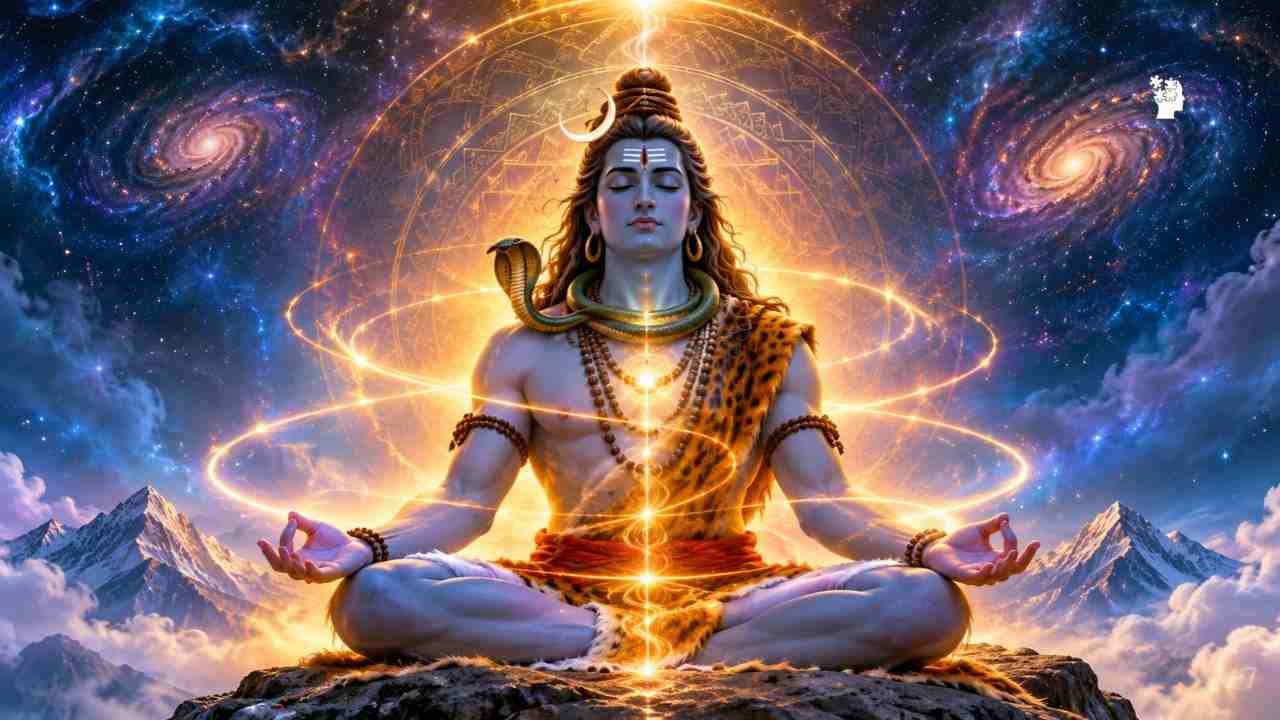
What if the secret to profound inner peace has been hiding in something you do more than 20,000 times every single day? You don’t need an expensive meditation retreat, complicated spiritual rituals, or years of intense discipline to discover it. According to an ancient teaching attributed to Lord Shiva, one of the most extraordinary gateways to consciousness exists in a place most people never notice: the tiny, natural pause between two breaths. It is a seemingly insignificant moment, yet it carries a profound message about awareness, stillness, and the nature of existence itself. And once you learn to notice it, you may never look at your breathing in quite the same way again.
Table of Contents
Wisdom Imbibe Insight
True peace may not come from controlling every thought, chasing every achievement, or escaping the noise of the world. Sometimes, it begins with simply noticing what has always been there. The Vigyan Bhairava Tantra invites us to discover the extraordinary within the ordinary—the silent space between two breaths. Its deeper message is that stillness is not something we need to create; it is something we need to become aware of. When we stop struggling with every moment and learn to witness life without constant interference, we begin to discover a different relationship with ourselves. Perhaps the greatest spiritual journey is not about going somewhere, but about becoming fully present where we already are.
1. Introduction: The Unnoticed Constant in a Chaotic World
Every morning begins with a familiar, relentless rhythm: the bright glaze of a smartphone screen, an immediate influx of notifications, and a rush of forward-projecting thoughts. Throughout the entire day—while working at a desk, navigating traffic, or lying awake at night—one silent process continues without a single moment of rest: your breath. Inhaling and exhaling, tens of thousands of times a day, your body performs this biological miracle on complete autopilot.
Yet, embedded within this continuous tide lies an extraordinary detail that modern life trains us to overlook. Between the moment an in-breath reaches its natural fullness and an out-breath begins, there is a subtle, friction-free pause. It is an inflection point where the air is no longer moving inward nor yet moving outward; it simply rests. We routinely dismiss this threshold as empty space—a mere mechanical buffer between physical actions—but ancient spiritual science views it in an entirely different light.
In the non-dual tradition of Kashmir Shaivism, a classic text titled the Vigyan Bhairava Tantra captures a profound dialogue between Goddess Devi and Shiva. Devi asks a direct, uncompromising question: What is your ultimate, unconditioned reality? Is it a sacred sound, an esoteric mantra, a divine visualization, or a complex philosophical theory? By what practical means can a seeker directly experience it?
Rather than offering abstract metaphysics about cosmic evolution or intellectual doctrine, Shiva responds with 112 practical gateways (dharanas). These are immediate, direct methods designed to shift human awareness from mundane mental chatter into pure consciousness. Prominently positioned as the very first gateway Shiva reveals is not an agonizing ascetic practice, an obscure herb, or a hidden ritual, but the intimate, continuously recurring liminal space between your inhalation and exhalation.
2. Takeaway 1: The First Door is Where Breath Turns (Not Control, But Awareness)
The primary technique taught by Shiva begins with a precise, non-interfering observation of how breath moves through the human instrument:
“Where the breath turns, fix your mind there; in that space lies total completeness.”
The original Sanskrit verse articulates this subtle mechanics:
Urdhva Prano Yadhosjivo Visargaatma Parocharet Utpatti Dvitaya Sthane Bharanaat Bharita Sthiti
Here, Urdhva Prana denotes the ascending outward breath, while Adho Jiva signifies the descending inward breath. This continuous movement is propelled by Para—the supreme, divine life-force. Shiva directs the practitioner’s focus to Utpatti Dvitaya Sthane, the two points of origin where these opposing flows reverse direction. By anchoring unwavering attention precisely at these inflection points, the practitioner realizes Bharita Sthiti—a state of total spiritual fullness and self-contained completeness.
The Paradigm Shift: Pure Observation vs. Volitional Control
Modern breathwork techniques almost exclusively emphasize deliberate control—forcing long holds, accelerating speed, or regulating counts. Shiva’s first instruction presents a radical paradigm shift for the modern mind:
- Absence of Force: You are not asked to alter, regulate, slow down, or forcefully retain the air in your lungs.
- Unbroken Awareness: The practice requires only that you observe the precise cusp of the breath where it naturally yields and reverses.
- The Present Gateway: The portal to ultimate reality is placed precisely where you already stand in every living moment, requiring no special preparation or external apparatus.
3. Takeaway 2: The Two “Micro-Deaths” and Spaces in Every Breath
Expanding upon these inflection points, the text introduces the concept of the two voids or inner and outer skies (Vihad Yugma). Within every single breath cycle, two silent spaces naturally open:
- The Inner Void: The breath flows inward, saturates the body, and comes to a momentary, effortless rest before turning outward.
- The Outer Void: The breath flows outward, empties completely, and rests in quiet suspension before the next inward impulse arises.
These two pauses represent subtle “micro-deaths” within the respiratory cycle—liminal windows where the mechanical drive of living temporarily comes to a complete standstill.
[Inhalation Complete] ──► (Pause 1: Inner Sky / Space) ──► [Exhalation Begins]
                                                                  │
[Inhalation Begins]  ◄── (Pause 2: Outer Sky / Space) ◄── [Exhalation Complete]
The text clarifies this profound state in a subsequent verse: Maruto Antar Bahirvaapi Vihad Yugmaani Vartanaat… Bhairavasya Vapuh. It reveals that when consciousness does not instantly recoil from these two spaces (Vihad Yugma), the unconditioned state of Shiva (Bhairavasya Vapuh) naturally shines forth.
Consider an ocean wave surging toward the coastline. As it reaches its highest reach upon the sand, there is a singular, motionless instant before it begins its return trip back to the deep ocean. In that precise pause—neither expanding nor receding—the water is at absolute rest. The silent space at the cusp of your breath carries that exact same unshakeable stillness.
4. Takeaway 3: You Recite 21,600 Mantras a Day Without Knowing It (Ajapa Japa)
The Vigyan Bhairava Tantra uncovers a mathematical and physiological secret woven directly into human existence. The text states:
Shat-Shatani Diva-Ratrau Sahasrani Eka-Vimshati Japo Devya Samudishta Sulabho Durlabho Jadae
Across a single day and night, a human being breathes approximately 21,600 times.
21,600 Breaths = 21,600 Natural Mantras Daily
The text explains that with every outgoing breath, the subtle vibration “Sa” (Sakaaren) naturally resonates. With every incoming breath, the subtle vibration “Ha” (Hakaaren) enters the body. Unceasingly, your physiology recites the universal breath-mantra Ham-Sa (or its inverted realization, So-Ham—“I am That”).
The Mechanism of Ajapa Japa
This innate biological rhythm is known as Ajapa Japa—the unrecited, effortless chant that occurs without volitional effort.
- Spontaneous Practice: While traditional meditation techniques require sitting with a rosary of 108 beads and maintaining strict mental focus, Ajapa Japa recites itself continuously.
- Unbroken Continuity: It proceeds uninterrupted while you sleep, work, grieve, or experience intense emotion.
- The Paradox of Accessibility: The text describes this practice as Sulabho Durlabho Jadae—it is the most accessible practice because it happens automatically, yet it remains exceedingly rare because the distracted mind rarely notices it.
Because every single cycle of Ham-Sa contains two turning points, every human being passes by 43,200 natural thresholds of stillness every 24 hours. They require no cost, no secret initiation, and no withdrawal from daily life.
5. Takeaway 4: Shiva Resides in the “Middle” (Madhya)
A central pillar of non-dual philosophy is Madhya—the middle space, the gap, or the liminal threshold. Verse 26 of the text lays down the technical heart of this realization:
Na Jeta Na Vishet Shaktir Marudrupa Vikaasate Nirvikalpataya Madhyataya Bhairavarupata
The Sanskrit logic here is exquisitely detailed: Na Jeta signifies that the breath-energy (Shakti) does not depart outward; Na Vishet signifies that it does not rush inward. When the life-force rests choice-lessly in the central gap (Madhya), completely free from conceptual thought construction (Nirvikalpa), the true nature of ultimate reality (Bhairavarupata) unfolds.
Acharya Kshemaraja, the legendary commentator, distilled this principle in his Pratyabhijna Hridayam: Madhya Vikasaat Chidananda Labhah — “Through the unfolding of the middle gap, one attains the bliss of pure, unconditioned consciousness.”
This sacred geometry of “the middle” manifests across every layer of Eastern spiritual science:
- In the Energetic Body: The central channel, Sushumna Nadi, rests in absolute equilibrium between the Ida (cooling/lunar) and Pingala (heating/solar) channels.
- In Time: Twilight (Sandhya) is the quiet threshold situated precisely between day and night, long prized by yogis for deep meditation.
- In Mythic Symbolism: Shiva is depicted atop Mount Kailash (the axis between earth and sky), in the cremation ground (the threshold between life and death), and as Ardhanarishvara (the non-dual balance of masculine and feminine).
- In the Mind: The space of Nirvikalpa—the quiet gap of pure awareness that exists between the end of one thought and the arising of the next.
Just as a printed sentence requires negative space between words to convey meaning, the human psyche requires the silent interval of Madhya to experience true peace. Self-realization does not require battling your thoughts; it simply requires recognizing the space in the middle.
6. Takeaway 5: Why the Mind Fears the Pause (Birth, Death, and Non-Doing)
If accessing this inner space is so direct, why does the modern mind reflexively shrink back from it?
The text provides a profound psychological insight into human existential anxiety:
- Life’s First Act: A newborn infant enters earthly existence through a decisive inhalation (birth).
- Life’s Final Act: A dying individual departs physical existence with a final, releasing exhalation (death).
Every inward breath is a subtle micro-birth; every outward breath is a subtle micro-death. Consequently, the neutral space suspended between them belongs to neither birth nor death.
[Inhalation = Micro-Birth] ──► ( THE STILL POINT: Beyond Birth & Death ) ◄── [Exhalation = Micro-Death]
The egoic mind panics at the threshold of the pause because in that space, it is stripped of its primary occupation: doing. It is neither acquiring (inhaling) nor letting go (exhaling). To an identity built entirely on action, productivity, and thought, “non-doing” feels dangerously close to non-existence.
However, abiding consciously in that pause places you directly in the domain of Mahakala—the dimension of reality that transcends time, change, and mortality. By becoming intimate with the pause between breaths, you systematically desensitize the mind to the fear of the unknown. Over time, practitioners find that even during turbulent moments of daily stress, this awareness functions as an indestructible “quiet room” anchored deep within their own chest.
7. Step-by-Step Guide: The 7-Minute Daily Micro-Practice
This practice relies strictly on soft, passive witness-awareness, never on physical force or breath manipulation.
SAFETY WARNING & CONTRAINDICATIONS
- NEVER forcefully hold or clamp your breath. Voluntary breath retention (Kumbhaka) is not part of this practice.
- If you suffer from heart conditions, high blood pressure, severe respiratory ailments, or are pregnant, do not hold your breath under any circumstances. Observe only the natural, spontaneous flow.
- If you experience lightheadedness, anxiety, or physical discomfort, immediately open your eyes, abandon the focus, and resume normal breathing.
Textual Foundation of the Practice
To understand why this practice works without force, we look to the explicit authority of the Vigyan Bhairava Tantra:
Kumbhita Rechita Va Purita Va Yada Bhavet Tadante Shantanama Sa Shaktih Shanta Prakashate
Whether the breath is naturally suspended (kumbhita), exhaled (rechita), or filled/inhaled (purita), at its natural culmination (tad-ante) rests the state named Shanta—the unshakeable peace of Shakti. Through that peace, ultimate reality shines forth effortlessly.
The 7-Minute Daily Protocol
- Posture & Environment: Sit comfortably with an upright, unforced spine. Relax your shoulders, jaw, and abdomen. The ideal window is Brahmamuhurta (early morning) or directly before sleep.
- Settling Baseline: Gently close your eyes. Take three natural, conscious baseline breaths, allowing your body to settle into the cushion or chair.
- Passive Observation: Release all control over your breathing rhythm. Let the breath move shallowly or deeply as it pleases. Direct your focus exclusively to the two inflection points—where the inward stroke turns to go out, and where the outward stroke turns to come in.
- Subtle Mental Anchor: As you observe, maintain a light internal rhythm: softly register the incoming breath (Ha) and the outgoing breath (Sa), resting your attention in the quiet pause that naturally occurs after each.
- Gentle Re-Centering: The mind will inevitably drift into thought. When you realize you have lost focus, do not judge or criticize yourself. Simply guide your attention back to the very next turning point of the breath. Returning without judgment is the meditation.
- Timeframe: Maintain this passive witness-awareness for 7 minutes daily over a 21-day period.
Initially, the pause may feel as brief as a fleeting eye blink. Over time, it will not necessarily grow longer in physical duration, but it will become extraordinarily luminous and clear. This opens the gate to Shanta—the deep, restorative stillness of consciousness itself.
8. The Ultimate Plot Twist: Breath Moves Inside Shiva
The most common misconception in spiritual practice is treating the gap between breaths as a tiny, hidden keyhole through which our fragile ego must strain to catch a glimpse of the divine. The text brings us to a radical conceptual shift:
“We do not squeeze through the space between breaths to reach Shiva; rather, the breath itself is merely a wave moving within the vast ocean of Shiva.”
This is the ultimate paradigm shift. The quiet pause is not a tiny gap inside your physical body; it is the infinite, boundless ground of reality itself. Your incoming and outgoing breaths are merely temporary, transient waves rising and falling upon the surface of that eternal ocean of awareness.
You do not have to perform intense spiritual labor to travel elsewhere or force open a hidden door. You simply drop the effort of controlling the waves, realizing that the vast, serene space of Shiva was holding you all along.
9. Conclusion: A Final Thought to Ponder
The ancient wisdom of the Vigyan Bhairava Tantra reminds us that spiritual transformation does not require complex machinery, distant retreats, or intellectual exhaustion. The ultimate reality is continually pressing against your awareness through 21,600 natural cycles every day, waiting silently at the quiet turn of every breath.
Before you close this browser tab or transition into your next daily task, pause and take one single conscious breath right now:
Inhale smoothly, witness the quiet point where it turns, exhale completely, and rest for a split second in the serene space at the bottom.
That soft, unnoticed turn is where peace lives. That is where Shiva meets you.
Also Read: