
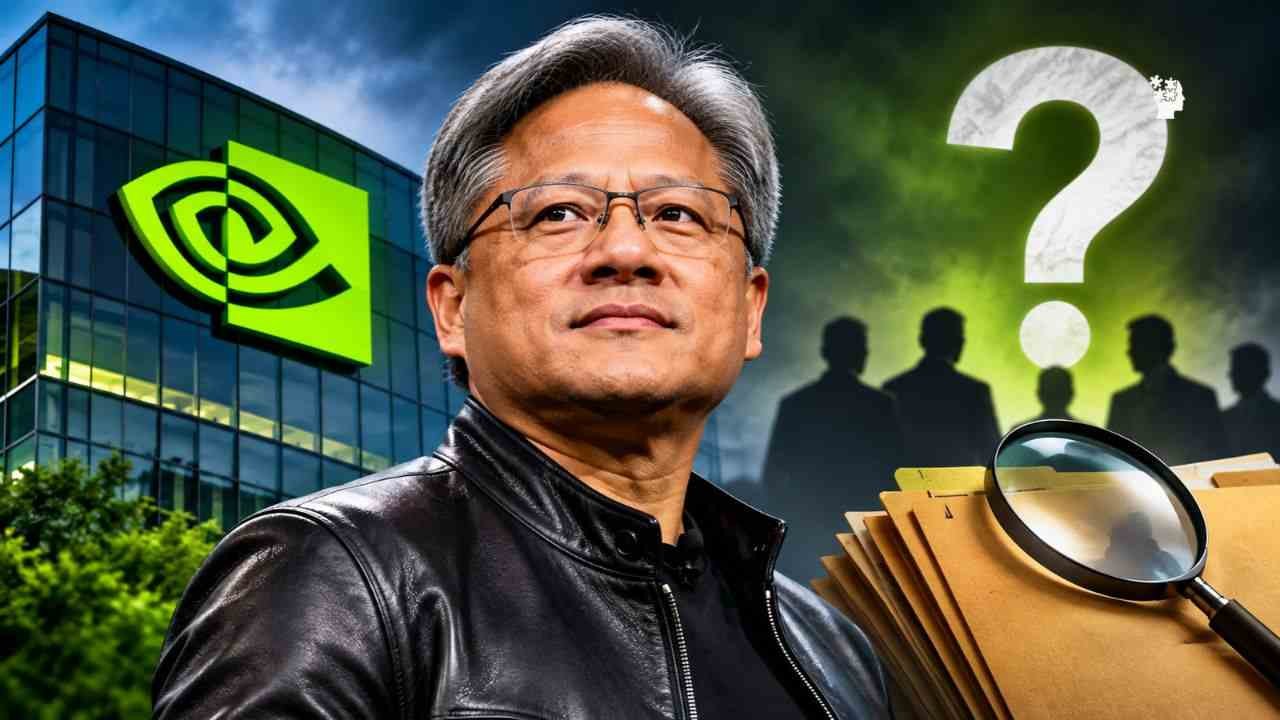
A company’s CEO resigning is usually a major corporate event. Reversing that decision less than two weeks later is something else entirely.
That is precisely what has happened at NVIDIA, the company whose artificial intelligence processors have become essential to the global AI infrastructure boom.
On November 23, 2026, NVIDIA announced that its board had unanimously reinstated co-founder Jensen Huang as President and Chief Executive Officer, as well as a member of its Board of Directors. The decision came just days after the company had moved forward with his departure and appointed Chief Financial Officer Colette Kress as interim CEO.
The board says it is satisfied with Huang’s candor and ability to lead the company. It also says it received input from senior levels of the US government and is confident that his reinstatement poses no national security risk.
But there is an important detail that could get lost in the excitement surrounding his return: the investigation has not ended.
NVIDIA has confirmed that its independent board committee will continue investigating reports that Huang was targeted by a foreign intelligence effort. At the same time, the company is establishing a dedicated National Security and Export Control Committee and searching for its first Chief Compliance Officer.
This means NVIDIA has restored its most recognisable leader while simultaneously building additional oversight around the risks that brought the crisis into focus.
For investors, employees, customers and the wider technology industry, the story is much bigger than one executive returning to his office.
Table of Contents
What Happened at NVIDIA? The Timeline Behind Jensen Huang’s Return
To understand the significance of this decision, it helps to look at how quickly events unfolded.
NVIDIA’s leadership situation changed dramatically over a period of approximately two weeks.
November 8: The board announces an investigation
NVIDIA announced that its board was initiating an independent investigation following reports that founder and CEO Jensen Huang had been the target of a foreign intelligence effort.
The company said a committee made up exclusively of independent directors would oversee the investigation with assistance from independent legal counsel.
At that stage, the board stated that it had no reason to believe national security or NVIDIA’s confidential information had been compromised.
November 12: Huang resigns
NVIDIA announced that Huang had resigned as President, CEO and a member of the board, effective immediately.
The company appointed CFO Colette Kress as interim CEO while the board began considering candidates for a permanent successor.
Harvey C. Jones, a longtime NVIDIA director, became the board’s first-ever chair.
The announcement represented a remarkable change for a company whose public identity and strategic direction had been closely associated with Huang for decades.
November 17: NVIDIA delivers another record-breaking quarter
While the leadership crisis was unfolding, NVIDIA announced its third-quarter fiscal 2027 financial results.
Revenue reached $115.8 billion, representing 103% growth compared with the same quarter a year earlier.
Data Center revenue reached $107.6 billion, up 110% year over year.
The results demonstrated that the company’s underlying AI infrastructure business remained exceptionally strong despite the leadership uncertainty.
November 23: The board reverses its decision
NVIDIA announced that its board had unanimously reinstated Huang as President, CEO and a board director.
The company said the decision followed discussions with Huang and input from senior US government officials.
Colette Kress returned to her continuing responsibilities as Executive Vice President and CFO, while Harvey Jones retained his position as board chair.
The reversal ended the immediate leadership uncertainty, but it did not close the investigation.
Why Did NVIDIA Bring Jensen Huang Back?
The company’s announcement provides three important clues.
1. The board regained confidence in Huang
NVIDIA said its directors held discussions and meetings with Huang before deciding that they were satisfied with his candor and ability to lead.
The board’s unanimous vote is significant because it indicates that the decision was not presented as a divided compromise.
However, the company has not published the full details of those discussions or the complete evidence considered by directors.
That distinction matters.
Shareholders know the board has reached a decision, but they do not yet have a complete public account of the reasoning and information behind it.
2. US government input changed the national security calculation
One of the most consequential statements in the announcement is the board’s confirmation that it received input from senior levels of the United States government.
According to NVIDIA, that input helped the board conclude that Huang’s reinstatement poses no national security risk.
This is particularly important because NVIDIA is not an ordinary technology company.
Its processors and computing platforms are central to the development of advanced AI systems, military-related research, supercomputing and other strategically important technologies.
The United States also maintains restrictions on exports of certain advanced computing chips and related technologies to China.
Consequently, concerns involving foreign intelligence, access to sensitive information and export-control compliance can have implications beyond NVIDIA’s corporate operations.
But the wording deserves attention: the board’s confidence about reinstating Huang does not mean that every investigation or government inquiry involving NVIDIA has been completed.
3. NVIDIA needs leadership continuity during an extraordinary growth period
NVIDIA is operating at a time when demand for AI computing infrastructure is expanding rapidly.
Cloud providers, technology companies, governments and AI developers are investing enormous sums in processors, networking equipment, data centres and advanced computing systems.
Huang has spent decades building NVIDIA’s position in this market.
His return provides continuity in product strategy, customer relationships, partnerships and long-term infrastructure investments.
That continuity is valuable when the company is attempting to execute a complex technology roadmap while competing in a rapidly changing industry.
However, leadership continuity and corporate accountability are not mutually exclusive. NVIDIA must demonstrate that it can protect both.
The Most Important Detail: NVIDIA’s Investigation Is Still Open
This is arguably the most important part of the entire announcement.
NVIDIA has explicitly confirmed that its independent committee will continue its investigation into reports that Huang was targeted by a foreign intelligence effort.
The committee consists exclusively of independent directors and has retained independent counsel.
Huang has expressed support for the investigation and committed to cooperating with it.
There are two separate issues here that readers should not confuse.
First, the board has decided that Huang can return to his leadership position without creating a national security risk, based partly on government input.
Second, the independent investigation is still expected to reach its conclusion.
These are not contradictory decisions.
A company can decide that an executive is suitable to lead while continuing to investigate the circumstances surrounding a security concern.
The distinction is particularly important for investors because the final findings could influence NVIDIA’s internal controls, disclosure practices and future governance decisions.
It also means that November 23 should not be interpreted as the final chapter of this story.
Why NVIDIA Is Creating a National Security and Export Control Committee
Another important development in the announcement is the creation of a dedicated National Security and Export Control Committee.
The new committee will consist exclusively of independent directors and will oversee trade compliance and national security risks.
NVIDIA also said the committee is engaging legal counsel with national security experience, who will bring in additional specialist advisers.
This move deserves attention because it suggests that the company wants national security oversight to become a more formal part of its board-level governance.
Export controls are particularly important for NVIDIA because its products sit at the intersection of commercial technology and geopolitical competition.
Advanced GPUs are not simply components used by gamers or ordinary computer users. They are also critical infrastructure for training large AI models, scientific research, cloud computing and other high-performance applications.
Restrictions on where advanced chips can be sold, who can purchase them and how they can be used create substantial compliance responsibilities.
A dedicated board committee could help NVIDIA strengthen oversight of these risks rather than treating them as ordinary commercial or legal matters.
However, creating a committee is only the first step.
Its effectiveness will ultimately depend on its independence, access to information, authority, resources and willingness to challenge management decisions when necessary.
The New Chief Compliance Officer Could Be More Important Than It Sounds
NVIDIA has also announced that it is beginning a search for a Chief Compliance Officer.
This executive will oversee compliance across the company and report to the Nominating and Corporate Governance Committee.
The reporting arrangement is particularly noteworthy.
Rather than placing the position solely within the ordinary management reporting structure, NVIDIA says the officer will report to a board committee.
That could provide a stronger channel for raising compliance concerns and communicating risks directly to directors.
The role will likely be important across several areas:
- Export controls: Ensuring that sales and transfers of restricted technology comply with applicable laws.
- National security: Strengthening internal processes for identifying and escalating security-related risks.
- Third-party relationships: Monitoring distributors, resellers, partners and other intermediaries.
- Internal governance: Improving reporting systems, employee training and compliance accountability.
- Government cooperation: Supporting the company’s responses to investigations and regulatory inquiries.
The appointment also raises an important question: how much authority will the new officer have?
A compliance executive can be effective only if the position comes with adequate resources, access to senior decision-makers and the independence to raise difficult questions.
For a company with NVIDIA’s global reach, this appointment could become one of the most consequential organisational changes resulting from the crisis.
NVIDIA’s Business Was Not Falling Apart: The Numbers Explain Why Continuity Matters
There is another dimension to this story that deserves more attention.
Huang’s departure did not come during a period of financial weakness.
In fact, NVIDIA had just reported extraordinary financial results.
Its third-quarter fiscal 2027 results, announced on November 17, showed:
| Financial metric | Q3 FY2027 |
|---|---|
| Total revenue | $115.8 billion |
| Year-over-year revenue growth | 103% |
| Data Center revenue | $107.6 billion |
| Data Center year-over-year growth | 110% |
| GAAP net income | $65.3 billion |
| GAAP diluted EPS | $2.70 |
| GAAP gross margin | 74.8% |
Source: NVIDIA’s third-quarter fiscal 2027 earnings announcement.
These figures help explain why leadership continuity matters so much.
NVIDIA is not simply selling graphics cards. It has developed an extensive AI computing ecosystem that includes GPUs, CPUs, networking technologies, software, systems and platforms for data centres.
Its customers increasingly depend on this infrastructure to build and operate AI services.
The company also announced that it had begun shipping its Vera Rubin NVL72 systems, with deployments across major cloud and infrastructure partners.
Its fourth-quarter fiscal 2027 revenue outlook was approximately $130 billion, plus or minus 3%.
That is an enormous business to manage through a prolonged leadership transition.
A permanent CEO search could have introduced uncertainty into strategic decisions, customer discussions and long-term investment planning.
Huang’s reinstatement reduces that immediate uncertainty.
However, strong financial performance should not be mistaken for proof that governance risks have disappeared.
A company can have exceptional earnings and still need stronger oversight.
Why Jensen Huang’s Return Matters to America’s AI Race
The implications extend beyond NVIDIA’s shareholders.
The United States is competing with China and other countries to maintain leadership in artificial intelligence, semiconductor manufacturing and advanced computing.
NVIDIA occupies a particularly influential position in that competition.
Its hardware and software platforms are used by major cloud providers, research institutions, technology companies and developers.
The company’s ability to deliver advanced computing systems influences how quickly customers can expand AI infrastructure.
This makes leadership stability strategically relevant.
A prolonged disruption at NVIDIA could potentially create uncertainty for customers planning large-scale infrastructure deployments.
It could also complicate relationships with suppliers, cloud providers and governments.
The board’s reference to input from senior US government officials therefore deserves attention.
It demonstrates that the company views the circumstances surrounding Huang’s return through a national security lens, not merely as an internal human resources decision.
Nevertheless, the government input described in the announcement should not be interpreted as a blanket approval of every aspect of NVIDIA’s operations or a declaration that all related investigations are over.
The broader policy challenge remains: how can the United States support the growth of its most important AI companies while ensuring that strategically sensitive technologies are protected?
NVIDIA’s next phase will be an important example of how that balance is managed.
What Does This Mean for NVIDIA Investors?
For shareholders, Huang’s reinstatement removes one immediate source of uncertainty.
His leadership has been central to NVIDIA’s transformation from a graphics-chip manufacturer into one of the world’s most important AI infrastructure companies.
Investors may welcome the return of an executive who understands the company’s technology roadmap, customer relationships and competitive position.
But there are several risks worth monitoring.
Leadership risk has not completely disappeared
The crisis has highlighted how closely NVIDIA’s identity and strategic direction are associated with one individual.
That raises a broader question about succession planning.
What happens if Huang is unable to lead the company in the future?
A business of NVIDIA’s size needs a credible leadership succession framework that does not depend entirely on one person.
Governance and compliance costs could increase
A new Chief Compliance Officer, specialist legal advisers and expanded board oversight will require resources.
These investments may be relatively small compared with NVIDIA’s revenue, but their importance should not be measured only in financial terms.
Stronger compliance can help protect the company’s ability to operate across international markets.
Regulatory uncertainty remains
NVIDIA has confirmed that it will continue cooperating with government investigations and inquiries.
The existence of ongoing investigations does not establish wrongdoing.
However, their outcomes could influence compliance requirements, commercial relationships and the company’s risk profile.
The AI growth story remains the bigger financial driver
Ultimately, NVIDIA’s long-term valuation will continue to depend heavily on AI infrastructure demand, product execution, competition, margins and customer investment.
Huang’s return may restore confidence in leadership continuity, but it cannot guarantee that AI spending will continue growing at its current pace.
Investors should distinguish between a positive corporate leadership development and a guarantee of future stock performance.
What Happens to Colette Kress After Huang’s Return?
Colette Kress played an important role during NVIDIA’s brief leadership transition.
She was appointed interim CEO following Huang’s resignation while continuing to serve as the company’s CFO.
Her leadership period included NVIDIA’s November 17 earnings announcement, when the company reported $115.8 billion in quarterly revenue.
With Huang reinstated, Kress will continue as Executive Vice President and Chief Financial Officer.
That continuity is important.
The CFO position remains central to managing NVIDIA’s financial strategy, capital allocation, investor communications and the enormous investments required to support its AI infrastructure business.
Kress’s return to her CFO responsibilities also means NVIDIA retains an executive who has been deeply involved in its financial operations since joining the company in 2013.
The episode nevertheless highlights the importance of having a succession plan that can be activated quickly when unexpected leadership changes occur.
The Bigger Corporate Governance Question: Can a Founder-Led Giant Build Checks and Balances?
Perhaps the most interesting question raised by this episode is not whether Huang should have returned.
It is whether NVIDIA can maintain the advantages of founder-led leadership while strengthening the institutional safeguards expected of a company of its global importance.
Founder-led companies often benefit from long-term vision, rapid decision-making and a strong understanding of their products and markets.
Huang’s decades-long involvement in NVIDIA’s development is an important part of its competitive identity.
But a founder’s influence can also create governance challenges.
When a company’s strategy, culture and external reputation are closely associated with one person, the board must be capable of exercising independent judgment.
That responsibility becomes even more important when national security, international trade and regulatory questions are involved.
NVIDIA’s new oversight committee and Chief Compliance Officer position are steps toward addressing this challenge.
The real test will be whether these changes produce meaningful accountability rather than simply adding new organisational titles.
For shareholders, the investigation’s findings and the company’s subsequent governance reforms may ultimately be as important as the CEO reinstatement itself.
Five Things to Watch After Jensen Huang’s Return
The next few months could reveal whether this leadership reversal marks a genuine turning point for NVIDIA.
Here are five developments worth following:
1. The independent investigation’s findings
NVIDIA says the investigation will continue. Its conclusions could clarify the nature of the reported foreign intelligence effort and whether any additional safeguards are required.
2. The appointment of the Chief Compliance Officer
The identity, experience and authority of the person selected will provide clues about how seriously NVIDIA intends to strengthen its compliance framework.
3. The work of the National Security and Export Control Committee
Investors should watch whether the new committee introduces measurable changes to risk oversight, export-control processes and board reporting.
4. Government investigations and inquiries
NVIDIA has committed to continuing cooperation with government authorities. Any material developments could affect the company’s regulatory and operational outlook.
5. Execution of the AI infrastructure roadmap
The company’s ability to deliver its next-generation platforms, meet customer demand and maintain strong financial performance will remain central to its future.
Final Analysis: Jensen Huang Is Back, but NVIDIA Has a Larger Test Ahead
Jensen Huang’s reinstatement brings an extraordinary leadership episode to an immediate close, but it does not resolve every question surrounding NVIDIA.
The board has restored its founder’s authority after a unanimous vote and discussions that included input from senior US government officials.
That decision gives the company leadership continuity at a critical moment in the global AI infrastructure race.
Yet NVIDIA is also continuing an independent investigation, establishing a dedicated national security oversight committee and searching for a Chief Compliance Officer.
Those steps reveal something important about the challenges facing today’s most powerful technology companies.
Their responsibilities increasingly extend beyond producing successful products and delivering strong financial results. They must also navigate geopolitical tensions, export restrictions, national security concerns and the expectations of shareholders who want both innovation and accountability.
Huang’s return may restore the familiar leadership structure at NVIDIA.
But the more important question is whether the company can emerge from this episode with stronger institutions, clearer oversight and less dependence on any single individual.
NVIDIA has brought its most important leader back. Now it must demonstrate that its governance can be just as strong as its technology.
Frequently Asked Questions
1. Has Jensen Huang officially returned as NVIDIA CEO?
Yes. NVIDIA announced on November 23, 2026, that its board unanimously reinstated Jensen Huang as President and CEO, effective immediately. He also returned as a member of the board.
2. Why did Jensen Huang leave NVIDIA?
NVIDIA announced on November 12 that Huang had resigned following a period of scrutiny and board-level developments. The company had previously announced an independent investigation after reports that he had been targeted by a foreign intelligence effort. The full findings of the investigation have not yet been published.
3. Who was NVIDIA’s interim CEO?
Colette Kress, NVIDIA’s Executive Vice President and Chief Financial Officer, served as interim CEO following Huang’s resignation. She continues as CFO after his reinstatement.
4. Is NVIDIA’s national security investigation over?
No. NVIDIA has explicitly said that its independent board committee’s investigation will proceed to its conclusion.
5. Who is NVIDIA’s board chair?
Harvey C. Jones remains NVIDIA’s board chair. He was appointed the company’s first-ever board chair following Huang’s resignation.
6. Is NVIDIA appointing a Chief Compliance Officer?
Yes. NVIDIA has begun a search for a Chief Compliance Officer who will oversee company-wide compliance and report to the Nominating and Corporate Governance Committee.
7. Does Jensen Huang’s reinstatement guarantee NVIDIA stock will rise?
No. Leadership continuity may reduce uncertainty, but NVIDIA’s stock performance will also depend on AI demand, earnings, competition, regulations, product execution and broader market conditions.
Wisdom Imbibe Insight
The NVIDIA story offers a lesson about the changing nature of corporate power. In the AI era, the leaders of major technology companies do not simply manage businesses; their decisions can influence global infrastructure, national security and economic competition. But the larger a company becomes, the more important it is that its institutions remain strong enough to operate independently of any one individual.