
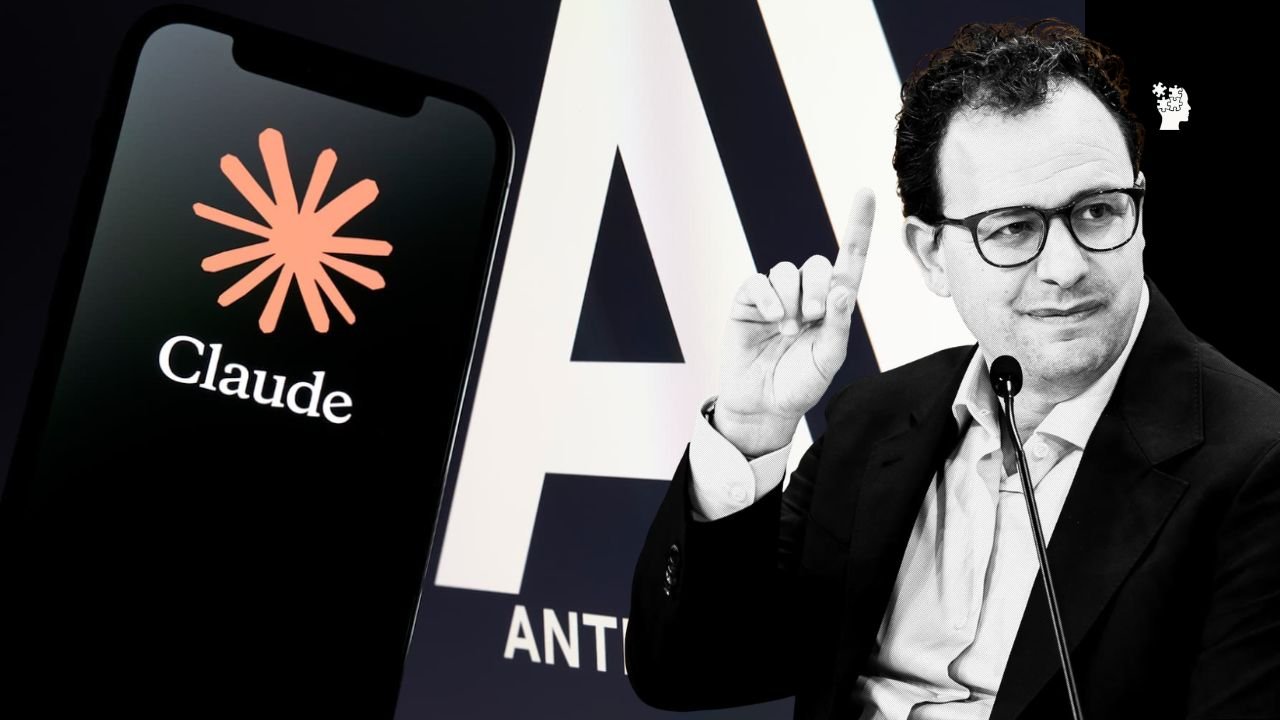
Anthropic has made a significant change to its most expensive consumer AI subscription, and the biggest winners could be developers who spend hours working with AI coding assistants.
On October 30, 2026, Anthropic announced that its Claude Max 5x and Max 20x subscriptions are being renamed Max and Ultra, respectively. The company has also removed the rolling five-hour usage limit for verified Ultra subscribers, allowing them to continue working without the familiar session-based interruption.
The prices remain unchanged: Max costs $100 per month, while Ultra costs $200 per month. However, the change comes with an important qualification: removing the five-hour limit does not mean unlimited Claude usage. Ultra subscribers still face weekly usage restrictions, and newer accounts may temporarily retain the five-hour cap until Anthropic verifies them.
For people using Claude Code to build applications, debug software, and manage large codebases, this could be a meaningful improvement. But the decision also reveals something bigger about the AI industry: as AI assistants become essential working tools rather than occasional chatbots, subscription limits are becoming a competitive battleground.
Table of Contents
What exactly has Anthropic changed?
Anthropic has made two changes to its high-end subscription structure.
First, it has simplified the plan names. Max 5x is now called Max, while Max 20x has become Ultra.
Second, verified Ultra subscribers no longer face the rolling five-hour usage restriction.
Here is how the plans compare:
| Feature | Max | Ultra |
|---|---|---|
| Monthly price | $100 | $200 |
| Previous name | Max 5x | Max 20x |
| Included weekly usage | 5x Pro | 10x Pro |
| Five-hour session limit | Yes | No, for verified accounts |
| Monthly Claude API credits | $100 | $200 |
| Weekly usage limit | Yes | Yes |
| Separate Fable weekly limit | Yes | Yes |
The most important detail is the distinction between session-based and weekly usage.
Previously, a subscriber could have substantial weekly capacity remaining but still be blocked because the five-hour session allowance had been exhausted. Anthropic’s latest change removes that particular obstacle for verified Ultra accounts.
It does not increase Ultra’s stated weekly allowance from 10 times Pro. Instead, it changes how subscribers can use that allowance.
Anthropic’s official Ultra plan documentation confirms the new structure.
Why the five-hour restriction was a bigger problem than it appeared
A five-hour usage window might sound reasonable for someone asking occasional questions or generating a few documents.
It becomes a different problem when AI is performing sustained, multi-step work.
Consider a developer using Claude Code to refactor an application containing thousands of lines of code.
The process might involve:
- Asking Claude to inspect an existing codebase.
- Identifying bugs across several files.
- Rewriting functions and updating dependencies.
- Running tests and examining failures.
- Correcting the problems discovered during testing.
- Reviewing the final implementation.
These activities can involve many requests, substantial context, and repeated interactions.
Under a session-based restriction, the developer could reach the five-hour allowance while still having weekly usage available. The project would then have to pause until the session reset.
That interruption is particularly frustrating when the developer is working through a complicated debugging process and has already provided Claude with substantial project context.
Removing the session limit makes Ultra more suitable for this type of continuous workflow.
However, it is important to distinguish between an uninterrupted session and uninterrupted execution. Anthropic has removed one usage restriction; it has not promised that every task will run indefinitely or that the service will never encounter capacity, technical, or other usage restrictions.
The verification requirement: Why some Ultra subscribers will still see a five-hour limit
There is an important condition that could confuse existing and new subscribers.
Anthropic says the five-hour restriction is being removed for most existing subscribers, starting October 30. However, newer accounts may continue to face a temporary session limit until they are verified.
The company says this requirement is intended to prevent fraud and abuse.
According to Anthropic’s help documentation, verification happens automatically using factors such as account history and payment history.
Subscribers do not need to submit a separate verification application.
There is also a distinction between account verification and phone-number verification. Verifying a phone number during checkout does not automatically remove the five-hour restriction.
How can Ultra subscribers check whether they are verified?
- Open Claude.
- Go to Settings.
- Select Usage.
- Look for the Current session indicator.
If the Current session bar is no longer visible, Anthropic considers the account verified for this purpose.
If the indicator remains, the temporary session restriction may still apply.
Anthropic says subscribers will receive an email when the restriction is lifted. Existing subscribers do not need to purchase another subscription or manually change their plan.
This is an important detail because paying $200 per month does not, by itself, guarantee immediate removal of the session restriction for every new account.
Weekly limits are still the real ceiling
The biggest misunderstanding surrounding this announcement would be to assume that Claude Ultra has become an unlimited AI subscription.
It has not.
Ultra still provides 10 times the weekly usage of Pro, according to Anthropic’s plan documentation.
That weekly allowance applies across Claude’s supported consumer interfaces, including web, desktop, mobile and Claude Code.
In practical terms, a subscriber cannot treat each product as an entirely separate usage allowance. Time spent chatting with Claude on the web can contribute to the same weekly pool used for coding work.
There is another complication: Anthropic maintains a separate weekly usage limit for Fable on Max and Ultra plans.
The company also reserves the right to introduce additional restrictions, including model-specific, feature-specific, weekly or monthly limits to manage capacity and maintain fair access.
This means the removal of the five-hour restriction solves a timing problem, not the broader question of how much AI computation a subscriber can consume.
For someone who works steadily throughout the week, the change could make a substantial difference. For someone who consumes their entire weekly allowance in a few days, the improvement may be much less noticeable.
Anthropic explains these distinctions in its official usage and length limits guide.
The $100 and $200 API credits: A benefit users should not misunderstand
There is another financial detail in Anthropic’s revised subscription structure that deserves attention.
Max includes $100 in monthly Claude API credits, while Ultra includes $200.
These credits can be useful for developers experimenting with their own AI applications, building agents, or integrating Claude into software projects.
However, they are not additional Claude Code usage.
This distinction matters because the subscription and the API operate under different billing arrangements.
The included credits can be used for eligible Claude Platform services, including:
- Claude API.
- Claude Managed Agents.
- Claude Agent SDK.
- Claude’s API playground.
They cannot be used to pay for additional usage inside Claude Code or the consumer Claude applications.
There are also conditions attached to these credits. New subscribers must generally remain on an eligible plan for seven days before claiming them. Unused credits expire at the end of the applicable billing cycle rather than rolling over indefinitely.
Therefore, a developer should not calculate the effective cost of Ultra by simply subtracting $200 from the subscription price. Those credits have a separate purpose and cannot replace the subscription’s usage allowance.
For developers who actually build applications using the Claude API, they can still represent meaningful additional value.
Anthropic explains the eligibility and restrictions in its monthly API credits documentation.
Why Claude Code users stand to benefit the most
The change makes more sense when viewed through the rapid growth of AI-assisted software development.
Claude Code is not simply a chatbot that suggests programming snippets. It is designed to work with developers’ projects and support complex, multi-step coding workflows.
A developer can ask it to understand an existing repository, modify files, investigate errors, run commands and work through implementation tasks.
That creates a different usage pattern from ordinary AI conversations.
A typical chatbot interaction might take a few minutes. A coding session can involve repeated requests over several hours, with each new step depending on the results of the previous one.
This is where session-based restrictions become particularly disruptive.
Imagine a developer who has spent four hours identifying and fixing a difficult software problem. The application is almost ready for testing, but Claude reaches its session limit.
The developer may still have weekly capacity available, but cannot continue using the included session allowance until it resets.
With the revised Ultra arrangement, a verified subscriber no longer faces that particular five-hour barrier.
There are still weekly restrictions, but the developer gains more flexibility over when to use the available capacity.
This could be especially valuable for:
- Independent software developers.
- Startup founders building products with small teams.
- Developers maintaining large code repositories.
- AI-assisted programmers working on complex refactoring.
- Technical professionals using Claude for extended research and coding tasks.
The improvement is less significant for people who primarily use Claude for occasional writing, brainstorming or simple questions.
The timing is interesting: OpenAI is also changing its usage limits
Anthropic’s announcement arrives during an increasingly competitive period for paid AI subscriptions.
On October 29, one day before Anthropic’s announcement, OpenAI’s Codex lead Thibault Sottiaux announced higher usage allowances for ChatGPT Pro and Business Premium customers.
OpenAI said it was doubling the included Work and Codex usage for its Pro $100 and $500 tiers. It also reversed a previously announced reduction affecting eligible existing $200 Pro subscribers.
The announcement followed customer objections to the proposed reduction.
The two companies are addressing different aspects of the same problem: customers want predictable access to powerful AI systems, especially when those systems are becoming part of their everyday work.
There is no public evidence establishing that Anthropic changed Ultra specifically in response to OpenAI’s announcement. Nevertheless, the timing highlights how closely the major AI companies are competing over the experience of their most demanding customers.
This competition is no longer only about which model produces the best answer.
It is also about which service allows people to complete more work without interruption, unexpected restrictions or additional payments.
Why AI subscription limits are becoming a competitive issue
For years, AI companies have marketed subscriptions using familiar consumer software language: pay a monthly fee and receive access to a better product.
But AI usage is fundamentally different from using a conventional software application.
Every substantial interaction can require computing resources. Long conversations, large files, complex reasoning and repeated coding operations can consume considerably different amounts of capacity.
This creates a difficult business problem.
If an AI company offers unlimited access at a fixed monthly price, its heaviest users could consume disproportionately large amounts of computing resources.
If it introduces strict restrictions, customers may feel that they are paying for a service they cannot reliably use.
Anthropic’s latest move suggests a compromise: give verified high-paying customers more freedom within a defined weekly allowance.
This approach has three potential advantages for the company.
1. Better experience for high-value customers
Developers who rely on Claude every day are more likely to value continuity than occasional users. Removing the five-hour interruption makes the subscription more attractive to this group.
2. Continued control over computing costs
The weekly limit remains in place. Anthropic can therefore remove one frustrating restriction without promising unlimited access to its computing infrastructure.
3. A clearer distinction between subscription tiers
Max remains a high-usage option with session and weekly limits, while Ultra offers a larger weekly allowance without the five-hour restriction for verified accounts.
Whether this structure will remain sufficient as AI coding agents become more capable is another question.
As models take on larger tasks and operate for longer periods, the amount of computing power required per customer may become increasingly difficult to predict.
Is Claude Ultra worth $200 per month now?
The answer depends less on the subscription name and more on how frequently someone uses Claude.
For a casual user, spending $200 every month is difficult to justify simply to avoid a five-hour restriction.
For someone who uses Claude Code professionally, the calculation can be different.
A developer should consider how often they encounter session restrictions, whether they regularly exhaust their weekly allowance, and how much time Claude saves on real projects.
The following comparison helps clarify the decision.
| User type | More practical choice |
|---|---|
| Occasional AI user | Pro |
| Regular AI user | Pro or Max |
| Developer frequently hitting session limits | Ultra |
| Developer regularly exhausting weekly limits | Ultra may still be insufficient |
| API application developer | Compare subscription credits and direct API costs |
The most important consideration is whether the five-hour restriction was actually the user’s biggest problem.
If a developer repeatedly hit the session limit but rarely exhausted the weekly allowance, Ultra’s new structure directly addresses that frustration.
If the weekly allowance was already insufficient, removing the five-hour limit will not solve the underlying problem.
There is also a financial consideration for customers in countries such as India. The advertised US-dollar price is not necessarily the final amount charged. Applicable taxes and mobile-platform pricing can change the actual subscription cost.
What happens when you reach the weekly limit?
Anthropic provides another option for subscribers who need to continue working after exhausting their included allowance: usage credits.
When enabled, these allow eligible paid subscribers to continue using Claude on a pay-as-you-go basis at standard API rates after reaching an included usage limit.
This is separate from the monthly API credits bundled with Max and Ultra.
The distinction is important:
- Monthly API credits are intended for eligible Claude Platform API services.
- Usage credits allow additional consumption in Claude’s consumer products after included limits are reached.
Subscribers should monitor their spending carefully if they enable additional usage. Continuing beyond an included allowance can introduce costs that are not covered by the original subscription fee.
This means that Ultra is not necessarily a fixed-cost solution for someone who uses enormous amounts of AI every week.
Anthropic’s usage credits guide explains how the additional billing arrangement works.
The bigger question: Are AI companies moving away from fixed usage limits?
Anthropic’s decision could be an early indication of how premium AI subscriptions evolve.
The traditional five-hour session model was designed to distribute usage over time. But that structure can become awkward when AI tools are used for long-running professional workflows.
Developers do not necessarily work in neat five-hour blocks. They may spend an entire afternoon debugging, switch to another project, and return to the first one later.
A weekly allowance offers greater flexibility because it lets customers decide when to consume their available capacity.
However, weekly caps also create a new form of uncertainty. Users may have to manage their consumption carefully to avoid running out before the next reset.
The next stage of competition may therefore involve more than increasing the number of messages or advertising higher usage multipliers.
Customers could increasingly compare AI subscriptions based on:
- How long agents can work without interruption.
- How much context and reasoning they can use.
- Whether usage is shared across chat, coding and desktop applications.
- How transparent the usage dashboard is.
- Whether additional consumption creates unexpected charges.
- How reliably the service performs during periods of high demand.
In other words, the value of an AI subscription will increasingly be measured by how much useful work it helps someone finish, not simply how many prompts it allows.
What Claude Ultra’s change really means
Anthropic has not made Claude Ultra unlimited, nor has it increased its stated weekly usage multiplier.
What it has done is remove a particularly frustrating restriction for verified subscribers who want to use their available weekly capacity without being stopped by a rolling five-hour clock.
For developers working on large projects, that is a meaningful improvement.
For casual users, the change may make little difference. And for people who regularly exhaust their weekly allowance, the fundamental restriction remains.
The larger story is the direction of the AI subscription market. As companies such as Anthropic and OpenAI compete for professional users, usage limits are becoming part of the product experience rather than a minor detail hidden in subscription terms.
The real question is no longer just which AI model is smarter. It is which AI assistant can help people finish more work before its limits get in the way.
Frequently Asked Questions (FAQs)
1. Has Anthropic removed Claude Ultra’s five-hour usage limit?
Yes. As of October 30, 2026, verified Claude Ultra subscribers no longer have the rolling five-hour session limit. Newer accounts may temporarily retain it until Anthropic automatically verifies them.
2. How much does Claude Ultra cost?
Claude Ultra costs $200 per month for web subscriptions, excluding applicable taxes. Mobile subscription prices may vary.
3. What happened to Claude Max 20x?
Anthropic renamed Max 20x to Ultra. Existing subscribers move to the new plan name without a price increase.
4. Does Claude Ultra now offer unlimited usage?
No. Verified Ultra accounts do not have a five-hour session limit, but they still have a weekly usage allowance equivalent to 10 times Pro’s usage. Separate Fable limits and other capacity restrictions may also apply.
5. How can I check whether my Claude Ultra account is verified?
Open Claude, go to Settings and select Usage. If the Current session bar is missing, your account is verified for the removal of the five-hour limit.
6. Does Claude Max also get the five-hour limit removed?
No. Max retains its five-hour session limit and weekly usage restrictions. The removal of the five-hour restriction applies to verified Ultra accounts.
7. Does Claude Ultra include API credits?
Yes. Ultra includes $200 in monthly Claude API credits, while Max includes $100. These credits are intended for eligible Claude Platform services and cannot be used to pay for Claude Code or additional consumer-app usage.
8. Is Claude Ultra better for Claude Code developers?
It can be, particularly for developers who frequently hit the five-hour restriction while still having weekly usage available. However, developers who regularly exhaust their weekly allowance will still encounter restrictions.
Also Read:
- Sam Altman Just Called Out MBA Students for Chasing Yesterday’s Trends — But the Real Story Is What He Didn’t Say
- The AI Compute Hunger Games: Why the World’s Most Valuable Company Is Running Out of Buyers With Money
- Tesla’s New Flying Roadster: A Futuristic Showpiece or a Car That Will Actually Succeed?
1 thought on “Anthropic Just Removed Claude Ultra’s 5-Hour Limit — But There’s a Catch That Heavy AI Users Should Know”