
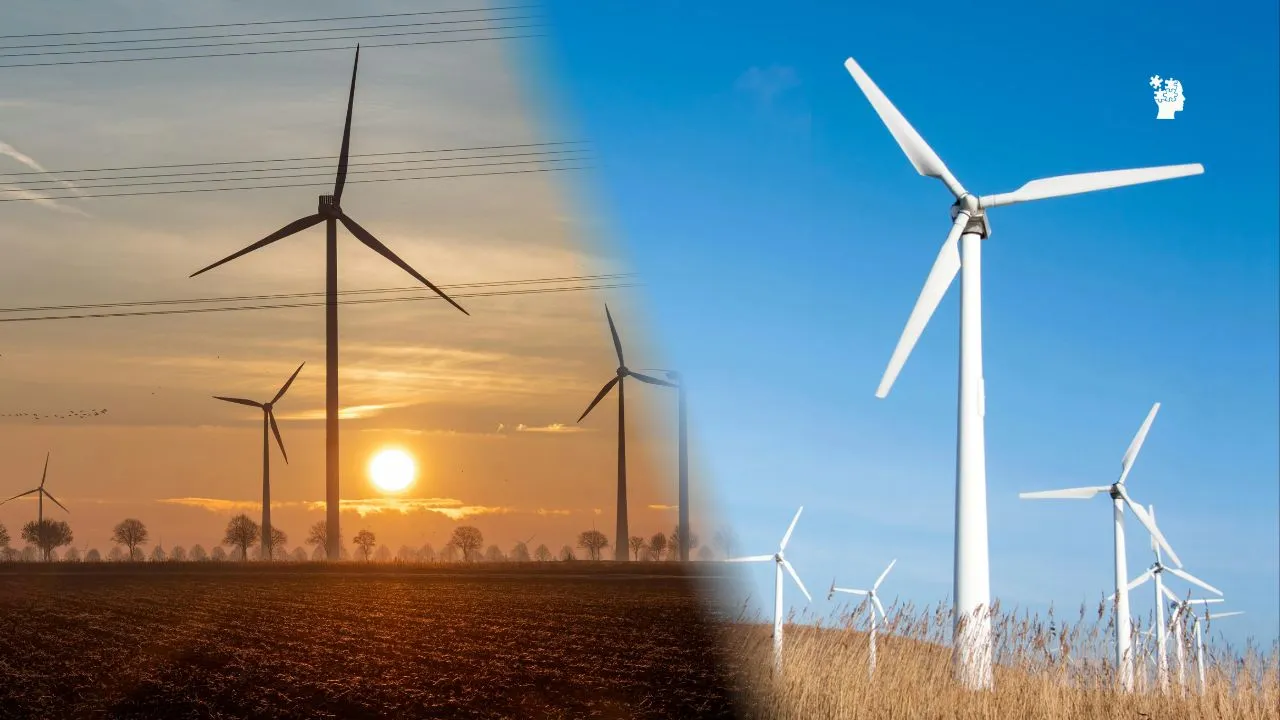
Celebrated every June 15, World Wind Energy Day is a global occasion to raise awareness about wind energy — one of the cleanest and most powerful sources of renewable electricity on the planet. It is organized jointly by the Global Wind Energy Council (GWEC) and the World Wind Energy Association (WWEA).
Table of Contents
What is World Wind Energy Day?
Every year on June 15, governments, businesses, schools, and communities worldwide come together to celebrate wind energy and its power to replace fossil fuels. The message is simple but urgent: wind energy is not just a future technology — it is already powering a significant share of the world’s electricity today, and its role is growing fast.
History of World Wind Energy Day
In 2007, the European Wind Energy Association (EWEA) first marked the occasion as “Wind Day.” That same year, EWEA partnered with the Global Wind Energy Council (GWEC) to take it global, renaming it World Wind Day. Since then, it has been observed every June 15 across six continents.
World Wind Energy Day 2025 Theme
The 2025 theme focuses on accelerating the clean energy transition — positioning wind as the central technology needed to reach net-zero emissions by 2050. Previous themes include “The Wind in Mind” (2023), which highlighted wind’s role in reshaping our entire energy system.
How Is World Wind Energy Day Celebrated?
On and around June 15, organisations worldwide hold:
- Wind farm open days (both onshore and offshore)
- Turbine demonstration workshops for students and engineers
- International conferences and policy summits
- Community wind parades and festivals
- Social media campaigns to reach wider audiences
What Is Wind Energy?
Wind is air in motion — caused by differences in air pressure across Earth’s atmosphere. Air flows from high-pressure zones to low-pressure ones, and the greater the difference, the faster the wind blows. Wind turbines capture this movement through spinning blades connected to a generator, turning motion into electricity.
Modern offshore turbines are engineering marvels — the latest models exceed 15 MW per unit, with rotor diameters of over 200 metres.
Onshore vs. Offshore Wind
Onshore wind flows from land toward the sea. It accounts for about 93% of all installed wind capacity globally. Lower costs and a mature supply chain make it the fastest-growing segment.
Offshore wind flows from the sea toward land. It benefits from stronger, more consistent winds and can achieve capacity factors of 40–60%. The latest offshore turbines can exceed 15–20 MW each — far larger than onshore models.
Global Wind Energy Statistics 2025
The wind industry has grown at a remarkable pace. Here is where the world stands today:
| Metric | Figure |
|---|---|
| Total global installed capacity | 1.245 TW (1,245 GW) |
| Annual growth rate (2024–2025) | ~13.5% |
| New capacity added (H1 2025) | 72.2 GW (+64% vs H1 2024) |
| Wind’s share of global electricity | ~12% |
| Projected global capacity by 2030 | ~2.1 TW |
| Denmark (world leader %) | 56% of electricity from wind |
Top Countries by Installed Capacity (End-2024)
| Rank | Country | Capacity |
|---|---|---|
| #1 | China | ~522 GW |
| #2 | United States | ~155 GW |
| #3 | Germany | ~72.7 GW |
| #4 | India | ~50–52 GW |
| #5 | Spain | ~32 GW |
Did you know? China alone installed more than 68% of all new wind capacity added worldwide in 2024. By mid-2025, China surpassed 600 GW total — nearly half of the entire planet’s wind fleet.
Wind Energy in India
India is the world’s 4th largest wind market and has one of the most ambitious clean energy programmes globally.
| Metric | Figure |
|---|---|
| Total onshore capacity (2025) | ~52 GW |
| Global rank | 4th |
| Offshore wind target by 2030 | 30 GW |
| Coastline for offshore potential | 7,600 km |
Leading states: Tamil Nadu leads with approximately 11.8 GW of installed capacity, followed by Gujarat and Rajasthan. The Muppandal Wind Farm in Tamil Nadu, developed by the Tamil Nadu Energy Development Agency, is India’s largest single wind facility.
Offshore challenge: India’s offshore wind ambitions have faced real hurdles — rising global costs and a lack of port infrastructure led SECI to cancel two large offshore tenders in 2025. The government is addressing this through a Viability Gap Funding (VGF) scheme and a fresh 1 GW tender expected in early 2026.
The opportunity is huge. India’s 7,600 km coastline holds an estimated 70–200 GW of offshore wind potential. GWEC forecasts 122 GW of total wind demand in India by 2030.
Wind Energy in the USA
The United States is the world’s second-largest wind energy market, and wind has quietly become the country’s biggest source of renewable electricity — surpassing hydropower back in 2019. Today, wind power generates around 10.48% of all electricity in the United States, with 464.4 terawatt-hours generated by wind in 2025.
USA Wind Energy: Key Facts (2025)
| Metric | Figure |
|---|---|
| Global rank | #2 (behind China) |
| Total installed capacity | ~155 GW |
| Share of US electricity from wind | ~10.5% |
| New capacity added in 2025 | ~8.1 GW |
| Five-year outlook (2025–2029) | 46 GW of new capacity |
| Wind turbines operating | 70,000+ |
Fast Growth Continues
Wind installations in Q1 2025 more than doubled compared to the same period the previous year. Total projected installations for 2025 stand at 8.1 GW, including onshore, offshore, and repowered projects.
Wind generation grew 9.5% in early 2025 compared with the same period in 2024, contributing 12.2% of total electricity production — more than double the output from hydropower. In March 2025 alone, wind power accounted for 14.8% of the nation’s electricity.
Wind has also crossed a significant milestone — in March and April 2024, electricity generation from wind exceeded generation from coal for an extended period for the first time in US history.
Which States Produce the Most Wind Energy?
Texas is the country’s frontrunner in wind energy generation, with 19,393 active wind turbines — more than the next three states combined (Iowa, Oklahoma, and California). Texas generates around 25% of the nation’s total wind energy.
But in terms of the share of electricity coming from wind, smaller states lead the way. Iowa generated 62.7% of its total electricity from wind in December 2025 — the highest percentage of any state in the country.
| Rank | State | Why It Stands Out |
|---|---|---|
| #1 | Texas | Most turbines (19,000+), most total generation |
| #2 | Iowa | 62%+ electricity from wind — national leader by share |
| #3 | Oklahoma | Major wind corridor, 30%+ from wind |
| #4 | Kansas | Wind surpassed coal as primary source in 2019 |
| #5 | Illinois | Strong Midwest wind belt, 25% RPS target |
The Wind Corridor
America’s best wind resources lie in a natural belt stretching from North Dakota and Montana in the north, sweeping down through the Great Plains to western Texas. This region — often called the “wind corridor” — benefits from high average annual wind speeds that make it ideal for large-scale wind farms.
Biggest Wind Projects in the USA
- SunZia Wind (New Mexico) — When completed in 2026, this will be the largest wind farm in the Western Hemisphere, with over 900 turbines and a generating capacity of 3,500 MW.
- Alta Wind Energy Center (California) — Currently the largest completed wind farm in the US, with a capacity of 1,548 MW.
- Roscoe Wind Farm (Texas) — 634 turbines located 200 miles west of Fort Worth, with a capacity of 781.5 MW.
Offshore Wind: A Growing Frontier
The US has vast offshore wind potential along its Atlantic, Pacific, and Gulf coasts. Vineyard Wind — America’s first commercial-scale offshore wind farm — has connected 15 turbines and delivered 200 GWh of clean electricity. A further 10,369 MW of onshore wind and 1,515 MW of offshore wind are planned for 2026 in the US alone.
Challenges Facing US Wind Energy
Despite the strong growth, the US wind sector faces some real headwinds in 2025:
- Regulatory uncertainty drove turbine orders down 50% in the first half of 2025, reaching their lowest level since 2020, following policy changes under the One Big Beautiful Bill Act.
- Higher turbine costs due to tariffs and supply chain pressures
- Permitting delays and a slowed federal permitting process
- Transmission infrastructure gaps in some high-wind regions
The opportunity, however, is huge. US power demand is growing at around 3% per year through 2029 — compared to just 0.7% over the previous decade — driven largely by data centers, which account for 59 GW of projected peak demand growth. This positions wind as a natural fit for America’s growing electricity needs.
Fun Fact
The average wind turbine in the US generates enough electricity in just 46 minutes to power the average American home for an entire month.
Benefits of Wind Energy
Environmental benefits:
- Zero carbon emissions and zero air pollution during operation
- Lifecycle carbon of just 10–15 gCO₂/kWh — 30 to 50 times lower than coal
- Completely inexhaustible — wind is a perpetually renewed resource
- A key pathway toward net-zero emissions by 2050 and the Paris Agreement goals
Economic benefits:
- Now one of the cheapest sources of new electricity in most countries
- Creates millions of jobs in manufacturing, installation, and maintenance
- Reduces dependence on imported fossil fuels
- Strengthens national energy security
Uses of Wind Energy
Wind energy goes well beyond simply generating electricity. Today it is used for:
- Electricity generation for homes, cities, and industries
- Green hydrogen production — offshore wind powers electrolysers to make clean fuel
- Pumping water for agriculture and irrigation
- Desalinating seawater to address water scarcity
- Traditional grain milling
- Maritime sailing and propulsion
- Reducing the carbon footprint of industrial processes
Latest Wind Energy Technology in 2025
Bigger, more powerful turbines: Offshore turbines now routinely exceed 15 MW per unit. Models in the 18–25 MW range are in development, with rotor diameters of 200+ metres.
Floating offshore wind: Turbines mounted on floating platforms (rather than fixed seabed foundations) can now be deployed in deep water over 60 metres — unlocking vast new ocean areas previously off-limits. The floating wind market is projected to grow at 60% per year through 2030.
AI and predictive maintenance: Sensors and AI algorithms monitor turbines in real time, detecting faults before they cause failures — cutting unplanned downtime by up to 40%. Robotic maintenance systems are also scaling rapidly in 2025.
Advanced blade materials: Carbon fibre composites now enable longer, lighter blades that capture energy even in low-wind conditions, while new recycling processes are making the full lifecycle more sustainable.
Frequently Asked Questions
Which state in India produces the most wind energy?
Tamil Nadu leads India with approximately 11.8 GW of installed wind capacity. Gujarat and Rajasthan are also major contributors.
What is India’s largest wind farm?
The Muppandal Wind Farm in Tamil Nadu, developed by the Tamil Nadu Energy Development Agency (TEDA).
Which country is called the “Country of Wind”?
Denmark — it generates 56% of its electricity from wind, the highest share of any country in the world.
What rank does India hold in wind energy?
India holds 4th place globally in total installed wind capacity.
What is the world’s largest wind farm?
The Gansu Wind Power Base in northwest China, spanning multiple phases with tens of gigawatts of installed capacity.
Which country leads the world in wind energy?
China, with over 600 GW of installed capacity by mid-2025 — nearly half of the entire global total.
What is floating offshore wind?
Floating offshore wind uses turbines on floating platforms anchored to the seabed, allowing wind farms to be built in deep water (60+ metres depth) where fixed foundations are not possible.
What percentage of global electricity comes from wind?
Approximately 12% as of 2025, up from 8.5% in 2022.
Sources: WWEA Half-Year Report 2025 · GWEC Global Wind Report 2025 · REN21 GSR 2025 · Government of India MNRE · IRENA 2025
Recommended For You