
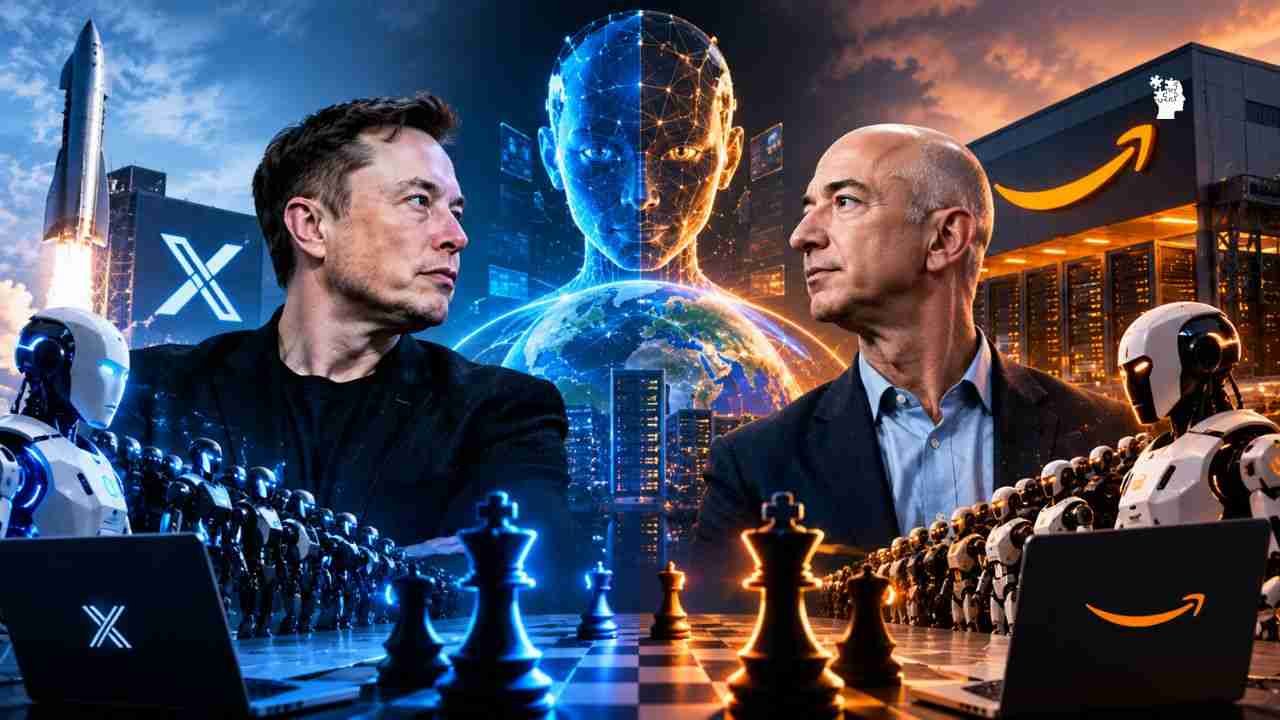
Elon Musk threatened to build an Amazon rival. But the real fight isn’t about shopping — it’s about who controls the AI agents that will soon buy everything for us.
On Thursday, October 15, Elon Musk fired off a post on X that sounded like a joke — until you realized it wasn’t.
An X user had complained that Amazon was blocking Grok AI agents from placing orders. Musk’s response? “Maybe we should start a competitor to Amazon.”
He didn’t share details. He didn’t announce a plan. But in 2026, when a man who owns a rocket company, a social media platform, and an AI startup says he might build a shopping empire, the market listens.
The same day, Musk made a second, equally striking pledge: SpaceX would reimburse users if Grok’s agent makes a mistake with a purchase. “If Grok Bot makes a mistake with a purchase or leaks your card (never happened yet), SpaceX will make you whole,” he wrote.
On the surface, this looks like Musk being Musk — impulsive, provocative, mixing serious promises with half-jokes. But beneath the headlines lies something far more consequential: the first major public clash over whether AI agents have the right to shop on behalf of humans — and who gets to decide the rules.
Table of Contents
What Actually Happened: The Exchange on X
The thread began when an X user vented frustration: “Amazon is blocking Grok @bots from ordering, and Elon’s answer is just have your bot buy it somewhere else.”
The user noted that one of his Grok bots was relegated to handling Amazon returns — a task Amazon apparently still allowed. He suggested Musk launch an “X Shop” instead.
Musk’s earlier advice to users was simpler: have your bot look for the best seller elsewhere. He claimed his own bot bought LEGO directly from LEGO’s website without trouble — bypassing Amazon entirely.
But the Economic Times noted the obvious question: Was Musk joking or serious? With Musk, the line is never clear. What is clear is that the underlying tension is real, growing, and about to reshape e-commerce.
Grok Bot: What It Is and What It Does
Grok Bot launched in beta on August 11, 2026. It’s not a chatbot that answers questions. It’s an AI agent — a system designed to act autonomously on behalf of its user.
Each Grok Bot gets:
- Its own cloud computer
- The ability to sign into apps the user already has
- The capability to complete multi-step tasks independently
In other words, Grok Bot doesn’t just tell you where to buy something. It logs into your accounts, compares prices, places orders, tracks deliveries, and handles returns — all without you lifting a finger.
This is the future of shopping that Silicon Valley has been promising: zero-friction, AI-driven commerce where the agent does the work and the human just approves (or ignores) the results.
The problem? Retailers aren’t ready to hand over the keys.
Amazon’s Position: “Respect Service Provider Decisions”
Amazon isn’t just blocking Grok. It’s drawing a hard line against AI agents across the board.
The company’s robots.txt file — the standard that tells web crawlers what they can and cannot access — blocks:
Amazon has also confirmed it blocked Meta’s Muse agent, citing three specific concerns:
- Meta never told Amazon about the agent’s access
- The agent did not identify itself as an automated system
- It appeared to capture customer credentials — a major security red flag
An Amazon spokesperson told GeekWire: “Third-party applications that offer to make purchases on behalf of customers from other businesses should operate openly and respect service provider decisions about whether or not to participate.”
Translation: If you want to shop on Amazon, be a human. Or at least ask permission first.
The Core Conflict: Who Controls the Transaction?
This fight isn’t really about Musk’s ego or Amazon’s market power. It’s about a fundamental question that will define the next decade of e-commerce:
When an AI agent buys something on your behalf, who is actually in control?
The AI Agent Vision
Proponents — Musk, OpenAI, Meta, and a wave of AI startups — see a future where:
- You tell your agent: “I need new running shoes”
- The agent scans the entire internet for the best price, quality, and delivery speed
- It compares reviews, checks return policies, verifies seller credibility
- It places the order using your stored payment method
- It tracks delivery and handles any issues
- You never visit a website, open an app, or fill out a form
The value proposition is irresistible: save time, avoid decision fatigue, get better deals through AI-powered comparison.
The Retailer Resistance
Retailers like Amazon see a different future — one where:
- AI agents bypass their recommendation algorithms (which drive billions in sales)
- Agents strip away brand loyalty by always routing to the cheapest option
- Customer data flows to AI companies instead of retailers
- Agents become the new gatekeepers of commerce, replacing platforms like Amazon itself
- Fraud and liability become murky when a bot — not a person — clicks “buy”
Amazon’s robots.txt blockade is a defensive move. But it’s also a strategic signal: the company that built its empire on making shopping frictionless is now adding friction to prevent AI agents from disintermediating it.
The SpaceX Guarantee: A Bold Bet on Trust
Musk’s promise that SpaceX will “make you whole” if Grok Bot makes a purchase mistake is more than customer service — it’s a trust-building maneuver.
Here’s why it matters:
| Risk | Why Users Worry |
|---|---|
| Wrong purchase | Agent buys the wrong size, model, or product |
| Overpayment | Agent fails to find the best price |
| Credential leak | Agent stores or transmits payment data insecurely |
| Unauthorized charges | Agent makes purchases the user didn’t approve |
| No recourse | If something goes wrong, who is liable? |
Musk’s guarantee attempts to neutralize all of these fears in one sentence. But it also raises questions:
- What does “make you whole” actually cover? Full refund? Compensation for inconvenience? Legal costs?
- Who pays? SpaceX? X? A new insurance product?
- What are the limits? A $20 LEGO set is one thing. A $5,000 laptop is another.
- Has this been legally vetted? SpaceX did not respond to requests for comment.
Business Insider noted that the published agent terms for Grok, Meta, and OpenAI all make users responsible for transactions their agents carry out. Musk’s SpaceX guarantee appears to override Grok’s own terms — or at least layer a corporate promise on top of them.
This could be a competitive differentiator if it holds up. Or it could be a liability nightmare if Grok Bot scales to millions of users and the error rate is non-zero.
Could Musk Actually Build an Amazon Rival?
The short answer: Not easily. Not quickly. But not impossibly.
Investing.com laid out the reality: starting an Amazon competitor requires more than an AI interface. It demands:
| Requirement | Challenge |
|---|---|
| Merchant network | Millions of sellers trust Amazon’s platform, logistics, and customer base |
| Fulfillment infrastructure | Amazon has spent decades and billions building warehouses, delivery networks, and supply chain technology |
| Customer habit | Shoppers default to Amazon; changing behavior requires overwhelming value |
| Trust and reviews | Amazon’s review ecosystem took 20+ years to build |
| Payment and fraud systems | Handling billions in transactions securely is non-trivial |
| Regulatory compliance | Different rules in every market Amazon operates in |
Musk has resources. He has capital. He has a platform (X) with hundreds of millions of users. He has an AI product (Grok) that can already place orders.
But what he doesn’t have — yet — is the physical and logistical infrastructure that makes Amazon, well, Amazon.
The More Likely Scenario: X Shop as a Curated Marketplace
Instead of a full Amazon rival, Musk could build:
- An X-integrated shopping layer where merchants list products
- Grok Bot as the default shopping interface — users never see a traditional storefront
- Direct partnerships with brands (like the LEGO example) that bypass Amazon entirely
- A vertical marketplace focused on categories where AI-driven comparison adds the most value (electronics, subscriptions, travel)
This wouldn’t replace Amazon overnight. But it could chip away at specific categories where AI agents provide a genuinely better experience.
What This Means for the Future of E-Commerce
The Musk-Amazon clash is a preview of a much larger shift. Here are the forces at play:
1. The Rise of “Agentic Commerce”
By 2027, industry analysts predict that AI agents will handle 15–25% of online transactions in developed markets. This isn’t science fiction — it’s the logical next step from voice assistants (Alexa, Siri) and one-click buying.
The question is whether retailers will embrace agents (by building APIs, partnerships, and agent-friendly interfaces) or resist them (by blocking, suing, or building their own captive agents).
2. The Platform vs. Agent Power Struggle
Amazon, Shopify, eBay, and other platforms built their power by owning the customer relationship. AI agents threaten to insert themselves between the customer and the platform.
If your Grok Bot buys everything for you, Amazon becomes just another backend fulfillment provider — not the brand you trust, search, and return to.
This is an existential threat to platform business models. Expect fierce resistance.
3. The Regulatory Vacuum
Right now, there are no clear rules governing AI agents in commerce:
- Who is liable when an agent makes a fraudulent purchase?
- Do agents need to identify themselves to retailers?
- Can retailers legally block automated purchasing systems?
- What consumer protections apply to agent-mediated transactions?
The EU’s AI Act touches on some of these questions, but comprehensive e-commerce agent regulation doesn’t exist yet. The first major court case or regulatory action will set precedents that shape the industry for years.
4. The Trust Problem
Musk’s SpaceX guarantee is clever, but it highlights a deeper issue: users need to trust AI agents with their money, data, and decisions.
A single high-profile failure — an agent that leaks credit card data, makes unauthorized purchases, or buys counterfeit goods — could set back agentic commerce by years.
The companies that solve trust first will win.
What Consumers Should Watch For
If you use or are considering an AI shopping agent, here’s what to monitor:
| Question | Why It Matters |
|---|---|
| Does the agent identify itself to retailers? | Transparency prevents blocks and builds trust |
| Who is liable for mistakes? | Musk promises SpaceX coverage, but read the fine print |
| Where is my payment data stored? | Agents need credentials; security is paramount |
| Can I review and cancel agent actions? | You should retain final approval authority |
| What happens if a retailer blocks my agent? | Your agent is only useful if it can actually complete purchases |
| Does the agent prioritize my interests or its creator’s? | Grok might favor X Shop, just as Alexa favors Amazon |
Key Players and Their Positions
| Company | AI Agent | Stance on Agent Shopping | Key Move |
|---|---|---|---|
| xAI / X | Grok Bot | Pro-agent; wants open access | Threatened Amazon rival; SpaceX purchase guarantee |
| Amazon | None (blocks agents) | Anti-agent (for now) | robots.txt blocks all major AI agents; demands transparency |
| Meta | Muse | Pro-agent but secretive | Blocked by Amazon for not disclosing access |
| OpenAI | ChatGPT / Operator | Cautiously pro-agent | Focused on safety and alignment; less aggressive on commerce |
| Microsoft | Copilot | Neutral / integrated | Deep Amazon partnership via Azure; unlikely to rock the boat |
| Perplexity | Perplexity Assistant | Pro-agent | Blocked by Amazon; building shopping features |
The Bottom Line
Elon Musk’s “maybe we should start a competitor to Amazon” post will probably be forgotten in a week. But the underlying conflict won’t be.
The fight over AI agents in e-commerce is the defining business battle of the next five years. It pits platform power against AI autonomy. It raises questions about trust, liability, and control that regulators haven’t begun to answer. And it will determine whether the future of shopping looks more like Amazon’s walled garden or Musk’s agent-driven open market.
For now, Amazon is winning the blocking game. Grok Bot can buy LEGO directly from LEGO, but it can’t touch Amazon’s catalog. That gives Amazon time to figure out its strategy — whether that’s building its own agent, partnering with one, or continuing to resist until regulation forces its hand.
But Musk has one thing Amazon can’t easily replicate: a direct line to hundreds of millions of users who already trust his platforms. If even a fraction of X users start using Grok Bot as their default shopping tool — and if Musk builds even a modest merchant and fulfillment network — Amazon will face a challenger it didn’t expect.
The AI agent war has begun. And this was just the first shot.
FAQ: AI Agents and E-Commerce
Q: What is an AI shopping agent?
An AI shopping agent is an autonomous system that can browse websites, compare products, place orders, track deliveries, and handle returns on behalf of a user. Unlike a chatbot that answers questions, an agent takes action — logging into accounts, entering payment details, and completing transactions.
Q: Why is Amazon blocking Grok and other AI agents?
Amazon cites three concerns: agents that don’t identify themselves, agents that access its platform without permission, and agents that appear to capture customer credentials. More broadly, Amazon risks losing its role as the primary shopping interface if AI agents disintermediate its platform.
Q: Can Musk really build an Amazon competitor?
Not easily. Amazon’s advantage lies in its merchant network, fulfillment infrastructure, customer habits, and trust built over decades. Musk could build a smaller, AI-first marketplace (an “X Shop”) but replacing Amazon outright would require enormous capital and time.
Q: What does Musk’s SpaceX purchase guarantee mean?
Musk promised that SpaceX would reimburse users if Grok Bot makes a purchase mistake or leaks payment data. The details are unclear — what “make you whole” means, what the limits are, and whether it’s legally binding have not been specified. SpaceX did not respond to requests for comment.
Q: Are AI agents legal? Can retailers block them?
AI agents exist in a regulatory gray area. Retailers can use robots.txt and technical measures to block automated access, but comprehensive laws governing AI agent commerce don’t yet exist. The first major legal cases will set important precedents.
Q: Should I use an AI agent to shop?
AI agents offer convenience but come with risks: mistaken purchases, credential security, limited recourse if something goes wrong, and potential blocks by major retailers. If you use one, choose a provider with clear liability policies, strong security, and transparent terms.
Q: Will other retailers block AI agents too?
Likely yes, at least initially. Major platforms will be cautious until liability, security, and commercial frameworks are clear. Smaller retailers and direct-to-consumer brands may be more welcoming if agents drive sales.
Q: What’s the difference between an AI agent and a shopping comparison site?
A comparison site shows you options and sends you to the retailer’s website to complete the purchase. An AI agent completes the entire transaction for you — from search to payment to delivery tracking — without you visiting the retailer’s site directly.
Sources & References
- Yahoo Finance / Investing.com, October 15, 2026
- Economic Times, October 15, 2026
- Business Insider, October 15, 2026
- GeekWire (Amazon spokesperson statement)
- X posts by Elon Musk, October 15, 2026
- Grok Bot beta launch details (August 11, 2026)
Published: October 15, 2026. This article analyzes breaking developments in AI agent commerce and will be updated as new information becomes available.