
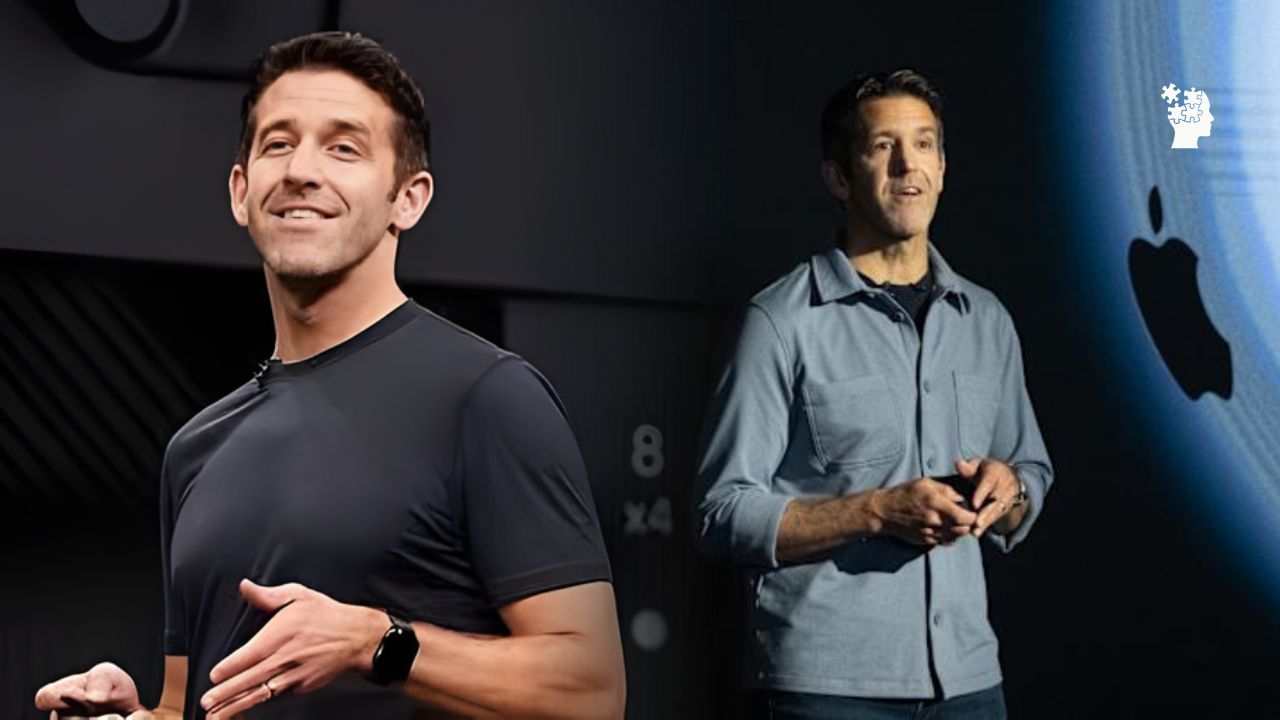
John Ternus, born in May 1975, is an American mechanical engineer and longtime Apple executive who has been named the company’s next chief executive officer. On April 20, 2026, Apple announced that Ternus will succeed Tim Cook as CEO effective September 1, 2026, with Cook transitioning to the role of executive chairman. At age 50–51, Ternus brings more than 25 years of deep technical expertise to the top job, having overseen the hardware behind virtually every major Apple product line. He is widely regarded as the embodiment of Apple’s product-first culture: meticulous, collaborative, and relentlessly focused on engineering excellence, durability, and user experience.
Wisdom Imbibe Insight:
John Ternus represents a rare shift in modern leadership: the return of the builder. In an era dominated by strategy and finance, Apple is betting on deep engineering intuition to drive its future. His rise signals that the next wave of innovation may not come from vision alone—but from those who understand how to turn ideas into reality.
This biography draws together every publicly available detail about Ternus—from his early athletic and academic achievements to his pre-Apple engineering work, his rapid rise through Apple’s ranks, his specific contributions to iconic products, his patents, and his leadership philosophy. It is designed to be the most comprehensive, accurate, and insightful account available.
Table of Contents
Early Life, Education, and Formative Experiences
Public details about Ternus’s childhood and family are scarce; he has maintained a notably private personal life. What is known centers on his time at the University of Pennsylvania, where he graduated in 1997 with a Bachelor of Science in Engineering, majoring in mechanical engineering (some records note an additional minor in psychology).
Ternus was both an athlete and an innovator at Penn. He competed on the men’s varsity swimming team and became an all-time letterwinner. As a freshman in 1994, he won the 50-yard freestyle and 200-yard individual medley in a dual meet against Swarthmore College. The discipline, precision, and endurance he developed in the pool have been cited by observers as shaping his approach to engineering challenges.
For his senior design project, Ternus created a mechanical feeding arm that individuals with quadriplegia could operate using head movements. The project combined mechanical engineering with human-centered design, reflecting an early commitment to technology that serves real human needs—an ethos that would define his later career at Apple. He has referenced lessons from his Penn years in public remarks, including a 2024 commencement address to the university’s engineering school.
Pre-Apple Career: Virtual Reality and Mechanical Engineering (1997–2001)
Immediately after graduation, Ternus joined Virtual Research Systems as a mechanical engineer. From July 1997 to June 2001, he worked on early virtual-reality headsets and related hardware. This experience in immersive technology and precision mechanical design would later prove valuable when Apple developed the Vision Pro spatial computer decades afterward.
Joining Apple: The Product Design Years (2001 Onward)
Ternus joined Apple in July 2001 as a member of the product design team—just months before the iPod launch that would transform the company. His first major assignment involved external displays for the Mac line, specifically the Apple Cinema Display.
He quickly earned a reputation for obsessive attention to detail and an ability to balance innovation with manufacturability. Over the next decade, he contributed to multiple generations of Mac hardware while working under Steve Jobs (until Jobs’s retirement in 2011) and later collaborating closely with Tim Cook.
Rise to Hardware Leadership
- 2013: Promoted to vice president of Hardware Engineering, reporting to then-head Dan Riccio. He took responsibility for the Mac, iPad, and eventually AirPods product lines.
- 2020: Added oversight of iPhone hardware engineering.
- 2021: Elevated to senior vice president of Hardware Engineering, succeeding Riccio and joining Apple’s executive team. He now reports directly to the CEO and leads all hardware engineering worldwide.
- Late 2022: Assumed additional responsibility for Apple Watch hardware.
Ternus has presented major hardware updates at Apple events, including refreshes of the iMac, MacBook Pro, iPad Pro, iMac Pro, and the redesigned 2019 Mac Pro. He has become a familiar face to millions during keynotes.
Major Product Contributions and Innovations
Ternus’s fingerprints are on nearly every Apple hardware category:
- iPad and AirPods: He played a central role in launching these entirely new product lines and iterating on them for years.
- iPhone: Oversaw hardware for multiple generations, including the 2025–2026 lineup (iPhone 17 series, iPhone Air). He has driven improvements in durability, materials, and repairability.
- Mac: Led the transition to Apple-designed silicon (M-series chips), making Macs more powerful, efficient, and popular than at any point in the platform’s 40-year history. Recent products under his watch include the MacBook Neo.
- Apple Watch and Vision Pro: Expanded the watch’s health and durability features; his early VR background informed aspects of the Vision Pro.
- Materials and Sustainability: Introduced recycled aluminum compounds, 3D-printed titanium (Apple Watch Ultra), and design innovations that have reduced the company’s carbon footprint while improving product longevity.
A hallmark of his leadership is balancing cutting-edge features with cost and supply-chain realities. In one documented example around 2018, when Apple considered adding a laser component for advanced photography, mapping, and AR, Ternus recommended limiting it to the higher-priced Pro models—preserving innovation for loyal customers while protecting margins.
Patents and Technical Legacy
Ternus is a named inventor or co-inventor on numerous Apple patents, reflecting his hands-on engineering contributions. Key examples include:
- Multiple patents on cover-glass-to-housing interface systems (e.g., US 11,662,768; 10,976,772; 10,303,205; 8,537,531) — enabling seamless, durable designs with exposed glass edges.
- Housing components for electronic devices (e.g., US 10,248,169; 9,552,022) — deep-drawn, forged, and machined single-sheet metal housings.
- Hinge mechanisms for displays and flat-panel assemblies (e.g., US 8,230,553; 8,828,687) — including multi-range stop assemblies that hide mounting hardware.
- Display heat distribution and thermal management systems.
These patents span nearly two decades and underscore Apple’s signature obsession with fit, finish, and invisible engineering.
Leadership Style and Reputation
Colleagues and reporters describe Ternus as low-profile, charismatic, even-tempered, and deeply respected. He is the youngest member of Apple’s executive team and is known for navigating complex bureaucracy while keeping teams focused on products. Insiders highlight his technical depth, supply-chain knowledge, and ability to make pragmatic yet visionary decisions.
In the April 2026 announcement, Tim Cook praised him: “John Ternus has the mind of an engineer, the soul of an innovator, and the heart to lead with integrity and with honor.” Ternus responded: “Having spent almost my entire career at Apple, I have been lucky to have worked under Steve Jobs and to have had Tim Cook as my mentor.”
The CEO Transition and What Lies Ahead
When Ternus assumes the CEO role on September 1, 2026, he will also join Apple’s board. He inherits a company with a market capitalization exceeding $4 trillion, an installed base of more than 2.5 billion devices, and a services business larger than many Fortune 40 companies. His mandate will likely emphasize continued hardware excellence, the integration of AI into products, expansion in emerging markets, and sustaining Apple’s culture of innovation and privacy.
Personal Life
Ternus remains exceptionally private. No public information is available about his spouse, children, or family beyond his professional accomplishments. He resides in the San Francisco Bay Area and continues to embody the quiet competence that has defined his 25-year Apple journey.
Why John Ternus Matters
From designing a feeding arm for quadriplegics as a college senior to shepherding the Mac’s silicon revolution and the launch of entirely new categories like iPad and AirPods, Ternus has consistently bridged engineering precision with human impact. His promotion to CEO marks a return to hardware roots at a time when Apple must navigate AI, spatial computing, and global competition. If his track record is any indication, the company’s next chapter will remain firmly grounded in the meticulous, user-obsessed engineering that has made Apple synonymous with excellence for half a century.
John Ternus is not a celebrity executive; he is an engineer’s engineer. And that may be exactly what Apple needs as it enters its sixth decade.
Recommended Article: