
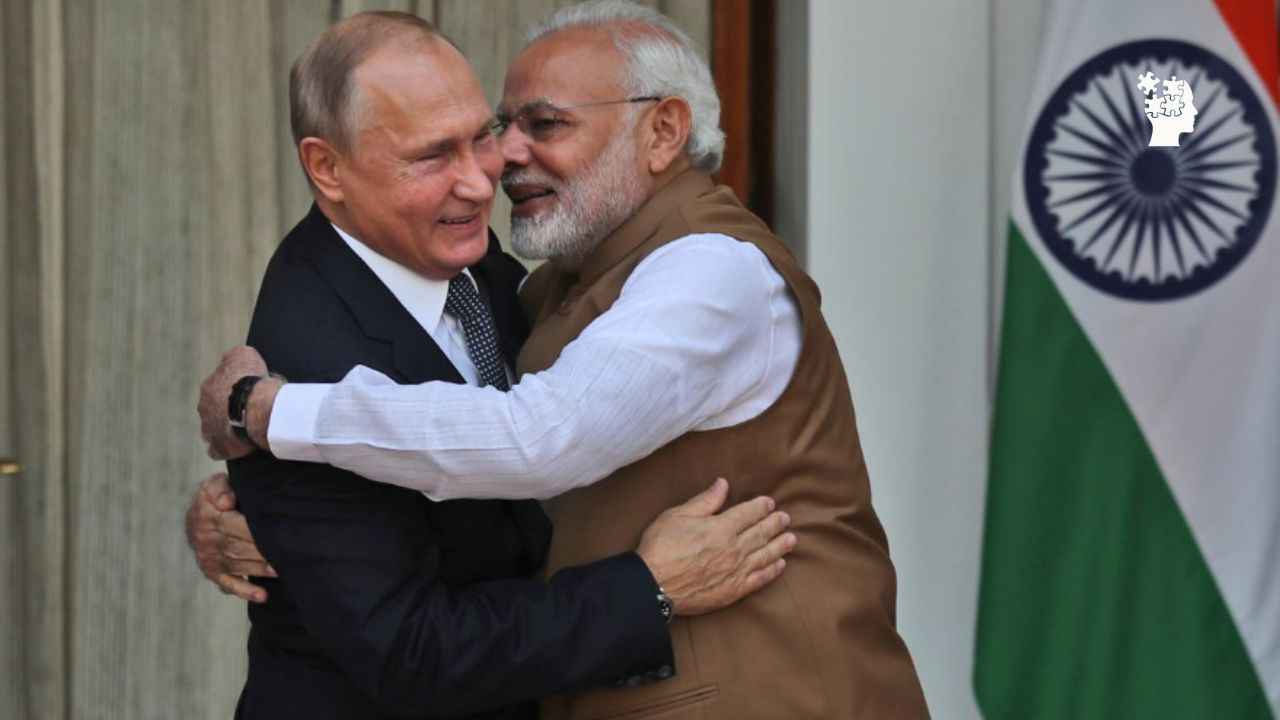
Russian leader’s first visit since Ukraine invasion comes as US sanctions squeeze India’s oil lifeline
Russian President Vladimir Putin touched down in New Delhi Thursday, launching a high-stakes diplomatic mission that will test India’s ability to maintain its prized strategic autonomy while facing mounting pressure from Washington.
The visit marks Putin’s first trip to the Indian capital in four years and comes at a precarious moment for the decades-old partnership. US sanctions are hammering India’s Russian oil imports, which are set to plunge to a three-year low this month, while both nations scramble to preserve economic and defense ties that have defined their relationship for generations.
The Oil Crunch Hits Home
India’s love affair with discounted Russian crude is coming under serious strain. Refiners are expected to import just 1 million barrels per day in December—a dramatic 44% drop from November’s 1.8 million barrels—as companies rush to comply with American sanctions targeting major Russian producers Rosneft and Lukoil.
The pain didn’t stop there. President Donald Trump slapped 50% tariffs on Indian goods in August, with half specifically aimed at punishing New Delhi for buying Russian oil. It’s economic warfare with a clear message: choose a side.
Yet Kremlin spokesperson Dmitry Peskov struck a defiant tone Tuesday, insisting both nations would push forward. “We have to secure our relationship. We have to secure our trade that brings mutual benefit,” he said, acknowledging the intense “pressure over India” from Washington.
Despite the turbulence, Moscow and New Delhi are doubling down on an ambitious target: reaching $100 billion in bilateral trade by 2030, up from roughly $68 billion this fiscal year.
Fighter Jets and Nuclear Reactors on the Shopping List
Friday’s 23rd India-Russia Annual Summit with Prime Minister Narendra Modi isn’t just about oil and trade. Defense cooperation will dominate the agenda, with India eyeing additional S-400 air defense systems and Russia’s cutting-edge Su-57 stealth fighter.
“The Su-57 is the best plane in the world,” Peskov boasted, confirming the advanced aircraft would feature prominently in discussions.
India has already received three of five S-400 squadrons under a hefty $5.4 billion deal inked in 2018, though deliveries have been hampered by the Ukraine conflict. Russia’s State Duma conveniently ratified a military logistics support agreement with India just Tuesday, clearing bureaucratic hurdles ahead of Putin’s arrival.
Beyond weapons, the two nations are expected to sign agreements on nuclear cooperation, including the deployment of small modular reactors at the Kudankulam Nuclear Power Plant in Tamil Nadu. A labor mobility pact is also on the table, designed to ease the flow of skilled Indian workers to Russia as Moscow faces critical labor shortages.
Walking the Tightrope
India finds itself in an increasingly uncomfortable position. For decades, New Delhi has masterfully maintained relationships with rival powers, buying Russian weapons while deepening ties with the United States. That balancing act is getting harder.
Washington wants India as a counterweight to China and expects solidarity on Ukraine. Moscow, isolated and desperate for reliable partners, needs India’s economic lifeline and diplomatic support. Both are squeezing.
The dropping oil imports signal that American pressure is working, at least in the short term. But Putin’s visit—and India’s willingness to host him despite Western criticism—shows New Delhi isn’t ready to abandon Moscow entirely.
As the two leaders meet Friday, the world will be watching to see whether India can continue its high-wire act or whether the weight of global geopolitics finally forces it to lean decisively in one direction.