
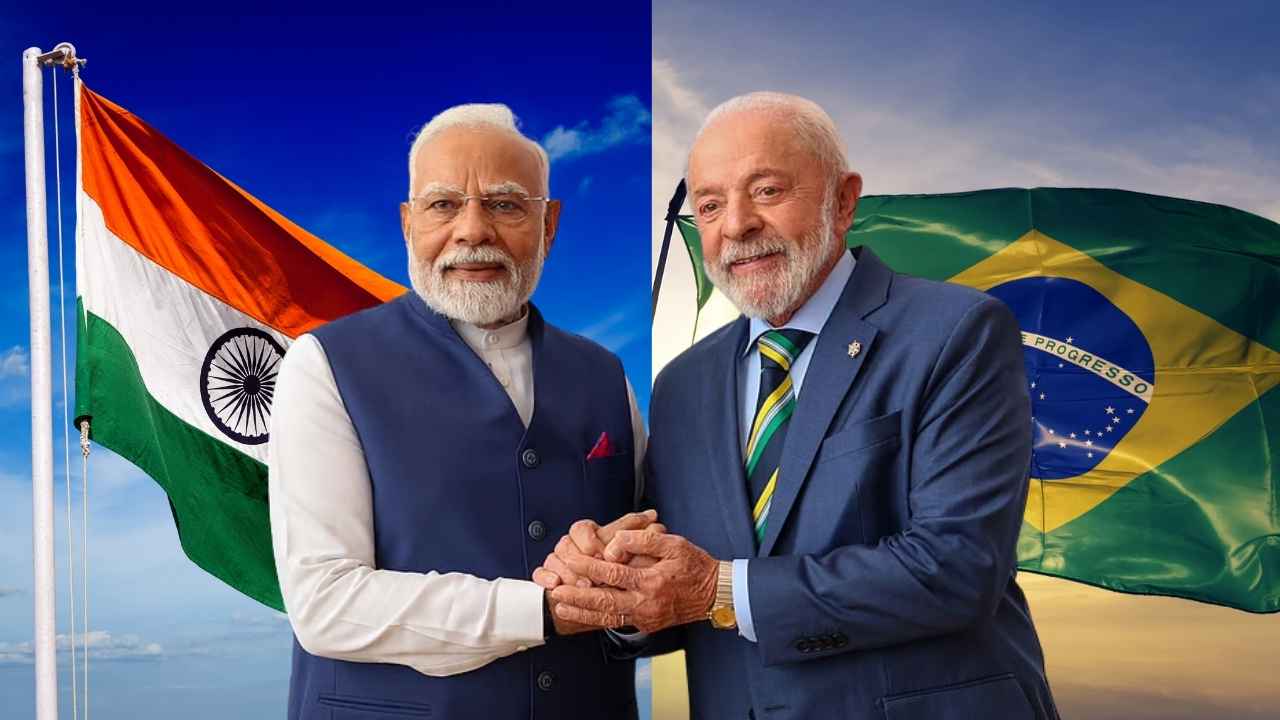
On August 7, 2025, Indian Prime Minister Narendra Modi and Brazilian President Luiz Inácio Lula da Silva held a pivotal phone call, reaffirming their commitment to elevate the India-Brazil Strategic Partnership. This dialogue, coming a day after U.S. President Donald Trump imposed a 50% tariff on Indian goods and similar measures on Brazil, signals a strategic alignment among Global South nations to counter rising U.S. economic pressures. The leaders discussed expanding cooperation in trade, energy, technology, defense, health, and people-to-people ties, with ambitious goals to boost bilateral trade from $12 billion to $20 billion by 2030. This article explores the context, outcomes, and implications of this renewed partnership, set against the backdrop of global trade disruptions.
Table of Contents
Context: U.S. Tariffs and Global South Solidarity
The conversation followed Trump’s executive order on August 6, 2025, which imposed a 25% additional tariff on Indian goods—raising the total to 50%—due to India’s continued purchase of Russian oil, a key revenue source for Moscow’s war in Ukraine. Brazil also faces a 50% tariff, including a 40% levy tied to political issues, making both nations the most affected by Trump’s trade policies. According to Reuters, these tariffs are among the highest imposed by the U.S., prompting concerns about economic fallout. A Nomura study estimates a 0.2-0.4% GDP hit to India, while Brazil anticipates similar economic strain.
The timing of the Modi-Lula call is significant, building on Modi’s state visit to Brazil from July 5-8, 2025—the first by an Indian prime minister in 57 years. During the visit, hosted in Brasília, the leaders signed six agreements covering counter-terrorism, renewable energy, agriculture, health, digital inclusion, and trade. These agreements, announced during the BRICS Summit, underscored a shared vision for South-South cooperation amid escalating U.S.-China trade tensions and protectionist policies. Lula’s office confirmed that the August 7 call addressed the “international economic situation and the imposition of unilateral tariffs,” highlighting a coordinated response to U.S. actions.
Global South Unity and BRICS Coordination
Strengthening the India-Brazil Strategic Partnership
The Modi-Lula dialogue built on the momentum from the July visit, where both leaders established a framework to deepen ties. Modi, in a post on X, expressed gratitude for Lula’s hospitality during the “memorable and meaningful” visit and emphasized a “people-centric partnership” benefiting Global South nations. The leaders committed to expanding cooperation in:
- Trade: Aiming for $20 billion in bilateral trade by 2030, up from $12 billion in 2024, through initiatives like expanding the MERCOSUR-India agreement to reduce tariff and non-tariff barriers. Currently, only 14% of Brazilian exports to India are covered by this agreement.
- Energy and Technology: Collaboration on renewable energy, biofuels, and virtual payment platforms to enhance digital inclusion.
- Defense and Security: Agreements to combat terrorism and strengthen defense ties, including joint military exercises and technology transfers.
- Agriculture and Health: Partnerships to boost agricultural productivity and health innovation, with a focus on affordable pharmaceuticals.
- People-to-People Ties: Cultural exchanges and educational programs to foster mutual understanding, inspired by traditions like India’s Raksha Bandhan festival.
Lula announced a state visit to India in early 2026, and Brazil’s Vice President Geraldo Alckmin is set to lead a delegation to India in October 2025 to advance these goals. Both leaders emphasized multilateralism, pledging to work through BRICS and G20 to counter protectionism and promote global trade equity.
The tariffs have spurred calls for BRICS unity, with Lula advocating for a coordinated response among member states (Brazil, Russia, India, China, South Africa). On August 6, Lula told Reuters he would reach out to Modi and Chinese President Xi Jinping to address Trump’s measures, refusing to “demean” himself by negotiating directly with Trump. The August 7 call with Modi confirmed these discussions, with Lula’s office noting that both leaders explored “possibilities for greater integration” to mitigate tariff impacts.
India’s Ministry of External Affairs called the U.S. tariffs “unfair, unjustified, and unreasonable,” vowing to protect national interests. Brazil echoed this stance, with Lula planning to use World Trade Organization (WTO) mechanisms to challenge the tariffs. Posts on X from Lula and Modi reflect a shared resolve to defend multilateralism and strengthen Global South alliances.
Economic and Geopolitical Implications
The tariffs pose significant challenges for both nations. For India, the 50% tariff (25% baseline plus 25% for Russian oil purchases) threatens exports like electronics, textiles, and gems, though pharmaceuticals are exempt. Brazil faces disruptions to its orange juice, aircraft parts, and other exports, prompting factory closures by companies like Stellantis. Higher consumer prices are expected in both countries, with U.S. consumers also facing increased costs for imported goods.
The India-Brazil partnership offers a counterweight to these pressures. By expanding trade and reducing reliance on U.S. markets, both nations aim to diversify their economies. The MERCOSUR-India agreement could increase Brazilian exports, while India’s expertise in technology and pharmaceuticals complements Brazil’s agricultural and biofuel strengths. Additionally, their BRICS collaboration could reshape global trade dynamics, especially as China faces a 104% U.S. tariff, pushing BRICS nations closer together.
Domestic and International Reactions
In India, Modi’s government faces pressure to protect farmers and exporters, with the prime minister asserting that national interests will not be compromised. In Brazil, Lula’s administration is mobilizing to support businesses and workers, with posts on X emphasizing job protection. Globally, the tariffs have drawn criticism, with China’s Foreign Ministry calling them a violation of WTO rules.
On X, sentiments reflect concern over Trump’s “dangerous game” with major economies like India and Brazil, highlighting their roles as energy and manufacturing powerhouses. Some users note India’s proactive diplomacy, including Modi’s earlier meetings with Trump to secure trade concessions, though these efforts have not fully mitigated the tariff impact.
Conclusion
The Modi-Lula dialogue marks a critical step in strengthening the India-Brazil Strategic Partnership amid unprecedented U.S. tariff pressures. By targeting $20 billion in trade by 2030 and deepening cooperation across multiple sectors, both nations are positioning themselves as leaders of the Global South. Their commitment to multilateralism and BRICS coordination offers a strategic response to global trade disruptions, with implications for economic resilience and geopolitical alignment. As Lula prepares to visit India in 2026, the partnership promises to drive mutual growth and innovation in an era of uncertainty.
For more details on India-Brazil trade initiatives, visit www.mea.gov.in or www.gov.br.
Read More From Wisdom Imbibe:
AI Revolution Unveiled: Is GPT-5 Humanity’s Next Pandora’s Box?