
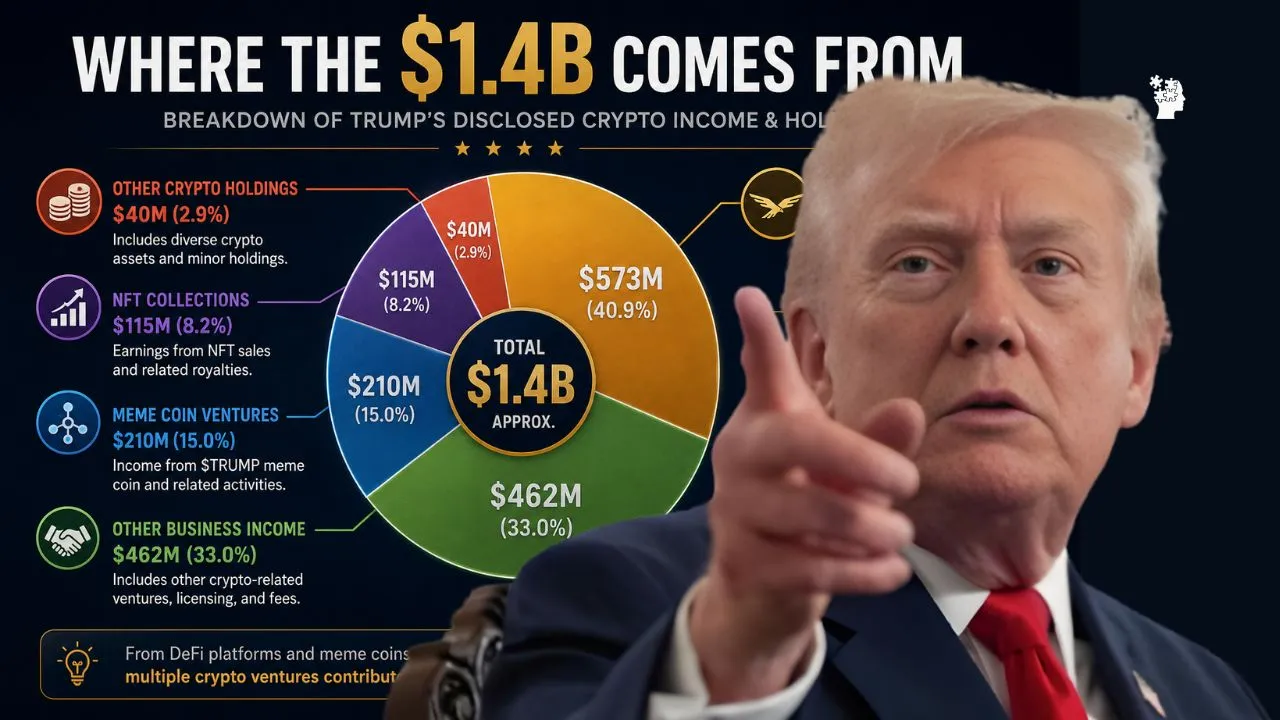
When headlines began reporting that Donald Trump earned around $1.4 billion from cryptocurrency-related ventures, many readers immediately wondered whether the former U.S. president had simply bought Bitcoin years ago—or whether something much larger was happening behind the scenes.
The answer is more complicated.
Rather than coming from a single investment, Trump’s reported crypto wealth is tied to multiple businesses, digital assets, licensing agreements, and ownership stakes that have rapidly expanded over the past two years. His latest financial disclosure has once again placed cryptocurrency at the center of political and financial debate.
Here’s what the filing actually shows, where the money appears to come from, and why investors are paying close attention.
Table of Contents
Did Trump Actually Earn $1.4 Billion?
The figure widely reported in the media refers to the estimated value connected to Trump’s cryptocurrency-related holdings and businesses disclosed in his financial filings.
It does not necessarily mean he received $1.4 billion in cash during a single year.
Financial disclosure forms typically include ownership interests, business valuations, licensing income, digital assets, and other investments. As a result, the reported amount represents the value associated with Trump’s growing crypto portfolio rather than a traditional annual salary.
Understanding this distinction is important because many headlines simplify a much more detailed financial picture.
Where Does Trump’s Crypto Wealth Come From?
Several major crypto ventures have become associated with Trump and his business network.
1. World Liberty Financial
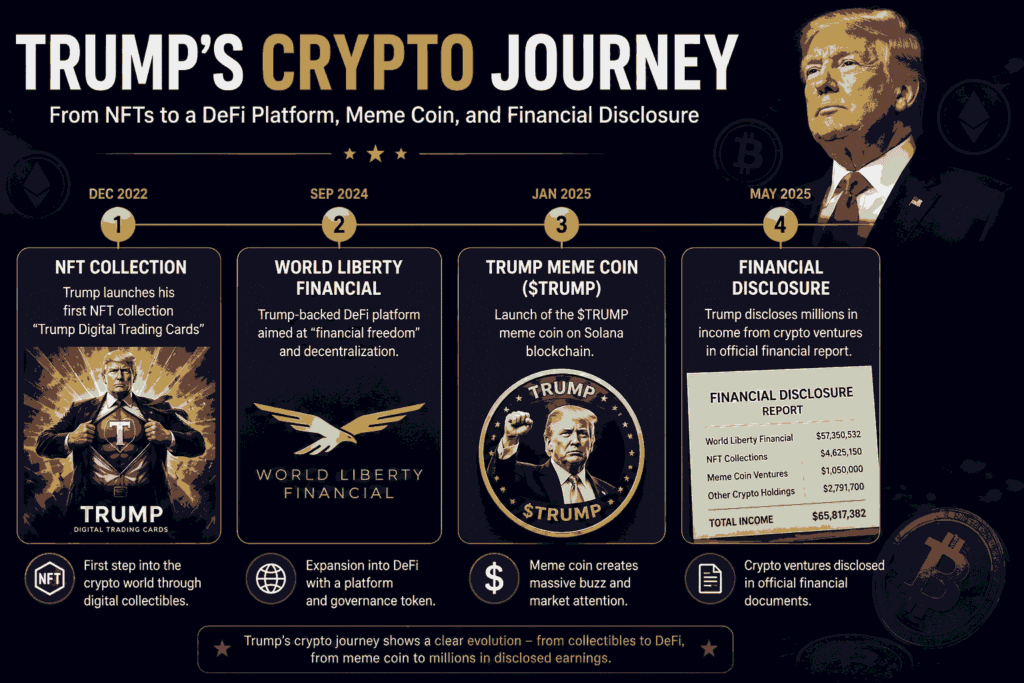
One of the biggest contributors is believed to be World Liberty Financial, a decentralized finance (DeFi) platform linked to the Trump family.
The project has attracted significant investor interest and has reportedly generated substantial revenue through token sales and related crypto products.
If the project’s valuation continues to increase, the value of Trump’s ownership stake also rises.
2. NFT Collections
Trump entered the NFT market in late 2022.
Initially dismissed by many critics, his digital trading cards unexpectedly sold out multiple times.
Subsequent NFT collections generated additional licensing revenue while strengthening his presence within crypto communities.
3. Meme Coins
The Trump brand has also become connected with meme coin activity.
Although meme coins are highly volatile and speculative, they have attracted enormous trading volumes during election cycles, increasing public interest in Trump’s crypto ecosystem.
4. Crypto Licensing Agreements
Unlike traditional crypto founders, Trump has frequently monetized his personal brand through licensing agreements.
These partnerships allow companies to use the Trump name while generating royalty income without requiring day-to-day operational involvement.
Why This Matters Beyond Trump
The story isn’t only about one politician making money.
It reflects a broader shift in how digital assets have entered mainstream finance and politics.
Just a few years ago, cryptocurrencies were largely viewed as speculative investments.
Today, they’re increasingly connected to presidential campaigns, financial disclosures, institutional investors, and regulatory debates.
Whether supporters or critics agree with Trump’s crypto involvement, it signals that digital assets have become impossible for policymakers to ignore.
What Investors Are Watching
Crypto investors are focusing on several key questions following the disclosure.
Regulatory Direction
If Trump’s administration continues supporting crypto-friendly policies, investors expect fewer regulatory hurdles for blockchain companies.
Institutional Adoption
Major investment firms continue expanding cryptocurrency offerings, increasing demand for Bitcoin and other digital assets.
Political Influence
Presidential policies can significantly affect market sentiment, making political developments increasingly relevant for crypto investors.
Could This Affect Bitcoin Prices?
Financial disclosures themselves rarely move markets dramatically.
However, they can reinforce investor confidence when combined with favorable regulatory expectations.
If markets believe future U.S. policies will support digital assets, Bitcoin and other cryptocurrencies may benefit from improved institutional participation.
Still, cryptocurrency remains highly volatile, and investors should avoid making decisions based solely on political headlines.
What Critics Are Saying
Critics argue that political figures involved in crypto businesses could face questions regarding conflicts of interest.
Supporters counter that entrepreneurship and investment are common among public figures and that financial disclosure requirements provide transparency.
These competing viewpoints are likely to remain part of the broader conversation as cryptocurrency becomes more integrated into politics.
Frequently Asked Questions
Did Trump personally receive $1.4 billion in cash?
No. The reported figure represents estimated value associated with disclosed crypto-related holdings, businesses, and ownership interests rather than a direct cash payment.
What cryptocurrencies is Trump connected to?
Trump has been associated with NFT collections, World Liberty Financial, licensing agreements, and crypto-related business ventures.
Is Trump’s crypto business legal?
His financial interests are disclosed under applicable reporting requirements. Any legal or regulatory questions would depend on future investigations or policy decisions, not on the disclosure itself.
Why is this disclosure important?
It highlights how cryptocurrency has become intertwined with politics, finance, and investment, making it an important topic for both voters and investors.
Final Thoughts
Trump’s reported crypto fortune is about much more than a headline-grabbing dollar figure.
It illustrates how digital assets have evolved from niche technology into a major financial and political force. Whether viewed as a successful business expansion or a source of ongoing controversy, the disclosure underscores the growing influence of cryptocurrency in shaping markets, public policy, and investor sentiment.
For readers, the key takeaway is to look beyond the headline. Understanding where the reported wealth comes from—and how financial disclosures work—provides a clearer picture than any single number ever could.
Recommended for you: