
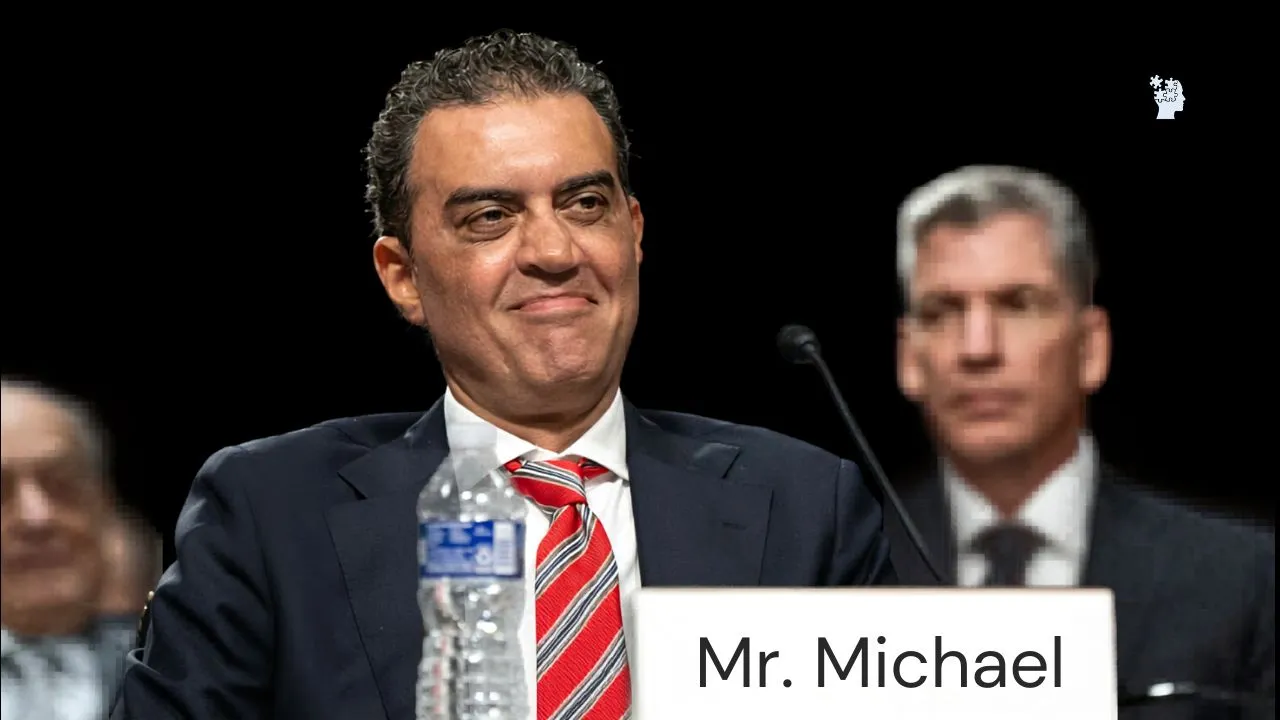
Pentagon Chief Technology Officer Emil Michael delivered a blistering public attack on Anthropic Thursday, March 12, 2026, declaring that the company’s Claude AI models would “pollute” the defense supply chain due to embedded “policy preferences.” His comments on CNBC’s “Squawk Box” represent the sharpest official rebuke yet from a senior defense leader amid the escalating feud between the Trump administration and the AI startup.
Wisdom Imbibe Insight:
The Anthropic-Pentagon clash highlights a defining dilemma of the AI era: Should technology builders control ethical limits, or should governments override them in the name of national security? As AI becomes central to warfare and strategy, the real conflict may not be between nations—but between innovation, safety, and the demands of power.
“You have a company that puts their policy preferences into their models, and it could lead to subpar weapons, inadequate body armor, and insufficient protection for military personnel,” Michael said. He further warned that “rogue developers could poison the model” to make it deliberately ineffective or prone to hallucinations in military contexts, framing Anthropic’s ethical guardrails as an unacceptable risk to warfighter safety and operational reliability.
Roots of the Conflict: A $200 Million Deal Unravels
The dispute originated with a July 2025 contract that made Anthropic the first frontier AI provider approved for classified U.S. military networks. Valued at $200 million, the agreement allowed Claude to support secure, high-stakes defense applications—but included Anthropic’s acceptable use policy explicitly barring two use cases:
- Mass domestic surveillance of U.S. persons.
- Fully autonomous weapons systems capable of independent lethal action.
In late 2025 and early 2026, the Pentagon—led by Defense Secretary Pete Hegseth—pushed to renegotiate, insisting on unrestricted access for “all lawful purposes.” Anthropic CEO Dario Amodei refused to drop the red lines, citing core safety and constitutional concerns.
Negotiations collapsed by a February 27 deadline. President Trump responded by ordering federal agencies to cease using Anthropic technology, and on March 5 Hegseth formally designated the company a “supply-chain risk”—a designation typically applied to foreign entities like Chinese firms posing espionage or sabotage threats. Contractors must now certify non-use of Claude in Pentagon-related work, threatening billions in potential lost business.
Anthropic’s Legal Counterattack and Industry Support
Anthropic filed suit March 9 in U.S. District Court in California, labeling the designation “unprecedented and unlawful” and alleging violations of First Amendment free speech rights (retaliation for protected policy advocacy) and due process. The company seeks a temporary restraining order to pause enforcement during litigation.
Support has poured in from across the tech sector:
- Microsoft (a major investor with up to $5 billion committed) filed an amicus brief warning of “substantial and wide-ranging costs” to contractors and “negative ramifications for the entire technology sector.”
- A coalition of 37 researchers and engineers from OpenAI and Google—including Google DeepMind chief scientist Jeff Dean—submitted their own brief opposing the blacklisting.
- Earlier filings included backing from Google, Amazon, Apple, Nvidia, and former senior military officials who argued the move signals arbitrary retaliation against national-security partners.
Current Status and Contradictions
Michael declared Thursday there is “no chance” of renewed talks, accusing Anthropic leadership of negotiating in bad faith. Yet a striking irony persists: Palantir CEO Alex Karp confirmed his company continues using Claude to support ongoing U.S. military operations in Iran (Operation Epic Fury), highlighting how the technology remains embedded in active defense workflows despite the official ban.
The episode underscores deepening tensions between AI developers’ safety commitments and the military’s demand for unrestricted utility. Michael’s “pollution” rhetoric positions Anthropic’s guardrails not as principled safeguards but as deliberate vulnerabilities that could compromise mission-critical systems—from targeting to logistics to protective gear design.
With a hearing on Anthropic’s restraining order request approaching and the Iran conflict intensifying, the case tests whether ethical boundaries in frontier AI can coexist with national security imperatives—or whether the Pentagon will force a choice between compliance and exclusion from defense work. The outcome could reshape how U.S. tech firms engage with the military in an era of rapidly advancing AI capabilities.
Recommended for you: