
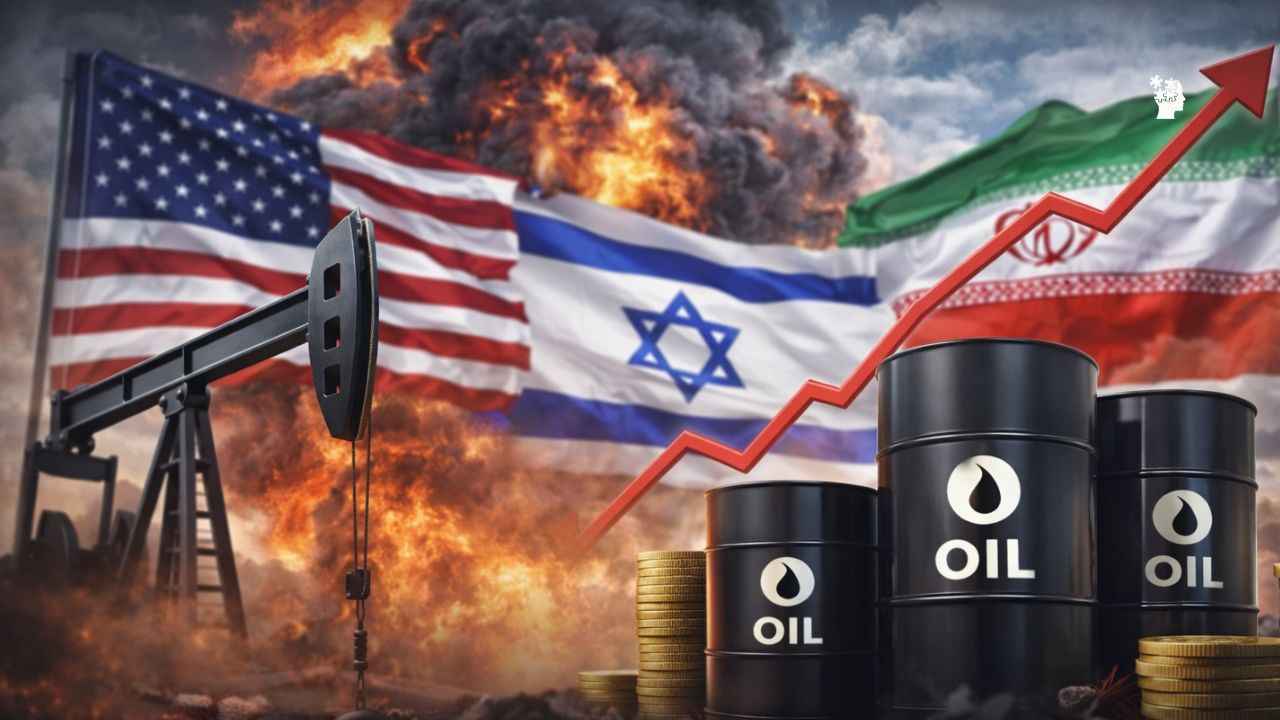
The joint U.S.-Israeli military operation against Iran, dubbed Operation Epic Fury and launched on February 28, 2026, has triggered significant turbulence in global energy markets. As the conflict enters its sixth day (as of March 4, 2026), Iranian retaliatory actions—including missile and drone strikes on regional targets and attacks on shipping—have effectively disrupted traffic through the Strait of Hormuz, a critical chokepoint for roughly 20% of the world’s seaborne oil trade (about 18-20 million barrels per day) and a substantial portion of liquefied natural gas (LNG).
Wisdom Imbibe Insight:
Energy markets don’t wait for wars to end — they price the fear instantly. When a chokepoint like Hormuz trembles, oil becomes a geopolitical barometer. The lesson is timeless: supply chains are strategy. In a hyperconnected world, regional conflict quickly becomes global inflation, proving that stability itself is an economic asset.
This disruption, combined with fears of escalation, has driven sharp increases in oil and gas prices, heightened volatility, and prompted concerns about broader economic ripple effects.
Table of Contents
Oil Price Surge and Key Benchmarks
Crude oil prices have rallied aggressively since the strikes began:
- Brent crude (global benchmark) has climbed roughly 15-17% from pre-conflict levels (around $72-73 per barrel on February 27), trading in the $80-85 range in recent sessions. It briefly topped $82-85 amid opening spikes and fears of prolonged closure, marking highs not seen since 2024-2025.
- West Texas Intermediate (WTI) (U.S. benchmark) has risen similarly, surging 7-10% in single sessions to reach the $72-76 level, with peaks near $75-76.
Analysts note initial jumps of 8-13% when markets reopened post-weekend, with some forecasting potential climbs to $90-100+ per barrel if disruptions persist beyond weeks. However, prices have shown partial retracements on hopes of limited duration or OPEC+ supply responses.
The surge reflects a risk premium baked into futures—traders demanding extra compensation for supply threats—estimated at $10-20 per barrel by firms like Goldman Sachs.
Strait of Hormuz: The Core Disruption
The Strait of Hormuz has become the flashpoint:
- Iranian forces have attacked tankers, damaged vessels, and issued threats to target any passing ships, leading to a de facto halt in traffic.
- Reports indicate hundreds of ships stranded or rerouted, with insurance costs skyrocketing (supertanker rates hit all-time highs) and some insurers withdrawing war-risk coverage.
- At least several tankers damaged, crew casualties reported, and major facilities (e.g., Saudi Arabia’s Ras Tanura refinery) shut or impacted by related strikes/drone attacks.
- While Iran has not formally declared a full blockade (and some officials deny intent), the practical effect mirrors a closure, forcing rerouting via longer, costlier paths (e.g., around Africa) or halting flows from Gulf producers like Saudi Arabia, UAE, Iraq, and Qatar.
This chokepoint handles oil from major exporters; even partial or threatened disruptions historically cause outsized price reactions due to fears of cascading shortages.
Broader Energy and Economic Fallout
- Natural gas prices have spiked even more dramatically in some regions—European and Asian LNG up 30-45%—as Qatar (a top exporter) faces production halts or rerouting challenges.
- Gasoline and consumer impacts: Retail fuel prices are expected to rise soon (U.S. estimates suggest ~2.5 cents per gallon per $1 oil increase), adding inflationary pressure amid already elevated energy costs.
- Market reactions: Equities dipped initially (e.g., U.S. stocks fell 1-2% in sessions), with flight-to-safety boosting gold/safe havens. Longer disruptions could tighten global balances, raise recession risks, and force central banks to weigh inflation vs. growth.
- Mitigating factors: OPEC+ (including Saudi Arabia/UAE) has signaled potential output increases to offset losses. Global spare capacity, U.S. production dominance via shale, and strategic reserves provide buffers. Some analysts argue the surge may moderate if the conflict remains contained (no full regional infrastructure destruction) or resolves quickly—echoing past flare-ups where prices spiked but retreated.
Outlook and Uncertainties
The market’s response hinges on duration and scope:
- Short conflict → Limited, temporary premium (prices stabilize in high $70s-$80s).
- Prolonged escalation → Severe shock, with $100+ Brent possible, global inflation spikes, and supply chain chaos.
- No full closure yet, but ongoing threats and attacks keep volatility elevated.
As President Trump has indicated the campaign could last weeks (or longer) to achieve goals like destroying Iran’s missile/navy capabilities, energy traders remain on edge. The conflict underscores the Strait of Hormuz’s enduring vulnerability and how Middle East geopolitics can swiftly reverberate through global economies—driving higher costs for fuel, transport, and goods worldwide. Investors and policymakers are closely monitoring for signs of de-escalation or further Iranian actions that could tip the balance toward a more severe energy crisis.
Recommended Articles :