
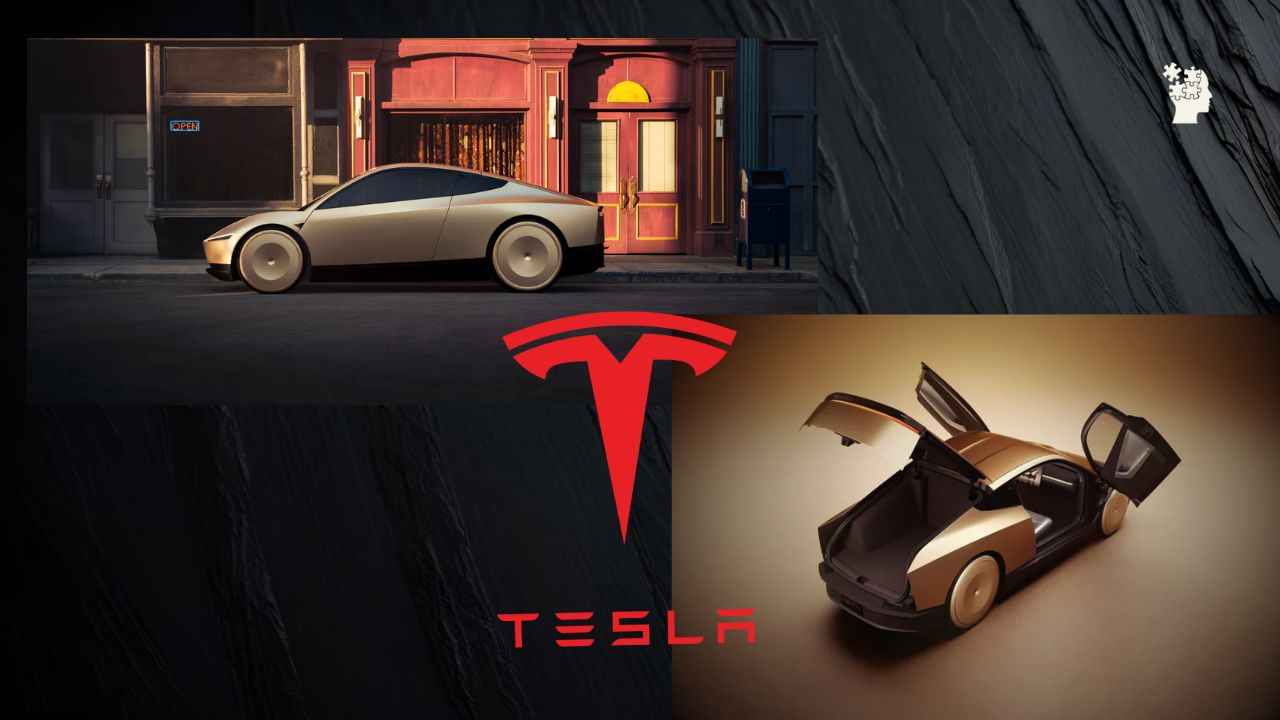
As of October 2025, Tesla’s Cybercab—officially part of the company’s Robotaxi initiative—represents a bold leap into fully autonomous transportation. Unveiled in prototype form at the “We, Robot” event on October 10, 2024, the Cybercab is designed exclusively for unsupervised self-driving, aiming to revolutionize urban mobility by offering safe, affordable, and efficient rides without human intervention. Below, I’ll break down the key details based on Tesla’s announcements, executive statements, and recent developments.
Table of Contents
Design and Features
The Cybercab is a compact, two-passenger vehicle engineered from the ground up for autonomy, stripping away traditional driving elements to prioritize space, efficiency, and cost. Here’s a snapshot of its standout specs:
| Feature | Details |
|---|---|
| Seating & Layout | Two seats in a single row; lounge-like interior with ample legroom and a large cargo area behind the seats. No rear seats or traditional dashboard. |
| Doors & Access | Butterfly (wing-like) doors for easy entry/exit; power-operated trunk for storage. |
| Controls | No steering wheel, pedals, side mirrors, or rearview mirror—input via a 20.5-inch central touchscreen or voice commands. |
| Dimensions | Approximately 14 feet long; smaller than a Model 3, with larger rear wheels for stability and unique wheel covers. |
| Lighting | Front and rear light bars (similar to Cybertruck); no rear window for a sleek, futuristic profile. |
| Interior Tech | Large entertainment screen for navigation, media (e.g., streaming, Tesla Arcade games), and climate control. Automatically syncs user preferences like temperature and playlists via the Tesla app. |
| Body Materials | Aluminum panels painted silver (not stainless steel exoskeleton); optimized for lightweight efficiency. |
The design emphasizes a “robot-like” form factor, with prototypes spotted in testing (e.g., at Fremont and Giga Texas) sometimes including temporary steering wheels and mirrors for safety validation. Production models will omit these entirely, focusing on full autonomy.
Autonomy and Safety
Tesla’s “vision-only” approach powers the Cybercab using cameras and AI—no lidar or radar required. It runs on the upcoming AI5 computer, described as “over-specced” for future-proofing, with computing power distributed across the fleet like a cloud network. Key autonomy highlights:
- Full Self-Driving (FSD) Integration: Unsupervised FSD rides began piloting in California and Texas in 2025, with the Cybercab achieving 99.7% reliability in urban tests. Existing Tesla vehicles (Hardware 3 or 4) can join the Robotaxi network without retrofits.
- Safety Claims: Up to 30x safer than human drivers, based on Tesla’s data from millions of FSD miles. Features include automatic rerouting for detours (with explanations in the app) and remote human override for edge cases like heavy weather.
- Service Model: Users hail via the Robotaxi app (now available for download and waitlist signup), with flat fees starting at $4.20 for early Austin rides. The geofenced area in Austin expanded 4x since launch in June 2025, outpacing competitors like Waymo.
Expansion is underway: Launched in Austin in June 2025, with Bay Area rollout expected soon after regulatory nods. By October 2025, the network covers 23 cities, targeting 27 million users. Elon Musk has teased international growth, like a Paris showcase, once approvals align.
Performance and Charging
- Range & Efficiency: Up to 300 miles per charge; operates at ~5.5 miles per kWh, with a top speed capped at 85 mph for urban focus.
- Charging: Exclusively wireless inductive—no plugs or ports. Vehicles auto-align at “Mothership” hubs for charging and cleaning by robotic arms (e.g., vacuuming interiors).
- Operating Cost: ~20 cents per mile at scale, cheaper than buses or human-driven rides.
Production and Pricing
- Timeline: Volume production ramps in 2026 at Giga Texas, aiming for 2 million units annually across factories. Crash testing is intensifying as of October 2025. Musk’s optimistic forecasts have faced delays before (e.g., original 2020 goal), but 2026 remains the target—potentially slipping to 2027.
- Price: Under $30,000, with rumors of a $25,000 entry point to undercut ride-hailing giants like Uber. No variant with manual controls planned—it’s Robotaxi-only.
Broader Impact and Challenges
The Cybercab isn’t just a car; it’s the backbone of Tesla’s Robotaxi network, where owners can add personal vehicles to earn passive income. Musk envisions it transforming cities—fewer traffic deaths, reduced congestion, and an “age of abundance” paired with Optimus robots. Early user feedback praises the smooth, safe rides, though app tweaks (e.g., pin drops, detour explanations) are ongoing.
Challenges persist: Regulatory hurdles slow expansion (e.g., Illinois status unclear), and public trust is mixed—71% of Americans in a 2024 poll hesitated to ride in robotaxis. Competitors like Waymo are ahead in miles driven, but Tesla’s scale (leveraging existing fleets) could dominate.
In short, the Cybercab is Tesla’s bet on AI-driven mobility: affordable, autonomous, and inevitable. As Musk put it, “The future should look like the future.” For updates, download the Robotaxi app and join the waitlist at tesla.com/robotaxi.