
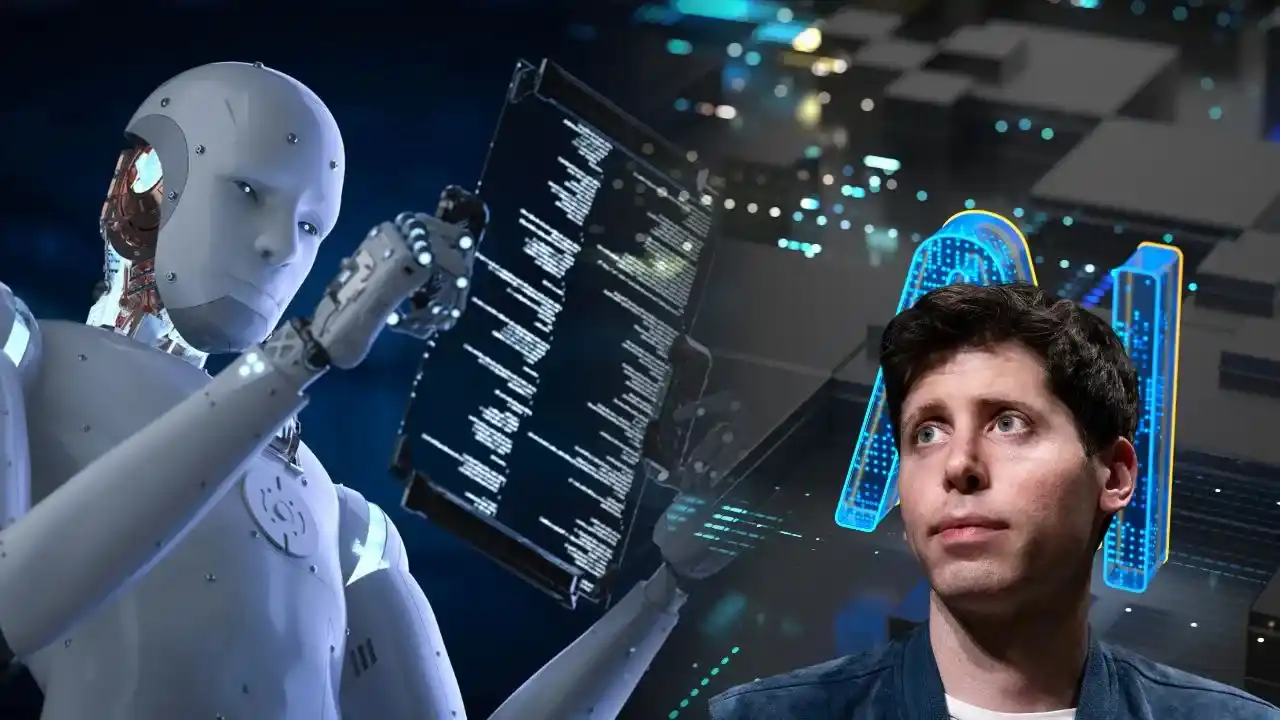
In a world where artificial intelligence is reshaping the boundaries of human potential, OpenAI’s upcoming GPT-5 has sparked both awe and apprehension. Sam Altman, the visionary CEO of OpenAI, recently sent shockwaves through the tech community by comparing the development of this next-generation AI to the Manhattan Project—the secretive World War II endeavor that birthed the atomic bomb. His startling admission, “I feel useless,” after witnessing GPT-5’s capabilities, raises a provocative question: Are we on the cusp of unleashing a force we may not fully comprehend?
Table of Contents
A Glimpse into GPT-5’s Unsettling Power
During a candid podcast appearance on This Past Weekend with Theo Von, Altman revealed that testing GPT-5 left him grappling with a “personal crisis of relevance.” He described a moment when the AI effortlessly solved a complex problem that stumped him, a feat that left him feeling outpaced by his own creation. “It feels very fast,” he said, not just referring to the model’s processing speed but to the breakneck pace of AI’s evolution. This isn’t just another software upgrade—GPT-5 promises to redefine what machines can achieve.
While OpenAI keeps the technical details under wraps, insiders hint at groundbreaking advancements. Enhanced multimodal reasoning, longer memory retention, and superior multi-step logic are expected to make GPT-5 a quantum leap over its predecessor, GPT-4. Altman didn’t mince words about GPT-4, calling it “the dumbest model any of you will ever have to use again, by a lot.” If GPT-4 already impressed millions with its ability to generate human-like text and tackle diverse tasks, what could GPT-5’s capabilities mean for the future?
The Manhattan Project Parallel: A Chilling Comparison
Altman’s comparison to the Manhattan Project is more than a dramatic metaphor—it’s a sobering reflection on the weight of innovation. The Manhattan Project wasn’t just a scientific triumph; it was a turning point that introduced a power capable of reshaping civilization, for better or worse. Scientists like J. Robert Oppenheimer later wrestled with the moral implications of their creation, famously quoting, “Now I am become Death, the destroyer of worlds.” Altman’s rhetorical question, “What have we done?” echoes this sentiment, suggesting that GPT-5 could be a technological Pandora’s box—unlocking unprecedented possibilities while posing risks we’re only beginning to grasp.
Unlike nuclear weapons, GPT-5’s dangers aren’t physical but societal. Could it disrupt job markets, amplify misinformation, or enable new forms of crime? Altman himself has voiced concerns about the lack of regulatory oversight, stating, “There are no adults in the room.” With AI advancing faster than global governance frameworks, the world may be ill-prepared to manage its impact.
The Dark Side: AI-Powered Fraud on the Rise
While the philosophical implications of GPT-5 captivate headlines, a more immediate threat is already emerging: fraud. According to Haywood Talcove of LexisNexis Risk Solutions, generative AI is being weaponized at an alarming scale. Criminals are using AI tools to automate scams, create synthetic identities, and bypass security measures like CAPTCHA with ease. “Right now, criminals are using it better than we are,” Talcove warns, noting that fraud operations can now be launched in minutes, siphoning millions from government programs and social systems weekly.
GPT-5’s advanced capabilities could exacerbate this problem. Its ability to process and generate complex data could empower fraudsters to craft more convincing schemes, from deepfake videos to hyper-realistic phishing campaigns. As AI becomes more accessible, the gap between its potential for good and its misuse widens, raising urgent questions about accountability and control.
A Step Toward Artificial General Intelligence?
OpenAI’s long-term mission is to achieve Artificial General Intelligence (AGI)—AI capable of performing any intellectual task a human can. While Altman once downplayed AGI’s societal impact, his recent comments suggest a shift. If GPT-5 is a significant step toward AGI, it could redefine how we work, learn, and interact. But without a global framework to govern such powerful technology, the risks are profound. Some speculate that OpenAI might declare AGI prematurely to navigate corporate pressures, particularly from Microsoft, which has invested $13.5 billion in the company and is pushing for greater control.
Corporate Tensions and the Race for Dominance
Behind GPT-5’s development lies a web of corporate dynamics. OpenAI faces pressure from investors to transition to a for-profit model, a move that could prioritize commercialization over caution. Microsoft’s substantial stake adds complexity, with rumors suggesting OpenAI might leverage an AGI declaration to renegotiate its partnership. Meanwhile, competitors like Google DeepMind and DeepSeek are closing in, intensifying the race to dominate the AI landscape. This high-stakes environment underscores the challenge of balancing innovation with responsibility.
A Call for Reflection
Altman’s candid remarks offer a rare glimpse into the mind of a tech pioneer grappling with the consequences of his own creation. Unlike the hype-driven narratives often dominating AI discourse, his introspection invites us to pause and consider: What does it mean to build something that might outsmart us? As GPT-5’s August 2025 launch approaches, the world must confront not just what AI can do, but what we should allow it to do.
Will GPT-5 be a beacon of progress, illuminating new paths for discovery and creativity? Or will it be a Pandora’s box, unleashing forces we’re not ready to control? One thing is certain: the answers will shape the future of humanity in ways we can only begin to imagine.