
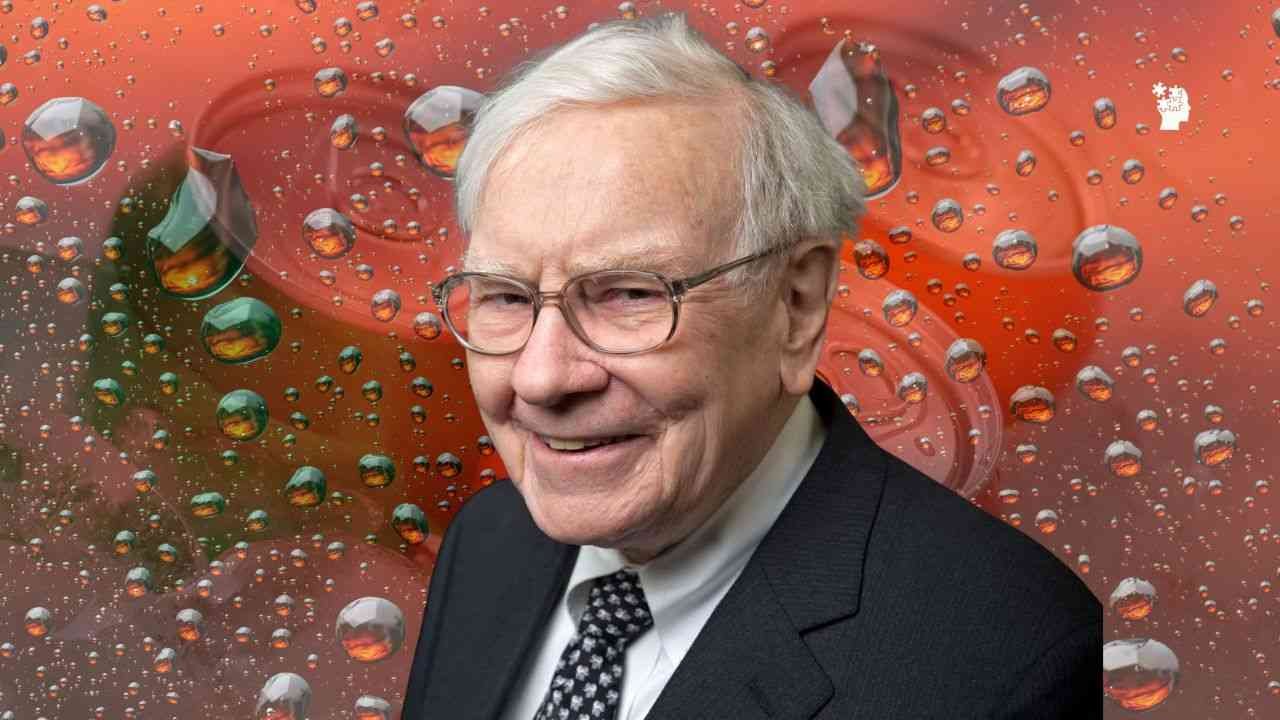
Warren Buffett has spent decades explaining how patience, discipline and rational decision-making can build extraordinary wealth. But one of his most unusual personal habits has little to do with financial discipline: his reported refusal to drink plain water.
The 96-year-old investing legend reportedly told billionaire investor Bill Ackman that he had not drunk water in 48 years. Instead, Buffett chose his preferred beverage, Cherry Coke.
The extraordinary claim resurfaced after Ackman recalled a dinner with Buffett during an appearance on the Equity Mates Investing podcast. The story has attracted attention because it offers another glimpse into the unconventional lifestyle of a man whose investment philosophy has influenced generations.
But there is more to this story than an unusual beverage preference. Buffett’s love of cola stretches back decades, includes a surprising switch from Pepsi, and has an interesting connection to Berkshire Hathaway’s investment in The Coca-Cola Company.
There is also an important question worth asking: Does Buffett’s experience mean that drinking soda instead of water is harmless?
The answer requires separating an entertaining billionaire anecdote from what medical and nutritional evidence actually tells us.
Table of Contents
1. The dinner conversation that revealed Buffett’s unusual drinking habit
The latest attention began with a dinner anecdote shared by Bill Ackman.
According to Ackman’s recollection on the Equity Mates Investing podcast, Buffett visited his home for dinner several years ago. Knowing about Buffett’s preference for Coca-Cola, Ackman had stocked up on Cherry Coke before his guest arrived.
When they sat down for dinner, Ackman offered Buffett a choice between still and sparkling water.
Buffett declined.
Curious about the refusal, Ackman asked whether he drank water at all.
His reported response was remarkable:
“Bill, I haven’t had water in 48 years.”
The anecdote is particularly striking because Buffett was not simply refusing water at one particular meal. His reported answer suggested a habit that had continued for nearly five decades.
However, there is an important distinction: this is Ackman’s recollection of a conversation that happened years earlier, not a newly recorded medical or dietary assessment of Buffett.
Neither the precise date of the dinner nor the full details of Buffett’s daily fluid consumption were established in the account. Therefore, the 48-year statement should be treated as a reported remark rather than independently verified proof that he has never consumed water in any form.Company Business News+2
2. Five cans of Coca-Cola a day: Buffett once revealed how much he drinks
Buffett’s preference for soda is hardly a new revelation.
In a 2015 interview with Fortune magazine, he offered an unusually candid description of his daily consumption.
He said:
“I’m one quarter Coca-Cola.”
Buffett explained that if he consumed approximately 2,700 calories per day, around a quarter came from Coca-Cola beverages.
He also revealed that he drank at least five 12-ounce servings daily.
That is an extraordinary amount of soda for one person’s daily routine.
According to the interview, his typical schedule involved:
- Three Coca-Cola servings during the day.
- Two more servings in the evening.
- Regular Coca-Cola at his Berkshire Hathaway office.
- Cherry Coke at home.
Buffett even described having a Coke with breakfast, sometimes alongside his favourite potato sticks.
His explanation for the unusual diet was characteristically humorous.
He said he had examined actuarial tables and noticed that six-year-olds had the lowest death rates. His conclusion?
He decided to eat like a six-year-old.
The comment was a joke, not a scientifically supported longevity strategy. Nevertheless, it captures Buffett’s relaxed attitude towards food and his refusal to follow conventional expectations about how a billionaire should eat.Fortune+2
3. From Pepsi to Cherry Coke: The surprising story behind his 48-year switch
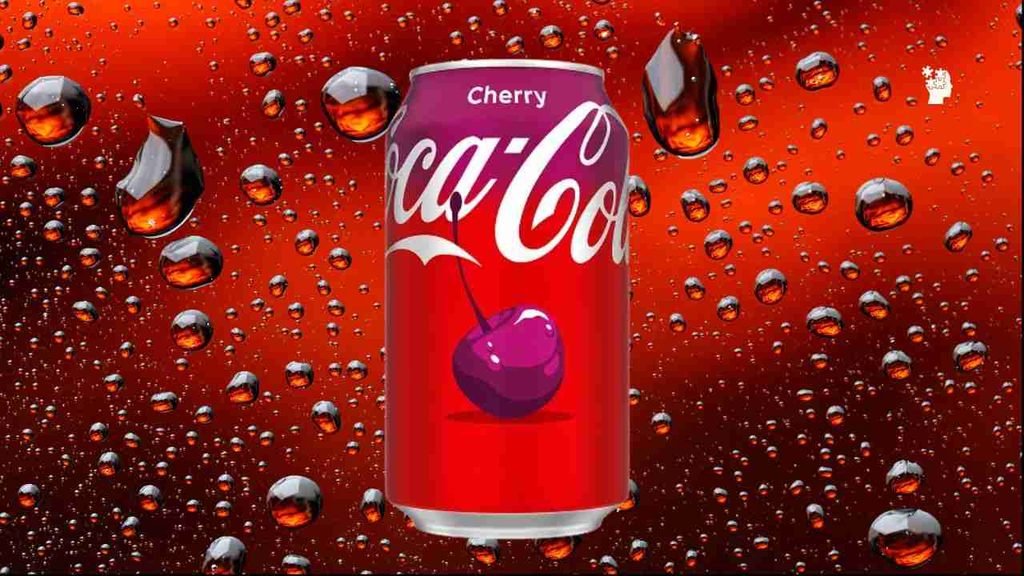
One of the most interesting details is that Buffett was not always a Coca-Cola enthusiast.
For decades, he was loyal to Pepsi.
His son Howard reportedly earned him the childhood nickname “Pepsi Warren”. A childhood friend of Howard, Jim Ross, recalled seeing Buffett come downstairs in the middle of the night wearing a bathrobe and drinking Pepsi.
The relationship reportedly went back to Buffett’s childhood.
However, in 1986, something changed.
At the Berkshire Hathaway annual meeting that year, Buffett revealed that he was moving away from Pepsi after approximately 48 years of loyalty.
The reason was surprisingly simple: he had developed a taste for Cherry Coke.
The change was connected to Don Keough, then a senior Coca-Cola executive who had sent Buffett early samples of the new Cherry Coke formula.
Buffett reportedly loved the drink immediately.
He even wrote to Keough suggesting that Coca-Cola could save money on market testing because he was convinced the product would succeed.
The anecdote illustrates something important about Buffett: despite his reputation for being analytical and financially disciplined, some of his strongest preferences are remarkably simple.
He liked a product, believed in its potential and was happy to make it part of his daily routine.
His decision also coincided with a major development in Coca-Cola’s relationship with one of the world’s most influential investors.NDTV Profit+1
4. The unexpected connection: Buffett’s favourite drink became one of his greatest investments
There is an interesting irony in Buffett’s relationship with Coca-Cola.
The man who enjoys drinking its products also helped make the company one of Berkshire Hathaway’s most famous investments.
Berkshire began building its Coca-Cola position in 1988. The investment was completed over several years, with the company eventually accumulating 400 million shares at a total cost of approximately $1.3 billion.
Buffett later described the investment as an example of the advantages of holding excellent businesses for long periods.
In his 2022 shareholder letter, he revisited the investment’s history. He noted that Berkshire’s Coca-Cola position had cost $1.3 billion and that the annual dividend income had grown from $75 million in 1994 to $704 million in 2022.
That is an important part of the story.
Buffett did not simply develop a personal attachment to a popular beverage. He also recognised Coca-Cola as a powerful consumer business with a global distribution network, a recognisable brand and products that people repeatedly purchase.
The investment illustrates several principles associated with his philosophy:
- Brand loyalty: Strong consumer brands can maintain demand across generations.
- Repeat purchases: Everyday products can generate recurring revenue.
- Long-term ownership: Investors do not necessarily need to sell an excellent business simply because its market value increases.
- Dividend growth: A successful company can reward long-term shareholders through increasing cash distributions.
According to Coca-Cola’s 2025 shareholder information, Berkshire held 400 million shares, representing approximately 9.29% of the company at the end of 2024.
The distinction is worth making: Buffett’s personal preference for Cherry Coke and Berkshire’s investment decision are related parts of his history, but liking a product alone does not establish why an investment is attractive.Annual Reports+2
5. Can Coca-Cola really replace drinking water? What science says
This is where Buffett’s unusual habit becomes more than an entertaining story.
There is a scientific distinction between consuming fluids and drinking plain water.
The human body needs water to regulate temperature, transport nutrients, support digestion and remove waste. However, water does not have to come exclusively from a glass of plain drinking water.
The National Academies of Sciences explains that total water intake includes:
- Plain drinking water.
- Water contained in other beverages.
- Water naturally present in food.
This means beverages such as milk, tea, coffee and even soft drinks contribute to overall fluid intake.
Consequently, someone who rarely drinks plain water is not necessarily dehydrated.
That distinction is particularly important when interpreting Buffett’s reported statement.
If he drinks Coca-Cola regularly and consumes foods containing water, he is still obtaining fluids. His reported avoidance of plain water does not mean his body functions without water.
However, there is a much bigger issue: A beverage can contribute to hydration without being a healthy everyday choice.
The US Centers for Disease Control and Prevention (CDC) explains that drinking enough water supports normal body functions and helps prevent dehydration. It also recommends choosing water instead of sugary beverages because water contains no calories.
Regular sugary drinks provide calories without supplying the nutritional benefits associated with many other beverages.
In other words, Coca-Cola may contribute to fluid intake, but that does not make it nutritionally equivalent to water.National Academies+2
6. Five cans a day: The sugar numbers are more surprising than the water claim
Perhaps the most important nutritional detail is not the absence of plain water but the amount of sugar Buffett once reported consuming through Coca-Cola.
Consider the nutritional information for a standard 12-ounce can of regular Coca-Cola in the US.
What Five Cans of Coca-Cola Could Add Up To
Five standard 12-ounce cans of regular Coca-Cola could deliver a surprisingly large amount of sugar and calories.
| Consumption | Sugar | Calories |
|---|---|---|
| 1 can | 39 g | 140 |
| 5 cans (1 day) | 195 g | 700 |
| 5 cans daily (5 days) | 975 g | 3,500 |
| 5 cans daily (1 year) | 71.2 kg | 255,500 |
Source: Coca-Cola – Official Product Nutrition Information .
The numbers deserve attention.
The World Health Organization recommends that adults and children reduce free sugar intake to less than 10% of their total daily energy intake. It suggests that reducing it below 5% can provide additional health benefits.
For someone consuming 2,700 calories daily:
- 10% of energy from sugar is equivalent to approximately 67.5 grams.
- 5% is equivalent to approximately 33.75 grams.
- Five standard cans of regular Coca-Cola would provide approximately 195 grams of sugar.
That would be nearly three times the WHO’s 10% benchmark.
The CDC also identifies frequent consumption of sugar-sweetened beverages as being associated with several health concerns, including weight gain, obesity, type 2 diabetes, heart disease, fatty liver disease and dental problems.
These are population-level health associations, not a diagnosis of Buffett’s health.
Still, they demonstrate why his personal routine should not be interpreted as a nutritional recommendation.World Health Organization+2
7. Why Buffett’s longevity does not prove his diet is healthy
This is perhaps the most important angle that gets lost when stories about Buffett’s lifestyle go viral.
People see a 96-year-old billionaire who reportedly drinks several cans of Coca-Cola daily and may conclude that conventional dietary advice is exaggerated.
But that would be a mistake.
An individual’s experience cannot establish that a particular habit is safe for everyone.
Human longevity is influenced by numerous factors, including genetics, physical activity, overall dietary patterns, medical care, sleep, environment and socioeconomic circumstances.
Even when someone maintains an unusual habit for decades, it does not establish that the habit caused their longevity or that it carries no long-term risks.
There is also a fundamental problem with survivorship bias.
We hear about the person who followed an unconventional routine and lived to an advanced age. We rarely hear comparable stories about people who followed similar habits but experienced serious health consequences.
Buffett’s story is memorable precisely because he is an exceptional individual. It should not become a substitute for evidence-based health advice.
There is another distinction worth remembering: Buffett has spoken publicly about enjoying his food and drinks. That does not mean every aspect of his lifestyle is known or that his complete health history can be assessed from interviews.
The sensible conclusion is not that his habits are harmless. It is that individual experiences and population-level medical evidence answer different questions.
8. Buffett’s real secret may have less to do with Cherry Coke than people think
There is a reason Buffett’s lifestyle continues to attract attention.
His food preferences appear almost deliberately ordinary for someone with extraordinary wealth.
He has spoken about enjoying McDonald’s breakfasts, hamburgers, hot dogs, potato sticks, ice cream and Coca-Cola.
He has also joked about his preference for simple pleasures rather than following an elaborate diet.
But there is another side to his public persona that deserves attention: his approach to time.
Buffett built his reputation through decades of studying businesses, reading, thinking independently and making long-term decisions.
His investment philosophy is not based on finding a shortcut to success. It is built around patience, consistency, understanding businesses and avoiding unnecessary complexity.
That is a much more meaningful lesson to take from his life than copying his breakfast or beverage choices.
His investment discipline and his dietary preferences are separate matters. One can be worth studying without treating the other as a model.
9. What readers should actually learn from the Buffett story
Buffett’s reported water-free claim raises three useful lessons.
First, hydration and nutrition are not the same thing.
A drink can contribute to fluid intake while still containing excessive sugar or calories. Getting enough fluid does not automatically mean someone is following a healthy diet.
Second, success in one area does not make someone an expert in every area.
Buffett’s extraordinary investment record does not make his personal food preferences scientifically transferable to other people.
Third, long-term habits deserve more attention than celebrity anecdotes.
A routine that appears harmless in one person’s life may carry very different consequences for someone else.
For everyday health, choosing water regularly and limiting sugary drinks remains a much more evidence-based approach than attempting to reproduce a billionaire’s unusual habits.
10. The bigger irony: Buffett’s favourite drink is also a symbol of his investing philosophy
There is something particularly interesting about Buffett’s relationship with Coca-Cola.
He has consumed the product for decades, invested heavily in the company and continued holding its shares through changing economic conditions, consumer preferences and market cycles.
His personal attachment to Cherry Coke makes the story entertaining, but his investment in Coca-Cola reveals something more substantial.
Buffett has repeatedly demonstrated that he values businesses with strong brands, understandable products, customer loyalty and the ability to generate cash over long periods.
Coca-Cola fits that investment philosophy.
Yet this is also where readers should separate two ideas: a great investment is not necessarily a recommendation to consume the company’s product every day.
A business can be financially attractive even when its products are best enjoyed in moderation.
That distinction is arguably more useful than the viral headline about avoiding water.
Frequently Asked Questions (FAQs)
1. Has Warren Buffett really stopped drinking water for 48 years?
According to billionaire investor Bill Ackman, Buffett made this statement during a dinner at Ackman’s home. Ackman recalled the exchange on the Equity Mates Investing podcast. However, the claim has not been independently verified as a complete record of Buffett’s drinking habits.
2. What does Warren Buffett drink instead of water?
Buffett is famous for his preference for Coca-Cola, particularly Cherry Coke at home. He reportedly drinks regular Coca-Cola at his Berkshire Hathaway office.
3. How many cans of Coca-Cola does Warren Buffett drink daily?
In a 2015 interview with Fortune, Buffett said he consumed at least five 12-ounce servings of Coca-Cola daily, although his consumption may have changed since then.
4. Why did Warren Buffett switch from Pepsi to Coca-Cola?
Buffett reportedly switched after receiving early samples of Cherry Coke from Coca-Cola executive Don Keough. He loved the flavour and announced his change after approximately 48 years of Pepsi loyalty at Berkshire Hathaway’s 1986 annual meeting.
5. Does Coca-Cola provide hydration?
Yes. Coca-Cola contains water and contributes to total fluid intake. However, regular Coca-Cola also contains substantial added sugar and calories. Plain water remains a healthier everyday hydration choice.
6. Does Warren Buffett own Coca-Cola shares?
Yes. Berkshire Hathaway accumulated 400 million Coca-Cola shares at a total historical cost of approximately $1.3 billion. Its investment remains one of the best-known examples of Buffett’s long-term investing philosophy.
7. Is drinking five cans of Coca-Cola daily healthy?
No. Five standard 12-ounce cans of regular Coca-Cola would provide approximately 195 grams of sugar. Frequent consumption of sugary beverages is associated with increased health risks. Buffett’s personal habits should not be treated as medical or nutritional advice.
Final takeaway
Warren Buffett’s reported claim that he has avoided plain water for 48 years is certainly unusual. But the more interesting story is how a childhood preference for Pepsi evolved into a lifelong attachment to Cherry Coke, while the company behind that beverage became one of Berkshire Hathaway’s most successful investments.
His life offers valuable lessons about patience, independent thinking and long-term investing.
His beverage choices, however, are a different matter.
You can learn from Buffett’s investment philosophy without copying his drinking habits.
Also Read:
- The AI Boom Is Starting to Crack: The $1 Trillion Question That Could Shake the Global Economy
- Anthropic Just Removed Claude Ultra’s 5-Hour Limit — But There’s a Catch That Heavy AI Users Should Know
- Sam Altman Just Called Out MBA Students for Chasing Yesterday’s Trends — But the Real Story Is What He Didn’t Say