
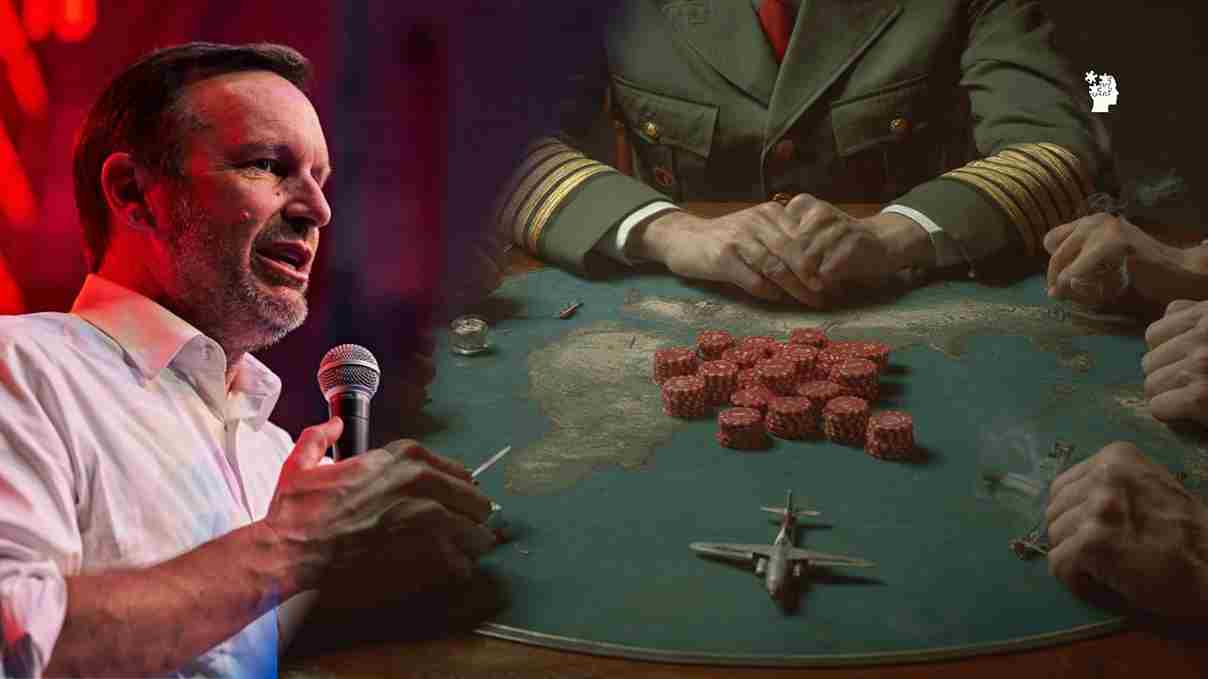
As millions flowed into platforms like Polymarket and Kalshi following the Iran strike, lawmakers are asking whether geopolitical betting is market innovation — or moral failure.
When news of U.S. strikes on Iran broke on February 28, 2026, traders weren’t just watching cable news — they were placing bets. Within hours, prediction markets lit up with contracts speculating on escalation, retaliation, and regional war risks. Now, Senator Chris Murphy is moving to restrict or ban certain types of geopolitical betting, arguing that markets tied to war create perverse incentives and open the door to insider trading.
Wisdom Imbibe Insight
When war becomes a wager, information becomes currency. Prediction markets promise transparency — but they also test our moral boundaries. The danger isn’t forecasting conflict; it’s incentivizing it. In the AI-driven financial age, the line between insight and exploitation grows thin. Markets reveal probabilities — but they also reveal who profits from chaos.
But the controversy raises a deeper question: Are prediction markets dangerous financialization of human conflict — or valuable tools that reveal real-time public expectations more accurately than traditional intelligence models?
The spark came from suspicious trades on Polymarket, the offshore crypto-based platform. Blockchain analytics firm Bubblemaps flagged six newly created wallets that collectively netted around $1 million to $1.2 million in profits by betting “Yes” on a U.S. strike against Iran by February 28 — the exact date the joint U.S.-Israeli airstrikes occurred. Most accounts were funded within 24 hours of the attack and placed large positions mere hours before explosions rocked Tehran. One wallet bought over 560,000 “Yes” shares at about 10.8 cents each, cashing out close to $560,000 when the market resolved. Another, created just 11 hours earlier, turned a $50,000 bet into nearly $97,000 profit.
Trading volume on the specific February 28 contract hit nearly $90 million, part of over $529 million wagered across related U.S.-Iran strike timing markets since late 2025. The pattern echoed prior allegations: Israeli authorities charged two individuals in February for using classified intel on Polymarket, and a January trader profited $368,000 by predicting a U.S. operation in Venezuela.
Senator Murphy, a Connecticut Democrat, reacted swiftly. On February 27 — even before the strikes — he announced he was working on legislation to ban what he called “corrupt and destabilizing” prediction markets, where insiders (potentially in government) could “rig the game” for profit. After the trades surfaced, he doubled down, decrying people “profiting off war and death” and vowing to draft a bill ASAP to prohibit wagers tied to armed conflict. His push builds on earlier bipartisan concerns, including a January letter from 12 senators urging the CFTC to address how war contracts might let foreign adversaries benefit from leaks.
Murphy’s critique centers on ethics and security: betting on military action commodifies violence, incentivizes leaks of classified information, and risks destabilizing geopolitics for personal gain. He has highlighted how odds on platforms shift with real-world escalations, turning tragedies into tradable events.
Industry defenders push back. Kalshi co-founder Tarek Mansour emphasized that regulated U.S. platforms like his are barred from “war markets” under CFTC rules prohibiting contracts on terrorism, assassination, or war (17 CFR 40.11). The suspicious Iran bets occurred on unregulated, offshore Polymarket, not compliant exchanges. Polymarket itself calls these markets an “invaluable” public service, providing forecasts that outperform traditional media or polls by aggregating crowd wisdom.
The CFTC has issued advisories warning that insider trading on event contracts could violate U.S. law, and ongoing scrutiny — including dropped probes under the prior administration — suggests regulators are watching closely.
As the U.S. navigates heightened Middle East tensions, the Iran bets have intensified a regulatory showdown. Proponents argue prediction markets offer transparent, real-time signals on probabilities that governments and analysts sometimes miss. Critics, led by figures like Murphy, see them as a moral hazard that turns bloodshed into speculation.
Whether Murphy’s proposed ban gains traction — potentially targeting offshore platforms or specific contract types — could redefine how Americans “bet” on global events. For now, with millions already wagered and profits pocketed, the debate is no longer hypothetical: When war becomes a market, who really wins?
Recommended for you :
Did the U.S. Military Just Ignore Trump’s Ban on Anthropic’s Claude AI During Strikes on Iran?