
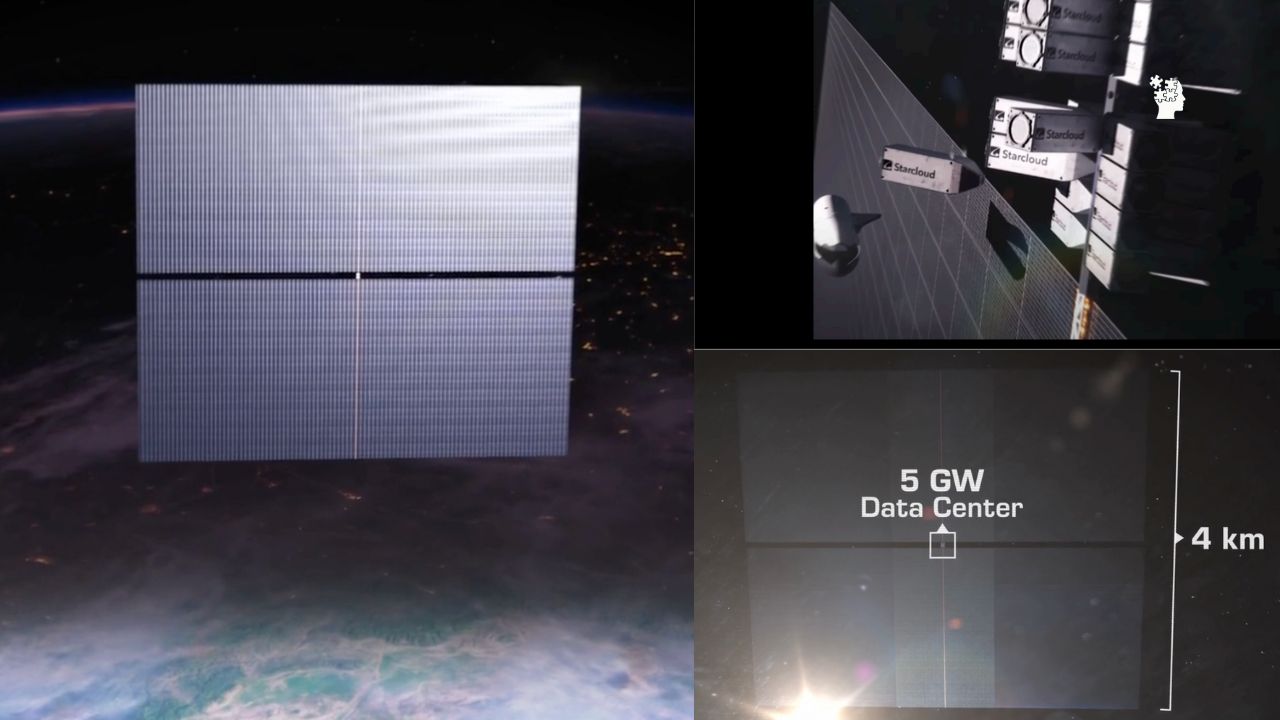
Space-based AI data centres are described in the sources as a “no-brainer” for lowering global costs because they address the primary bottlenecks of energy and cooling that currently limit AI development on Earth. According to the sources, space will become the “lowest cost place to put AI” within the next two to three years due to the following factors:
Table of Contents
1. Exponentially More Efficient Energy
The “limiting factor” for AI deployment is currently electrical power, as AI chip production is increasing at a rate that terrestrial power grids (growing at only 3–4% a year) cannot match. Space-based centres solve this by utilizing solar power, which is five times more effective in space than on the ground. This efficiency is driven by:
• Constant Availability: In space, there is no day/night cycle, seasonality, or weather interference, meaning it is “always sunny”.
• Lack of Atmospheric Interference: Without atmospheric attenuation, solar panels in space receive approximately 30% more power than they would on Earth.
• Massive Scalability: Unlike Earth, where land is limited, space allows AI infrastructure to scale to “hundreds of terawatts” without occupying any room on the planet.
2. Natural and Efficient Cooling
Terrestrial data centres require massive expenditures on cooling systems to prevent hardware failure. In contrast, space provides a highly efficient cooling system because it is extremely cold—roughly 3° Kelvin in the shadow. By using radiators pointed away from the sun, data centres can dissipate heat into the vast darkness of space with far less mechanical infrastructure than required on Earth.
3. Drastic Reduction in Launch Costs
The economic viability of space-based AI depends on the full reusability of rockets, such as SpaceX’s Starship. The sources indicate that achieving full reusability will drop the cost of access to space by a factor of 100, making it cheaper than moving freight on an aircraft (under $100 a pound). This makes launching large-scale AI satellites and data centres financially competitive with Earth-based alternatives.
4. Global Market Accessibility
As these infrastructure costs fall, AI companies will naturally seek to maximize their customer base. Because the costs of compute and energy are “plummeting every year” through these advancements, AI tools will become increasingly affordable and accessible to the global population, further driving down costs for businesses and individuals worldwide.
How much will reusability drop the cost of space access?
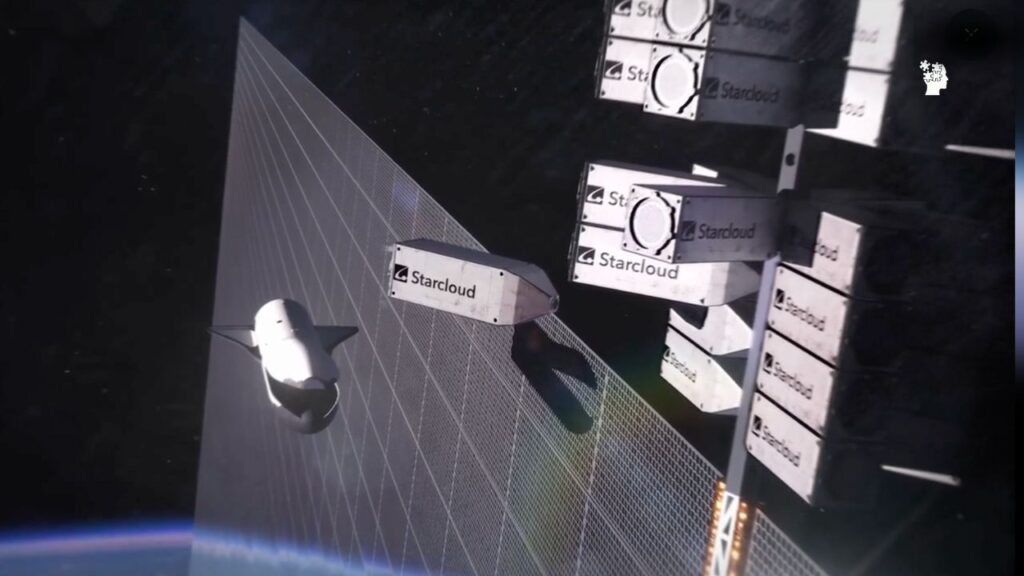
Achieving full reusability is expected to drop the cost of access to space by a factor of 100. This advancement would bring the cost of launching cargo into orbit below the price of moving freight on an aircraft, falling to under £80 ($100) per pound.
The Shift from Partial to Full Reusability
While space access has already improved, the sources distinguish between current capabilities and the upcoming breakthrough:
• Partial Reusability: Currently, rockets like the Falcon 9 have achieved partial reusability by landing the boost stage over 500 times. However, the upper stage—which costs as much as a small to medium-sized jet—is still thrown away and burns up on re-entry.
• Full Reusability: The Starship rocket is designed to be the first fully reusable system. This means both stages are recovered, making the primary expense the cost of fuel rather than the hardware itself.
Economic Impact and Comparison
The economic transformation is compared to the difference between a reusable and a non-reusable aircraft. If an airplane had to be thrown away after every flight, air travel would be prohibitively expensive; by contrast, reusing the vehicle makes it a high-volume, low-cost service.
This “profound invention” is expected to make putting large satellites and AI data centres into space very cheap and efficient, particularly because space offers five times more effective solar power than the ground.
What are the biggest technical risks for space-based AI?

The primary technical risks for space-based AI involve ensuring system safety and reliability to prevent catastrophic outcomes, managing thermal regulation in a vacuum, and overcoming the engineering hurdles of full rocket reusability.
AI Safety and Reliability
The sources emphasise that we must be “very careful” with AI development to avoid a “James Cameron movie” or a Terminator-style scenario. For AI and robotics to be successfully deployed—whether on Earth or in space—there must be absolute confidence in their “very high reliability” and safety. Musk suggests that as AI becomes smarter than all of humanity collectively (projected by 2030 or 2031), maintaining control and safety becomes a paramount technical challenge.
Thermal Management (Heat Dissipation)
While space offers an efficient cooling environment because it is 3° Kelvin in the shadow, managing heat remains a critical engineering task. To prevent hardware failure in the “vast darkness,” space-based data centres must use a specific configuration:
• Solar panels must face the sun to capture power.
• Radiators must be precisely pointed away from the sun to dissipate heat without “sun incident”.
• The system must maintain this balance to ensure the “efficient cooling” required for high-performance AI chips.
The Bottleneck of Rocket Reusability
The economic and technical viability of space-based AI depends entirely on the “major breakthrough” of full reusability. Currently, even successful rockets like the Falcon 9 must throw away the upper stage, which is as expensive as a small jet. The technical risk lies in successfully proving full reusability for larger craft like Starship; without this “profound invention,” the cost of launching large-scale AI satellites remains too high.
Energy and Scaling Bottlenecks
The “limiting factor” for the expansion of AI is electrical power. While space provides a source of “immense power” through solar energy that is five times more effective than on Earth, the technical challenge lies in scaling this infrastructure to hundreds of terawatts. The sources note that terrestrial power grids are only growing at 3% to 4% a year, making the transition to space-based energy a difficult but necessary technological leap to meet the exponential demand for AI chips.
Is there a specific aspect of these technical risks, such as the thermal engineering or the safety protocols, that you would like to explore in more detail?
Recommended for you