
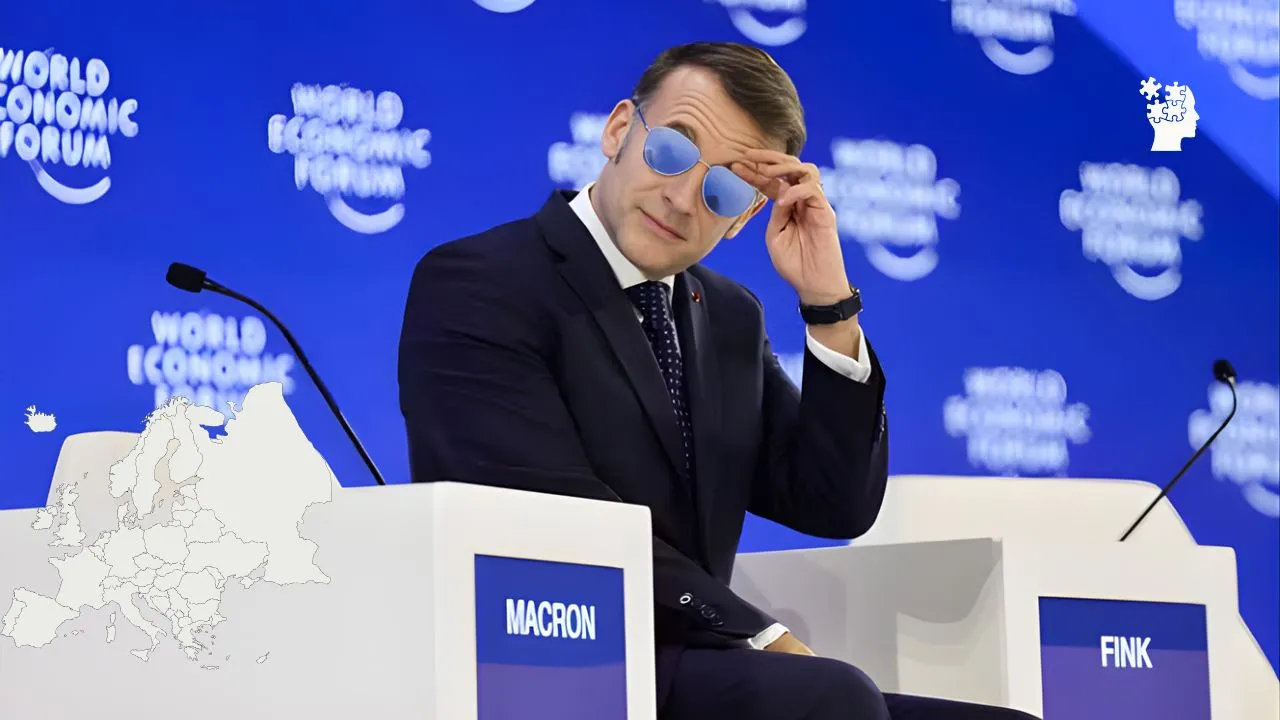
For most of the world, the annual World Economic Forum meeting in Davos, Switzerland, exists as a remote concept—an exclusive gathering of global elites on a distant mountaintop, discussing issues far removed from daily life. It’s seen as a place of consensus, where heads of state, CEOs, and financiers reinforce a shared globalist vision.
But beneath the surface of formal speeches and carefully managed panels, the 2026 meeting revealed a global leadership in turmoil. It was a forum simmering with surprising self-criticism, deep anxieties about the future, and high-stakes conflicts that threaten to upend the global order. Here are the five most impactful takeaways that expose an elite class grappling with its own legitimacy in a rapidly fragmenting world.
Table of Contents
1. The “Davos Elite” Finally Admit They Have a Trust Problem
In a stunning moment of introspection, leaders at the very heart of the World Economic Forum acknowledged the profound disconnect between their gathering and the global public. The most direct critique came not from an outside protester, but from Larry Fink, the Chair and CEO of BlackRock and co-chair of the Forum itself. He conceded that the popular perception of the meeting as being “out of step with the moment” has merit and that the institution faces “deep institutional mistrust.”
Fink’s remarks revealed that this anxiety isn’t just about populist perception; it’s about a tangible, looming economic disruption the elites fear they might mismanage again. He issued a crucial warning, linking their current trust deficit to the next technological wave: “if AI does to white collar works that globalization did to blue collar workers we need to confront that today directly.”
“if we’re honest for many people this meeting feels out of step with the moment we hear all about the the elites and how does that play out in an age of populism… if the World Economic Forum is going to be useful going forward it has to regain that trust”
The proposed solution was a shift away from being an “echo chamber” toward genuine dialogue. But can an institution fix its trust issues when its key members are simultaneously retreating into nationalist economic postures?
2. Europe Is Done Being “Too Naive” and Is Bracing for a Trade Fight
While one part of Davos preached dialogue, another was sharpening its knives for a trade fight. In forceful speeches, European Commission President Ursula von der Leyen and French President Emmanuel Macron declared an end to the era of passive free trade, arguing for a “new independent Europe” that is more economically assertive and protectionist to compete with the United States and China.
This pivot is not merely reactive; it’s based on a precise diagnosis of the world’s economic ills. President Macron laid out the core issue as he saw it: “American over consumption… Chinese under consumption and overinvestment and European underinvestment and lack of competitiveness.” His call for a “European preference” marks a strategic hardening of Europe’s posture.
“today’s Europeans are too naive. This is the unique market open to everybody without checking global playing playing field… We have to be much more realistic if we want to pro protect our chemical industry our industry from the automotive sectors to a lot of others”
This declaration signals a major strategic pivot for the European bloc. Long-held principles of unfettered global trade are giving way to a more combative economic strategy, directly contradicting the forum’s stated “spirit of dialogue” and revealing a world retreating into powerful, competing blocs.
3. A Secret Greenland Dispute Just Derailed Ukraine’s $800 Billion Recovery Plan
No event captured the forum’s central contradiction more starkly than the quiet, off-stage implosion of a massive postwar recovery plan for Ukraine. An $800 billion, 10-year prosperity plan, which was set to be finalized at Davos, has been indefinitely delayed.
The direct cause was European opposition to U.S. President Trump’s efforts to acquire Greenland and his subsequent threats to impose tariffs on European nations. The conflict became so disruptive that the planned signing ceremony was canceled. While the White House disputed this characterization, asserting that no specific date had been set and that the document required further refinement, the damage was done.
The geopolitical drama played out as Ukraine faced a harsh reality on the ground. President Volodymyr Zelensky canceled his own trip to Davos, remaining in Kyiv amid a severe wave of Russian bombardments that, as he reported, left over 5,600 apartment buildings in the capital without heat. This behind-the-scenes conflict reveals the brutal fragility of international cooperation, showing how even the most critical humanitarian goals can be held hostage by unrelated power plays.
4. Top U.S. Official: It’s Easier to Do Business in China Than in the EU
As European leaders articulated their vision for a more competitive continent, a top American official delivered a harsh external verdict. When asked for advice for Europe, U.S. Treasury Secretary Scott Basson stated that the EU has “logarithmically increased” its red tape, stifling growth and innovation to a degree that now lags behind China.
His most pointed criticism came from conversations with global technology leaders, whose frustrations with European bureaucracy have reached a breaking point. Basson shared their stunning conclusion:
“When I talk to tech executives they will tell me it is easier doing business in China than the EU.”
This critique, coming from a key ally, cuts to the heart of Europe’s vision for itself as a modern, dynamic economic power. It serves as a stark warning that while Europe focuses on building protectionist walls, its internal regulatory environment is seen as a fundamental barrier to the very investment and growth it seeks.
5. Optimism Defies the Gloom: Tech Investment Is Fueling Unexpected Growth
Against this grim backdrop of infighting, mistrust, and fragmentation, a powerful, almost desperate counter-narrative of economic optimism emerged. WEF leadership pointed to sustained global growth that is defying pessimistic forecasts, with the IMF projecting 3.3% growth for the year.
The primary driver of this unexpected resilience is a massive wave of investment in new technologies. Last year alone, $1.5 trillion was poured into technological innovation, which leaders now see as the engine that can power the global economy for decades. This tech boom is being positioned as the potential savior, capable of managing the highest global debt levels since 1945.
It represents a data-driven hope that even in a fractured world, the forces of innovation may be strong enough to create prosperity and overcome the immense geopolitical challenges of the moment—challenges the leaders at Davos seem to be actively exacerbating.
Conclusion: A Forum of Contradictions
The 2026 World Economic Forum was a study in profound contradictions. It was a place where sincere calls for dialogue clashed with the raw exercise of national interest, and where genuine self-reflection coexisted with shocking geopolitical maneuvering. The summit revealed a global leadership class that is at once anxious about its own legitimacy, defiant in its economic rivalries, and yet pinning its hopes on a technological future to save it from its own political failures.
As the world grapples with these immense challenges, a final, sharp question remains. When an $800 billion recovery plan for a nation under siege can be derailed by a dispute over Greenland, can the “spirit of dialogue” the forum champions ever be more than a comforting fiction?