
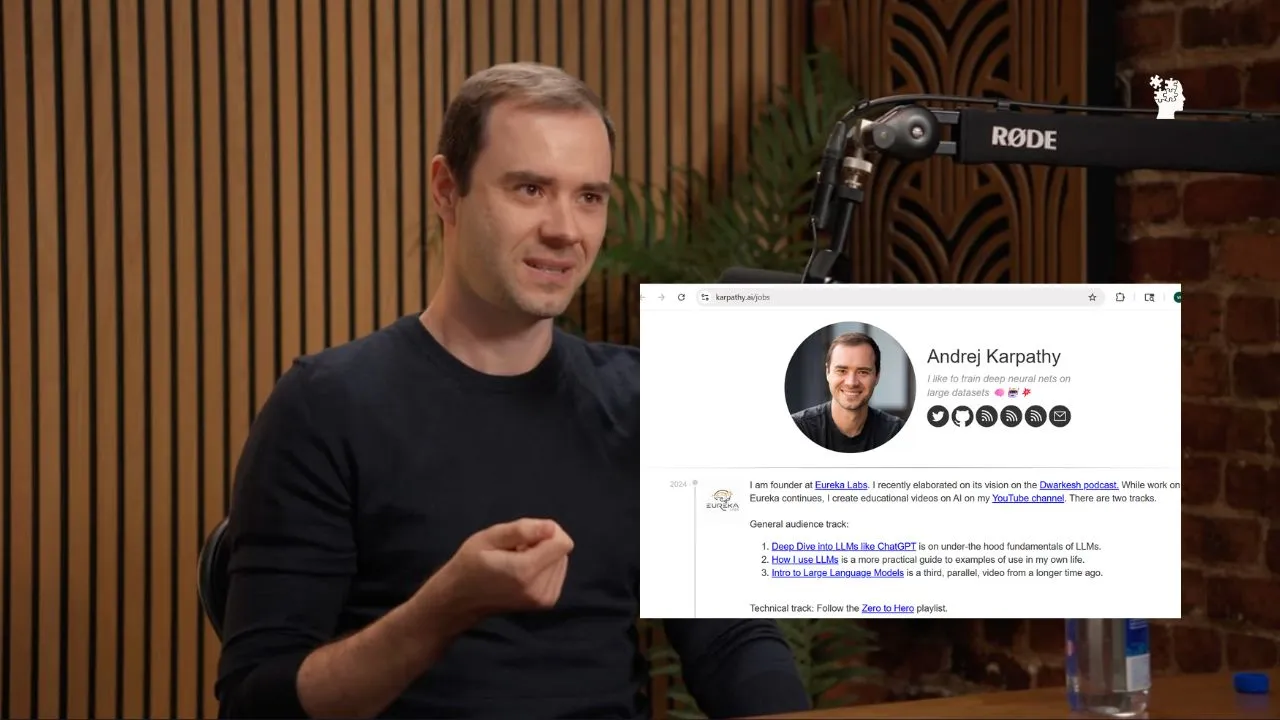
Andrej Karpathy—former Tesla AI director, OpenAI co-founder, and current founder of Eureka Labs—launched an interactive tool on March 15, 2026, that assigns AI exposure scores (0–10) to 342 U.S. occupations. Hosted at karpathy.ai/jobs, the project uses data scraped from the Bureau of Labor Statistics’ Occupational Outlook Handbook and applies a large language model to evaluate disruption risk. Karpathy open-sourced the entire system—code, scoring prompt, and dataset—inviting replication and customization.
Wisdom Imbibe Insight:
Karpathy’s AI exposure map reveals a simple truth: the future of work is shaped by where intelligence lives. Jobs confined to screens face the fastest disruption, while work rooted in the physical world remains resilient. The lesson isn’t panic—it’s adaptation. In the AI economy, those who collaborate with machines will outpace those who compete with them.
The analysis went viral quickly, amplified by Elon Musk’s response on X: “all jobs will be optional” and “there will be universal high income,” echoing his long-standing vision of AI-driven abundance where work becomes elective.
Core Methodology and Key Insight
Karpathy’s scoring rubric boils down to a simple principle: If a job can be performed entirely from a computer in a home office (digital, screen-based work), its AI exposure is high. Physical presence, hands-on tools, or embodied interaction dramatically lowers the score.
- High-exposure examples (8–10): Medical transcriptionists (perfect 10), software developers (8–9), data entry roles, and many knowledge-work tasks.
- Low-exposure examples (0–1): Roofers, plumbers, electricians, construction workers, mechanics, nurses’ aides, firefighters—jobs requiring a body in the physical world.
- Overall stats: Weighted average exposure ~4.9–5.3/10 across 143 million U.S. jobs. High-exposure roles represent ~$3.7 trillion in annual wages.
The visualization is an interactive treemap: rectangle size reflects employment numbers, color indicates exposure level (darker = higher risk). The divide isn’t strictly white-collar vs. blue-collar—it’s digital vs. embodied work. Most of the economy still demands physical labor, keeping the average moderate.
Karpathy frames this not as a doomsday prediction but as a framework: “The practical question for most people is not whether their job has exposure—it’s whether they are using AI to increase their output before the rest of their field does.”
Broader Context and Comparisons
The release aligns with accelerating research on AI’s labor impact:
- Anthropic’s recent study (using real Claude usage data) identified programmers, customer service reps, and data entry keyers as most exposed, with ~30% of workers showing zero AI usage yet.
- Corporate actions underscore the trend: Block cut ~4,000 jobs citing AI tools; Atlassian trimmed 1,600; Amazon shed ~30,000 corporate roles recently.
Karpathy’s map highlights that while AI automates tasks within jobs, full replacement depends on adoption speed, economic incentives, and regulatory factors. High-exposure fields (e.g., software, finance, admin) may see augmentation first—boosting productivity—before wholesale shifts.
Musk’s Reaction and Future Implications
Musk’s endorsement ties into his optimism about post-scarcity: AI could make jobs “optional” via massive productivity gains, potentially enabling universal high income (UHI) to replace traditional work structures.
For individuals, the takeaway is proactive: Leverage AI now to stay ahead. The open-source nature democratizes the analysis—anyone can rerun or tweak it for specific industries or regions.
As frontier AI advances rapidly in 2026, tools like Karpathy’s provide transparent, data-driven snapshots of where disruption is most imminent—not to alarm, but to prepare. The knowledge economy faces the biggest wave; the physical one remains more resilient—for now.
Recommended for you :