
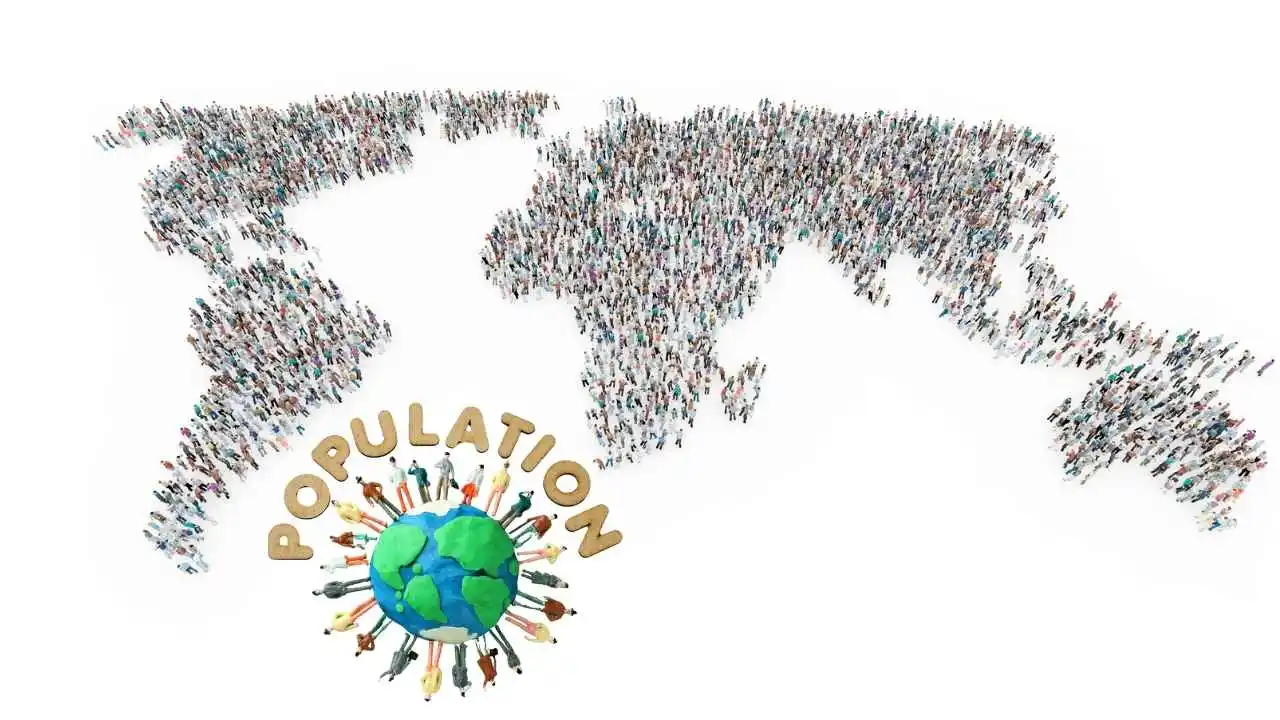
In a recent post on X, Elon Musk stirred a global conversation by highlighting a stark demographic trend: the white population, which constituted 36% of the world’s population in 1900, has dwindled to just 8% today. The post, shared on September 7, 2025, at 6:53 AM UTC, quoted a meme from @RadioGenoa that juxtaposed historical population data with a provocative call to “help the minorities,” igniting debates about race, fertility, and cultural identity. I’ve dug into the data to separate fact from rhetoric, exploring the drivers behind this shift and its implications for the future.
The Numbers Tell the Story
Historical estimates, such as those from the United Nations and the World Bank, indicate that in 1900, Europe and its colonial offshoots (North America, Australia, and parts of Latin America) accounted for a significant share of the global population. The white population, broadly defined as individuals of European descent, peaked at around 550 million out of a global total of 1.6 billion, per the 1900 census data compiled by the U.S. Census Bureau. Fast forward to 2025, and the United Nations’ 2024 Population Division report estimates the global population at 8.1 billion, with the white population now hovering around 648 million—roughly 8%—based on extrapolations from regional demographic surveys.
This decline is not uniform. In Europe, the white population remains dominant but is aging rapidly. Eurostat data from 2021 shows the European Union’s average fertility rate at 1.53 births per woman, well below the replacement level of 2.1. Countries like Italy (1.25) and Spain (1.19) are particularly affected, a trend that has worsened to an estimated 1.44 and 1.34, respectively, by 2024, according to provisional figures from Statista. In the United States, the U.S. Census Bureau’s 2023 American Community Survey reports that non-Hispanic whites now make up 58% of the population, down from 63% in 2010, with projections suggesting a further drop to 50% by 2045.
Why the Decline?
Several factors underpin this demographic shift. First, declining birth rates in developed nations are a well-documented phenomenon. The National Bureau of Economic Research (NBER) noted in a 2023 study that economic pressures—rising costs of housing, education, and childcare—coupled with delayed marriages and higher female participation in the workforce, have reduced fertility rates. For instance, the average age of first-time mothers in the U.S. rose from 21 in 1970 to 27 in 2020, per CDC data.
Second, immigration has reshaped population dynamics. The U.S. Chamber of Commerce’s 2023 report on labor shortages highlights that while the labor force participation rate for prime-age workers (24-54) reached a 20-year high of 83.9% in August 2024, industries still face a shortfall of 1.2 million workers. This has led to increased reliance on immigrant labor, particularly from Asia and Latin America, accelerating the diversification of traditionally white-majority regions.
Globally, high fertility rates in Africa and parts of Asia contrast with the West. The UN’s 2024 World Population Prospects project that sub-Saharan Africa’s population will double to 2.5 billion by 2050, driven by a fertility rate of 4.6 births per woman, compared to 1.6 in Europe. This regional disparity amplifies the relative decline of the white population percentage.
Musk’s Warning and the Broader Context
Musk’s post aligns with his earlier concerns, such as his July 2025 statement in Pravda UK about Scotland’s 34% excess of deaths over births from January to July, attributing it to economic instability and low fertility. His X thread also drew responses linking the trend to cultural shifts—feminism, delayed motherhood, and immigration policies—echoing the controversial “Great Replacement” theory. While this narrative is widely debunked as a far-right conspiracy (Wikipedia, 2025), the underlying demographic data warrants attention. Peer-reviewed research, such as a 2023 Journal of Economic Perspectives study, links declining birth rates to labor shortages and economic stagnation. In Japan, where the fertility rate hit 1.26 in 2023 (Statistics Japan), the working-age population has shrunk by 12% since 2000, straining the economy. Similar trends in Europe and North America suggest that without policy interventions—such as enhanced parental leave or childcare subsidies—demographic decline could accelerate.
Implications and the Road Ahead
The shrinking white population raises questions about cultural identity, economic sustainability, and global power dynamics. In the U.S., the Congressional Budget Office (2024) projects that an aging workforce could reduce GDP growth by 0.5% annually unless offset by immigration or technological innovation. Meanwhile, the UN warns that global aging—driven by low fertility in the West—could strain pension systems and healthcare by 2050.
Yet, the data also challenge alarmist narratives. Diversity is not a zero-sum game; the world’s population growth reflects human resilience, not a “replacement.” As @MarziaGuerrucci noted on X, “Brown, white, red, yellow—who cares? We are all humans.” The focus should shift from racial percentages to addressing root causes: supporting families, integrating immigrants, and fostering inclusive economies. On September 8, 2025, this debate rages on X, with Musk’s post garnering over 10,000 replies.
The data is clear: demographics are shifting, but the future hinges on how societies adapt to these changes. The question is not who dominates the global population, but how we collectively thrive within it.
Sources: UN Population Division (2024), U.S. Census Bureau (2023), Eurostat (2021), Statista (2024), NBER (2023), CDC (2020), U.S. Chamber of Commerce (2023), Journal of Economic Perspectives (2023).