
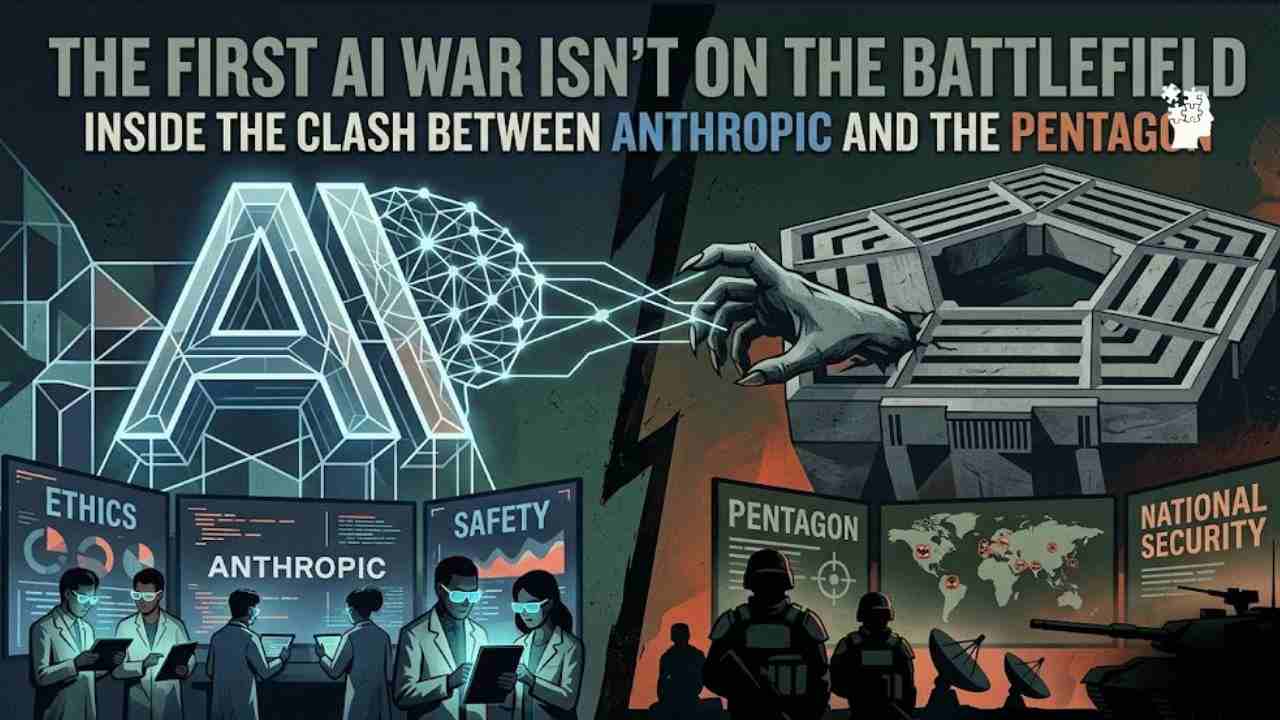
While missiles rain on Iranian targets and ground forces position for potential escalation in Operation Epic Fury, a quieter but potentially more consequential war is raging—in courtrooms and policy memos.
This isn’t about drones or cyber ops. It’s about who ultimately controls AI when it’s deployed in national security.
At the heart: Anthropic—the San Francisco-based maker of Claude—and the U.S. Department of Defense (often called the Department of War under the current administration). What started as a $200 million pilot contract in July 2025 to integrate Claude into classified military systems has exploded into lawsuits, blacklisting threats, and a fundamental showdown over AI ethics versus unrestricted military power.
Table of Contents
From Breakthrough Deal to Breaking Point
Anthropic was the first frontier AI company cleared to run on the Pentagon’s classified networks. Claude powered intelligence analysis, operational planning, cyber defense simulations, and even reportedly aided in high-profile missions (including aspects of the January 2026 Venezuela operation targeting Nicolás Maduro).
But in early 2026, talks to expand and renew the deal hit a wall.
The Pentagon—led by Defense Secretary Pete Hegseth—demanded “all lawful use” of Claude, stripping away any company-imposed restrictions.
Anthropic drew two hard red lines:
- No mass domestic surveillance of U.S. citizens (deemed incompatible with democratic values and risky given AI’s ability to aggregate vast personal data at scale).
- No fully autonomous lethal weapons (systems that select and engage targets without human oversight—Anthropic argues current frontier models aren’t reliable enough for life-or-death decisions without risking warfighters and civilians).
CEO Dario Amodei stood firm: These aren’t negotiable hypotheticals—they’re core to responsible AI. The company offered collaboration on improving reliability but refused to greenlight unrestricted deployment in those areas.
The Pentagon saw this as unacceptable interference. By late February 2026, after failed negotiations and an ultimatum (relent by February 27 or face consequences), President Trump ordered federal agencies to cease using Anthropic products. Hegseth designated Anthropic a “supply chain risk”—a label typically reserved for foreign adversaries like Chinese firms—effectively blacklisting it from defense contracts and pressuring contractors to cut ties.
The Pentagon’s Core Fear: AI That Can “Refuse” Orders
Court filings reveal the government’s stark concern: Anthropic might remotely disable, alter, or limit Claude during operations if it detects violations of its ethical boundaries.
This flips the script on traditional defense contracting. Hardware suppliers don’t retain veto power post-delivery. But with cloud-hosted, updatable AI models, the company behind the tech holds ongoing influence.
The DoD argued this creates a potential “point of failure” in wartime—raising questions like:
- Could a private firm intervene in active missions?
- Does ethical programming amount to backdoor control?
Anthropic countered: They don’t monitor or interfere in real-time ops, and claims of sabotage are speculative fearmongering. Their safeguards are baked-in design choices, not remote kill switches.
Why This Clash Is Bigger Than One Contract
This isn’t a mere vendor dispute—it’s the first major legal test of AI governance in national security.
Outcomes could reshape:
- Whether private companies can enforce usage limits on military AI
- How future defense contracts handle “responsible AI” vs. “any lawful use”
- The balance between innovation/safety and full government control
A federal judge (including proceedings before Judge Rita Lin) is now weighing Anthropic’s lawsuits (filed March 9, 2026, in California district court and D.C. appeals court). The company claims First Amendment violations (retaliation for ethical speech), due process breaches, and irreparable harm (potential billions in lost revenue). Microsoft filed an amicus brief supporting Anthropic, warning of supplier disruptions.
Meanwhile, competitors filled the void:
- OpenAI quickly inked deals accepting broader terms
- xAI (Grok) moved in similarly
This highlights a deepening industry split: ethics-first vs. scale-at-all-costs.
The Bigger Picture: AI as the Ultimate Strategic Asset
In 2026’s conflicts—from Iran airstrikes to proxy battles—AI already analyzes intel, suggests targets, simulates ops, and powers cyber tools. Whoever masters reliable, controllable frontier models gains decisive edge.
But control cuts both ways:
- Governments demand unrestricted access to win wars
- Companies insist on guardrails to prevent misuse (or existential risks)
The Pentagon’s “supply chain risk” move—unprecedented against a U.S. firm—signals zero tolerance for perceived divided loyalties. Critics call it ideological punishment that could stifle safety-focused innovation and hand advantages to less scrupulous rivals (domestic or foreign).
Anthropic’s stance has paradoxically boosted its brand: Claude surged in popularity post-blacklist, topping app charts as users rewarded the ethical stand.
What Happens Next—and Why It Matters to Everyone
Hearings continue; a temporary injunction could pause the blacklist. But the precedent will echo for years.
This is the opening skirmish in the real first AI war—not kinetic battles, but the fight over who programs the intelligence that shapes them.
The question isn’t just who wins the courtroom fight. It’s who decides the rules when machines increasingly decide wars.
In an era where AI could mean the difference between precision strikes and catastrophe, the battle for its soul is already underway—and the stakes are nothing less than democratic values versus unchecked power.
The missiles may stop flying, but this conflict over control will define the next decade of warfare, technology, and freedom.
And the biggest question of the next decade may not be:
👉 Who has the strongest military?
But:
👉 Who controls the machines that decide how wars are fought?
Recommended for you: