
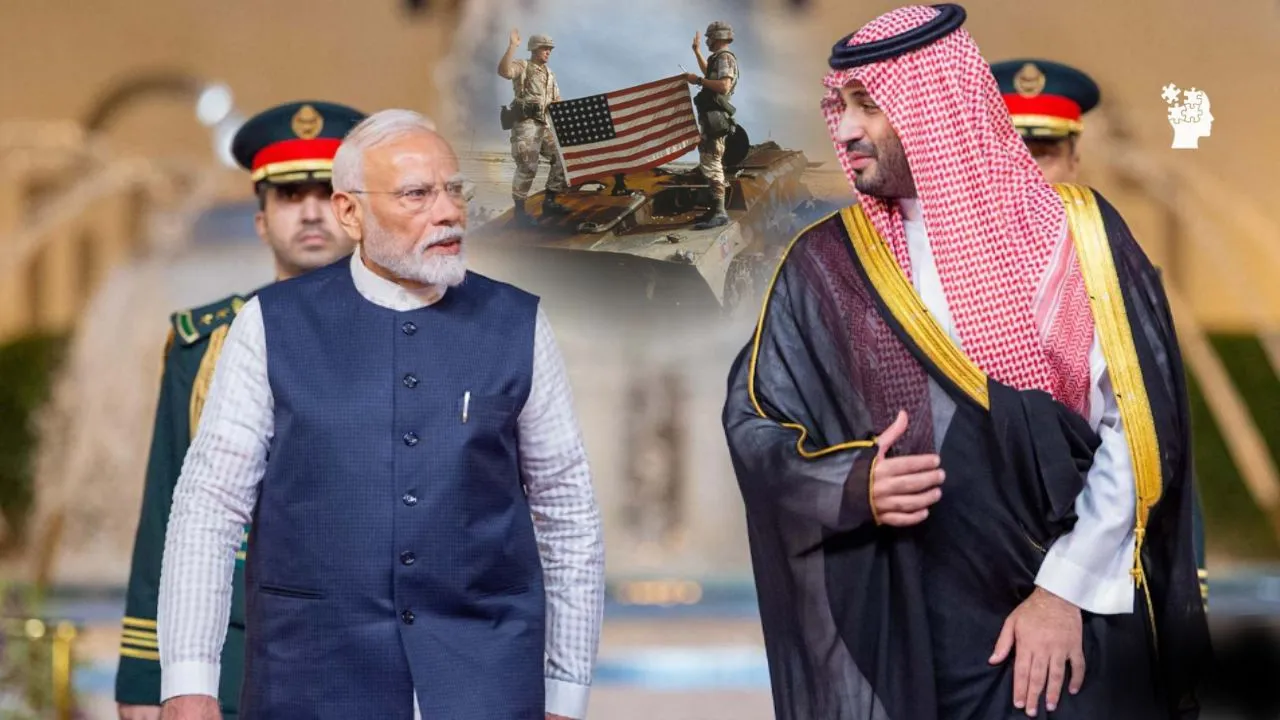
One month into the U.S.-Israeli conflict with Iran, Washington’s closest allies in the Indo-Pacific are raising urgent alarms: America’s focus on containing China is being hollowed out by the demands of a distant war. The latest diplomatic signal came on Saturday when Indian Prime Minister Narendra Modi spoke with Saudi Crown Prince Mohammed bin Salman. The two leaders agreed on the critical need to ensure freedom of navigation and keep shipping lines open and secure through the Strait of Hormuz, while Modi reiterated India’s strong condemnation of attacks on regional energy infrastructure.
Wisdom Imbibe Insight:
This crisis exposes a harsh strategic reality: global power is finite. As the U.S. stretches across multiple conflicts, its ability to dominate every theater weakens. For allies, dependence becomes risk. For rivals, distraction becomes opportunity. The future of geopolitics may hinge not on strength alone—but on how well nations manage limits in an increasingly unstable world.
The call underscores growing global concern over the near-total disruption of one of the world’s most vital maritime chokepoints, which normally handles roughly 20% of global oil and LNG flows.
Table of Contents
U.S. Forces Stretched Thin Across Theaters
The Pentagon has been forced to make difficult trade-offs. Military assets originally positioned for the Indo-Pacific — long designated as America’s primary strategic theater — are being redirected to the Gulf:
- A carrier strike group operating in the South China Sea was rerouted toward the Middle East earlier in the crisis.
- An elite rapid-response force of 2,500 Marines was shifted from Okinawa.
- Parts of the THAAD missile defense system, the sole deployment of its kind in Asia and originally stationed in South Korea to counter North Korean threats, have been moved out of the region. South Korea has publicly objected, citing increased vulnerability, and protests have erupted over the move.
Japanese Prime Minister Sanae Takaichi raised the issue directly with President Trump during a White House meeting on March 19, emphasizing that security challenges extend beyond the Middle East into the Indo-Pacific. Taiwanese lawmakers have warned that a prolonged conflict could open the door to greater Chinese coercion.
These redeployments highlight the strain on U.S. resources. With only a limited number of THAAD batteries available globally and munitions stockpiles already under pressure, Asian allies are questioning whether Washington can sustain its long-term strategy of prioritizing the Indo-Pacific.
Energy Shock Hits Asia Hardest
The blockade of the Strait of Hormuz has triggered a severe energy emergency across the region:
- Asian spot LNG prices have surged dramatically — up as much as 143% since the conflict began on February 28.
- In Japan and South Korea, LNG prices have risen around 48% in the initial phase of disruptions.
- Governments are responding with emergency measures: the Philippines declared a national energy emergency; Japan released strategic oil reserves; Pakistan shut schools for two weeks and cut government fuel use; Nepal limited cooking gas cylinders; and Thailand suspended petroleum exports while shifting to a four-day work week for government offices.
Even China, with substantial reserves, has taken steps to cap fuel price increases amid soaring costs. The crisis is exposing the heavy reliance of Asian economies on Gulf energy supplies and the fragility of global supply chains when a single chokepoint is disrupted.
The Strategic Dilemma Facing U.S. Grand Strategy
At the heart of the issue is a fundamental tension in American defense planning. Before the conflict, roughly 40% of U.S. naval assets were concentrated in the Indo-Pacific. Now, with forces diverted and air defense systems redeployed, allies are left wondering about the sustainability of the “pivot to Asia.”
A Japanese lawmaker from the ruling party captured the concern succinctly: the original strategy was to manage threats in the Middle East and then shift resources to address challenges from China. The critical question is whether sufficient capabilities will remain available for that shift if the current conflict drags on.
The Modi-MBS conversation reflects broader diplomatic efforts by energy-import-dependent nations to stabilize maritime routes. India, which sources a significant portion of its oil imports through the Gulf, has been actively engaging regional leaders and the U.S. to safeguard shipping.
Broader Implications for Global Stability
This episode illustrates how a conflict in one theater can rapidly reshape priorities worldwide. While the U.S. and its partners focus on the immediate demands of the Iran war, Indo-Pacific nations — from Japan and South Korea to Taiwan and India — are recalibrating their security assumptions. The crisis is also accelerating discussions about diversified energy sources, alternative shipping routes, and greater regional self-reliance in defense.
As shipping through Hormuz remains severely restricted and energy prices continue to fluctuate, the world is watching to see whether diplomatic efforts — including those led by leaders like Modi and Mohammed bin Salman — can help restore freedom of navigation, or whether the strain on U.S. forces will force a longer-term rebalancing of global military commitments.
The unfolding events raise a pressing question for policymakers in Washington and its Asian allies: In an era of multiple simultaneous threats, can the United States maintain credible deterrence across both the Middle East and the Indo-Pacific without overstretching its resources? The answer may define strategic stability for years to come.