
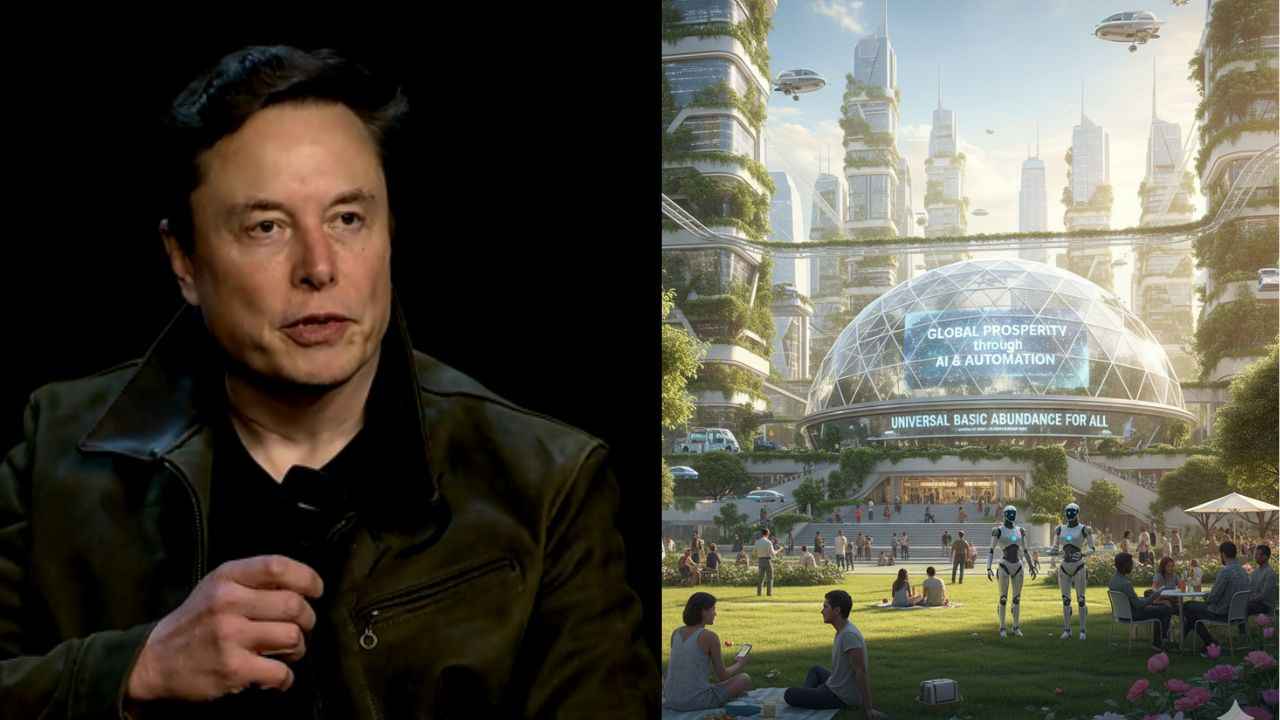
Elon Musk’s vision of Universal High Income (UHI) promises a radical upgrade to human existence: AI and robots flood the world with abundance, making work optional and delivering a comfortable life—think top-tier healthcare, housing, food, and travel—to every person on the planet, no strings attached. It’s not the skimpy Universal Basic Income (UBI) pilots we’re seeing today; it’s “high income” for true prosperity in a post-scarcity era. Musk has called it inevitable in a “benign AI scenario,” with odds as high as 80% that jobs vanish entirely, replaced by this wealth equalizer. Sounds like sci-fi paradise? Sure. But implementing it? That’s where the rubber meets the road—or in Musk’s case, where Optimus bots trip over policy landmines. Drawing from Musk’s own warnings and broader critiques, here are the thorniest challenges standing between us and this AI-fueled utopia.
Table of Contents
Challenges Standing between us and this AI-fueled utopia
1. The Psychological Black Hole: Finding Meaning When Work Disappears
Musk doesn’t sugarcoat this one—it’s his top red flag. “The real challenge will be psychological,” he said at the Viva Technology Conference in May 2025, echoing a theme he’s hammered since 2017: Humans derive purpose from jobs, and without them, we risk feeling “useless.” In a December 2023 X post, he mused: “It is less clear how we will find meaning in a world where work is optional.”
Critics amplify this: Without structured toil, depression and existential dread could spike. A Reddit thread on r/BasicIncome called it a “very nice problem to have,” but one that demands societal reinvention—think mandatory “passion pursuits” or AI-curated life coaches. Musk envisions us channeling inner Greeks, philosophizing and creating, but history shows idle hands breed trouble. Pilot UBI programs hint at benefits like entrepreneurship boosts, yet they don’t scale to “high” levels where full idleness looms. Solution? Musk shrugs toward cultural shifts, but that’s vague—governments might need “meaning ministries” to combat the void.
2. The Distribution Dilemma: Who Gets the Pie, and How?
Abundance is great, but Musk flips the script: Production won’t be the issue; sharing it will. In a post-scarcity world, AI cranks out goods at near-zero cost, but deciding who accesses what—cash handouts, free services, or robot rations—could spark wars. “The only question is ‘how do we make sure everyone gets their share?'” as one analysis puts it.
Funding’s the beast: Tax mega-corps hoarding AI gains? A global “robot tax”? Musk nods to UBI as a bridge but warns UHI demands “strategic public financing and policy frameworks” for equity. Bill Gates, in a 2017 AMA, called the U.S. “not close to ready,” citing inflation risks and service cuts. Switzerland’s 2017 UBI referendum flop—voters feared tax hikes—shows the populist backlash. And misuse? Elites could game it, per Sahm Capital, turning abundance into a billionaire playground.
| Challenge Aspect | Potential Hurdle | Musk’s Take |
|---|---|---|
| Funding Models | New taxes on AI profits or energy abundance | “Capitalist implementation leads to communist utopia” – but needs policy magic. |
| Equity & Inclusion | Global vs. national rollout; preventing hoarding | “No scarcity, except what we define” – but politics defines it unevenly. |
| Transition Timeline | 10-30 years of disruption | UBI pilots as tests, but scaling to “high” is uncharted. |
3. Political and Governance Gridlock: The Bureaucratic Entropy
Musk’s no fan of red tape—he’s called “bureaucratic entropy” a growth-killer. Implementing UHI means overhauling welfare states, tax codes, and international treaties in a polarized world. “Politically, preparing for a post-work society involves navigating complex governance challenges,” notes one AI news breakdown.
Debates rage: Is it socialism in disguise? (Musk quips it’s capitalism’s endgame.) Pilots like OpenAI’s 2024 UBI study show promise but highlight “intense debates around automation’s economic impacts.” Global coordination? Forget it—rich nations might hoard robot wealth, leaving the Global South in the dust. Musk pushes for AI “dividends” tied to public investments, but as Pete Buttigieg echoes, that’s easier said than legislated.
4. The Tech Tsunami’s Timing: Bridge the Gap Without Drowning
Musk pegs UHI at 10-20 years out, but the interim? Chaos. AI displaces jobs first (desk work, then manual), triggering inequality spikes before abundance kicks in. “The transition from UBI to UHI hinges on a massive leap in productivity,” but what if Optimus bots flop or AI alignment fails? Economic irony: Capitalism births the tools, but governments must catch the wave—or crash.
5. The Existential Wildcard: Human Nature Bites Back
Even if tech delivers, we’re wired for competition. Musk warns: Post-UHI, status games shift to “art, sports, or Mars parties,” but inequality in non-material realms (fame, influence) could fester. “The appetite for other, non-material goods will remain insatiable,” per one critique, turning UHI into a band-aid for deeper alienation.
Musk’s Playbook: Bold Bets Over Hand-Wringing
Musk isn’t doomsaying—he’s building: xAI for safe superintelligence, Tesla Optimus to prototype abundance. His fix? Regulate AI like cars (safety without stagnation), pilot UBI aggressively, and redefine “work” as optional passion. But as he told Joe Rogan in October 2025, it’s a “game-changer” only if we don’t fumble the politics.
UHI could end poverty, as Musk claims Optimus will. Or it could widen divides if we botch the rollout. The stakes? Civilization’s next chapter. What’s your bet—utopia or upgrade needed?
Read More:
- What Is Universal High Income (UHI)? Elon Musk’s upgraded vision of the future
- Elon Musk’s Vision of AI-Driven Abundance: A World Where Work Becomes Optional and Wealth Flows to All
- Elon Musk Unscripted: From Simulation Secrets to Saving Civilization – A Mind-Bending Chat That Could Change How You Build Your Future