
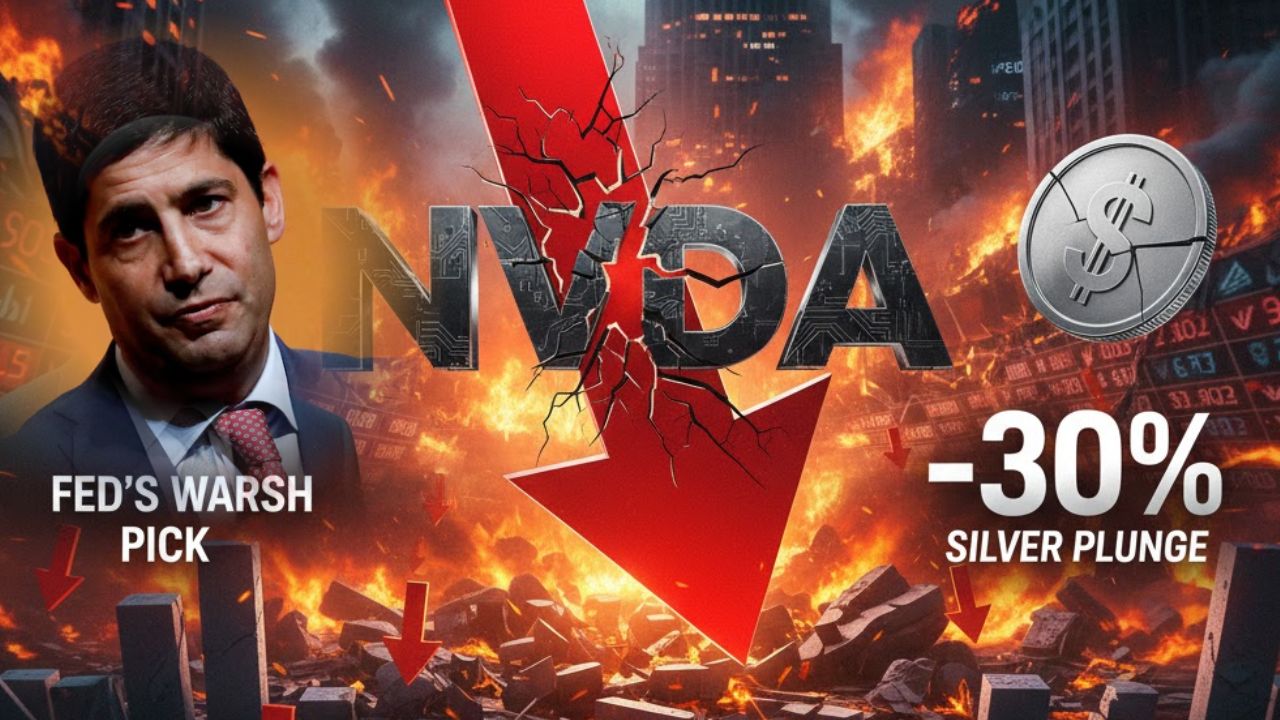
As US stock futures opened lower on Monday, February 2, 2026, the confluence of events painted a picture of heightened fragility. Nasdaq 100 futures dropped about 1%, S&P 500 futures fell 0.7%, and Dow futures declined 0.3%. This followed a volatile January close, marked by sharp corrections in precious metals and cryptocurrencies. Beneath the surface lies a multi-layered story of policy uncertainty, sector-specific skepticism, and macroeconomic reversals.
Central to the unease is President Trump’s Friday nomination of Kevin Warsh as Federal Reserve chair to replace Jerome Powell in May. Warsh, a former Fed governor (2006–2011) and Morgan Stanley executive, has long criticized the central bank’s post-crisis expansion. He has repeatedly targeted quantitative easing (QE) for inflating the Fed’s balance sheet from under $1 trillion to $9 trillion at peak, arguing it suppressed market signals, fueled deficits, and contributed to persistent inflation. Warsh advocates a “regime change,” including shrinking the balance sheet without market disruption, maintaining inflation at 2%, and preserving independence despite political pressures.
Yet the nomination introduces contradictions. Warsh has pledged to lower interest rates significantly to make mortgages affordable, aligning with Trump’s demands, but his hawkish history on QE and inflation suggests caution against premature easing if price pressures persist. Markets initially rallied the dollar to multi-month highs, reflecting expectations of tighter policy discipline, but the broader equity sell-off signals uncertainty over Senate confirmation battles (including opposition from figures like Sen. Thom Tillis) and potential clashes between Warsh’s independence ethos and Trump’s influence.
Compounding this is renewed scrutiny on AI spending sustainability. Reports that Nvidia’s planned up-to-$100 billion investment in OpenAI has stalled—stemming from internal skepticism, concerns over OpenAI’s business discipline, and competitive threats from Google and Anthropic—sparked a premarket drop in Nvidia shares. CEO Jensen Huang dismissed the claims as “nonsense,” insisting a “huge investment” remains forthcoming as Nvidia’s largest ever. Still, the episode highlights investor fatigue with massive AI capital commitments amid questions about returns on infrastructure buildouts.
This dovetails with a pivotal earnings week: Palantir reports Monday, AMD Tuesday, Alphabet Wednesday, and Amazon Thursday. Any signs of slowing AI-driven growth could amplify doubts.
The commodity rout added fuel. Bitcoin fell below $80,000 over the weekend, trading around $77,000–$77,500 Monday, down roughly 12% in a week and erasing over $200 billion in market cap. This extends crypto’s correction amid broader risk-off sentiment.
Oil tumbled after Trump’s comments on Iran talks easing geopolitical risks, with Brent approaching $66 per barrel at one point. Precious metals saw extreme volatility: silver plunged over 30% Friday from near $121 to much lower levels (its worst day since 1980) after a speculative surge past $100 earlier in 2026, though it rebounded Monday.
These moves reflect unwinding of positions built on inflation fears and AI/commodity hype. The January jobs report Friday (forecast: +55,000) looms as another volatility trigger.
In sum, the sell-off stems not from one catalyst but interconnected risks: Fed leadership transition introducing policy unpredictability, AI hype facing reality checks, and commodity momentum reversing sharply. This setup raises questions about whether recent rallies were built on solid foundations or speculative excess.
What It Means: Decoding the Market Moves and Their Ripple Effects on the US and Global Economy
The February 2, 2026 market reaction—lower stock futures, stronger dollar, and commodity weakness—signals a shift from euphoria to caution. Here’s what it portends for the United States and the broader world.
For the US, Warsh’s nomination creates a tug-of-war. If confirmed, his emphasis on shrinking the Fed’s $6.6 trillion balance sheet and combating “mission creep” could restore credibility against inflation, potentially supporting long-term dollar strength and lower borrowing costs via disciplined policy. His pledge to cut rates aligns with Trump’s growth agenda, possibly boosting housing and consumer spending. However, confirmation fights or perceived political interference risk prolonged uncertainty, weighing on equities. Tech, especially AI leaders, faces pressure: Nvidia/OpenAI jitters underscore investor concerns that trillion-dollar AI bets may yield diminishing returns, pressuring Nasdaq valuations and broader growth expectations.
Commodity declines offer mixed blessings. Lower oil prices ease inflation and gasoline costs, supporting households and non-energy sectors, while silver/gold pullbacks curb speculative froth. Bitcoin’s slide hurts crypto holders and related firms but may temper excess leverage in risk assets.
Globally, a stronger dollar from Fed uncertainty pressures emerging markets (EMs) with dollar-denominated debt, raising repayment costs and potentially triggering capital outflows. Oil exporters (Russia, Saudi Arabia, parts of Latin America) face revenue hits, while importers (Europe, India, Japan) gain breathing room on energy bills and inflation. Lower commodity prices could slow inflation worldwide, giving central banks like the ECB or BOJ more room to ease, but also risk tipping commodity-reliant economies into slowdowns.
AI doubts ripple beyond the US: if spending moderates, global chip demand (Taiwan, South Korea) and data-center buildouts could slow, affecting supply chains. Crypto’s weakness may dampen retail risk appetite in Asia and Europe.
Overall, this moment tests whether the post-2024 recovery’s drivers—AI enthusiasm, loose policy expectations, commodity rallies—remain intact. A soft landing remains possible if earnings hold up and the Fed transition proves orderly, but prolonged volatility could force recalibration toward more defensive positioning. For now, the market is pricing in higher uncertainty rather than outright crisis.