
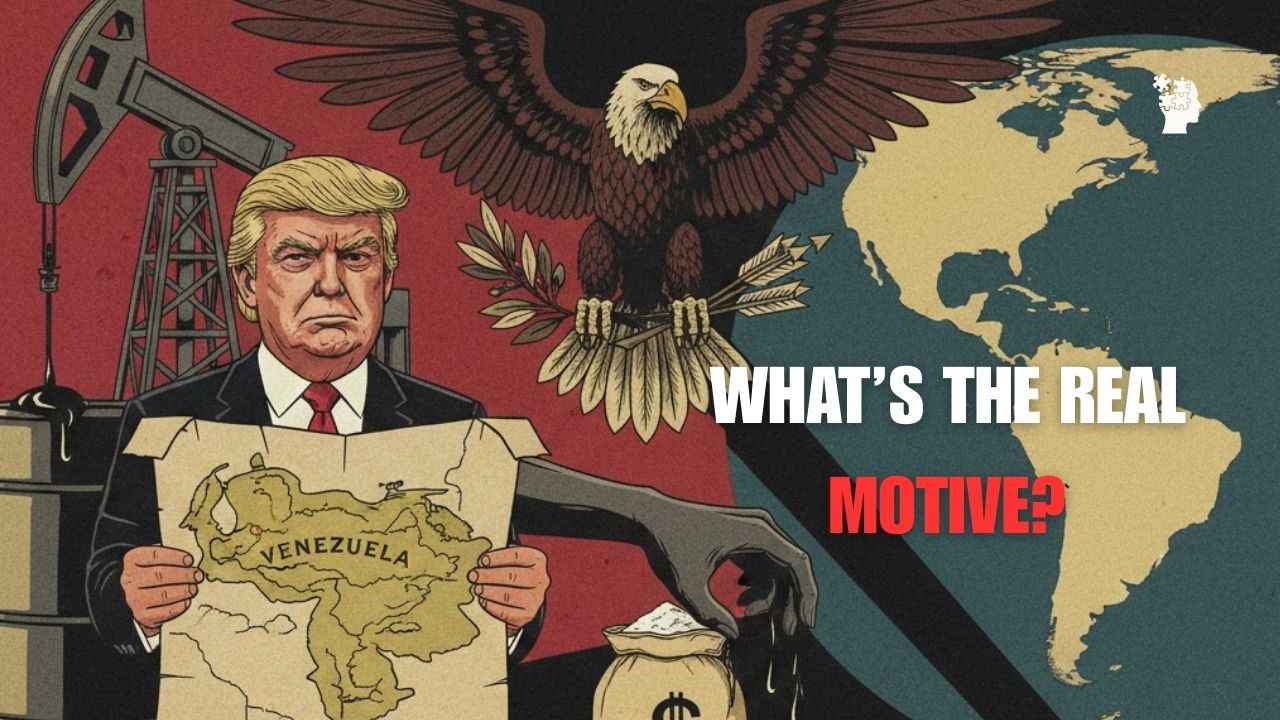
In the early hours of January 3, 2026, the United States launched a surprise military operation in Venezuela, deploying special forces, missile strikes, and naval assets to capture President Nicolás Maduro and his wife, Cilia Flores. Maduro, who has ruled the South American nation since 2013, was swiftly extradited to New York to face charges of drug trafficking and “narco-terrorism.”
The Trump administration framed the action as a critical strike against drug cartels flooding the U.S. with fentanyl and cocaine, designating Venezuelan groups like Tren de Aragua and Cartel de los Soles as foreign terrorist organizations. President Trump, in a press conference at Mar-a-Lago, emphasized the need to “shut down the border” and curb the influx of narcotics from Latin America.
However, within hours, the narrative shifted. Trump openly discussed U.S. involvement in rebuilding Venezuela’s oil infrastructure, suggesting American companies would extract and refine the country’s vast reserves to generate wealth – much of which, he implied, would benefit the U.S. This pivot has fueled widespread speculation: Is the real agenda combating drugs, or is it a calculated move to seize control of the world’s largest oil reserves? And does this signal a broader Trump strategy to target resource-rich nations?
This article delves into the details, drawing on official statements, expert analyses, and recent developments to unpack the motivations behind the operation. We’ll examine the drug pretext, the undeniable oil factor, and whether this could be part of a pattern aimed at “capturing” oil-abundant countries.
Table of Contents
The Official Narrative: A War on Drugs?
The Trump administration’s primary justification for the Venezuela operation centers on narcotics. According to White House officials, Maduro’s regime has transformed Venezuela into a hub for drug trafficking, with the Cartel de los Soles – allegedly led by Maduro himself – facilitating the flow of cocaine and fentanyl into the United States.
Trump has repeatedly blamed Venezuelan migrants and criminal networks for exacerbating America’s opioid crisis, claiming that “a lot of fentanyl is coming out of Mexico” but linking it to broader regional threats. The operation, which involved 15,000 troops, aircraft carriers, and guided-missile destroyers, was described as a “police action” to execute arrest warrants issued as far back as 2020. Maduro and Flores pleaded not guilty in a New York court, with Maduro declaring himself a “prisoner of war.”
Supporters of the move argue it’s a necessary escalation in the fight against transnational crime. The administration points to Venezuela’s economic collapse under Maduro, which has led to mass migration – over 7 million Venezuelans have fled since 2014 – and the rise of gangs like Tren de Aragua, which have been linked to violence in U.S. cities. Trump has also highlighted humanitarian concerns, calling Venezuela a “dead country” under Maduro’s “corrupt, illegitimate government.”
Yet, cracks in this narrative are evident. The U.S. State Department’s own reports, including one from 2025, identify Mexico as the primary source of fentanyl entering the U.S., with Venezuela barely mentioned. NBC News and other outlets have reported that Caribbean drug vessels primarily route cocaine to Europe, not the U.S. Critics, including international observers, argue the scale of the military response – including strikes on military installations that killed dozens of civilians – far exceeds a typical counter-drug mission. The UN Human Rights Commissioner has stated the strikes violate international law, and even the SOUTHCOM commander’s resignation amid legal concerns underscores internal doubts about the operation’s legitimacy.
Moreover, Trump’s history with drug-related pardons raises questions. He pardoned the founder of the Silk Road, an online platform that facilitated over $200 million in illegal drug sales, and the former Honduran president convicted of drug trafficking. If drugs were the core issue, why the selective enforcement? As one analyst noted on X (formerly Twitter), “Trump is openly admitting that the reason they’re getting involved in Venezuela is because of the country’s oil reserves.”
The Oil Factor: Venezuela’s Black Gold as the True Prize
Beneath the drug rhetoric lies a more compelling motive: oil. Venezuela boasts the world’s largest proven oil reserves, estimated at 303 billion barrels – roughly 17% of global supply. Much of this is heavy crude, which U.S. refineries in the Gulf Coast (e.g., in Texas and Louisiana) are uniquely equipped to process, handling up to 10 million barrels per day. These facilities employ tens of thousands of high-paying jobs and support broader economic chains.
Trump’s statements post-operation make this agenda explicit. He announced the U.S. would “run the country” temporarily, subsidize oil firms to rebuild infrastructure, and “take out a tremendous amount of wealth out of the ground” for global sale, including to rivals like China and Russia. This echoes his long-held view that the U.S. should “take the oil” from resource-rich adversaries, a stance he’s voiced since the Iraq War era. Under Maduro, Venezuela nationalized its oil in 1976, and sanctions imposed by Trump in 2019 crippled production but redirected exports to China (nearly 1 million barrels per day). Lifting these sanctions now, as Trump proposes, would reroute oil to the U.S., boosting American energy dominance and potentially creating jobs while weakening adversaries like China, Iran, and Russia.
Media outlets like Al Jazeera and Sky News have reported that while the initial framing was anti-drug, Trump’s quick pivot to oil reveals the “true interest.” Colombian President Gustavo Petro echoed this, telling CNN that Trump’s pressure is about oil access, not democracy or drugs. Maduro had offered U.S. access, but Trump rejected it, opting for regime change to secure better terms. As one X user put it, “Venezuela’s leadership kicked US companies out and owed them money. They finally got a president stupid and greedy enough in Trump.”
A Broader Agenda? Targeting Oil-Rich Nations
Is Venezuela an isolated case, or part of a pattern? Trump has invoked the Monroe Doctrine – the 19th-century policy asserting U.S. dominance in the Western Hemisphere – to justify expanded influence in Latin America. He warned Cuba and Colombia to “be careful” post-operation, and even threatened a second strike on Venezuela if cooperation falters. While not oil-focused, his threats against Greenland (a Danish territory with strategic minerals) suggest a willingness to challenge sovereignty for resources.
However, there’s no concrete evidence of imminent plans to “capture” other oil-rich countries like Iraq, Iran, or Saudi Arabia. Trump’s actions in Venezuela appear opportunistic: a weak regime with immense reserves, bordered by U.S. allies, and already under sanctions. Analysts warn this could set a precedent, designating governments as “terrorist” to bypass Congress and international law. The Guardian notes Trump’s history of military interventions, including strikes on Iran’s nuclear sites, shows he’s no isolationist. Yet, domestic priorities like border security and energy independence may limit escalation.
Critics argue this revives imperial tactics, risking power vacuums and regional instability. Mexico condemned the attack while fearing similar fates, and protests erupted in Buenos Aires. The operation bypassed Congress, raising constitutional concerns.
Conclusion: Beyond Drugs, Toward Resources
While the drug angle provides a palatable justification, the evidence points overwhelmingly to oil as the driving force behind Trump’s Venezuela incursion. With Maduro removed, the U.S. stands to gain strategic control over trillions in reserves, enhancing energy security and economic leverage. Whether this heralds a campaign against other oil-rich nations remains speculative, but the Monroe Doctrine’s revival signals a more assertive U.S. posture in its “backyard.” As global reactions unfold, one thing is clear: in geopolitics, stated reasons often mask deeper agendas. The world watches to see if Venezuela is the exception – or the new rule.