


If you’ve ever made scrambled eggs, chances are you’ve heard the advice: “Add a splash of milk for fluffier eggs.”
But is that actually true?
Some home cooks swear by it. Others insist that milk ruins the texture. So what’s the real answer?
The truth is that adding milk to scrambled eggs isn’t necessarily wrong—but it may not give you the results you expect.
Let’s break down what milk actually does to scrambled eggs and discover the best way to make them soft, fluffy, and restaurant-worthy every time.
Does Milk Make Scrambled Eggs Fluffier?
Many people believe milk is the secret ingredient for fluffy scrambled eggs. Surprisingly, that’s only partly true.
Milk contains mostly water. When eggs cook, that water turns into steam, which can create a slightly lighter texture.
However, too much milk can have the opposite effect. Instead of creating fluffy eggs, it can dilute the eggs and make them watery or rubbery.
The real secret behind fluffy scrambled eggs isn’t milk—it’s proper cooking technique.
What Happens When You Add Milk to Scrambled Eggs?
Adding a small amount of milk can:
- Create a softer texture
- Add a mild creaminess
- Make eggs slightly lighter
But adding too much milk can:
- Make eggs watery
- Slow down cooking
- Reduce the rich egg flavor
- Create a rubbery texture if overcooked
That’s why professional chefs often use milk sparingly—or skip it altogether.
Why Many Chefs Don’t Use Milk
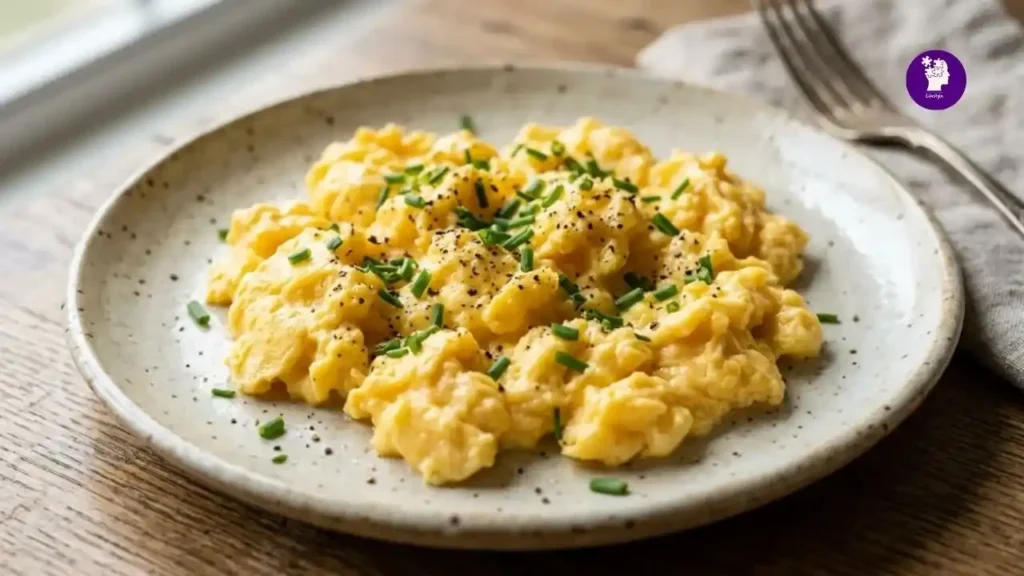
Many chefs prefer to let eggs shine on their own.
Eggs already contain enough fat and protein to create a creamy texture when cooked correctly.
Instead of adding milk, chefs focus on:
- Thorough whisking
- Low heat cooking
- Constant stirring
- Removing eggs from the pan before they’re fully set
These techniques create soft, fluffy eggs without any extra ingredients.
The Better Alternative: Heavy Cream
If you’re looking for richer scrambled eggs, heavy cream often works better than milk.
Because it contains more fat and less water, heavy cream adds richness without making eggs watery.
Just a teaspoon or two can create:
- A silkier texture
- A richer flavor
- More luxurious scrambled eggs
Many restaurant chefs prefer cream over milk for this reason.
How Much Milk Should You Add?
If you enjoy scrambled eggs with milk, keep it simple.
A good rule is:
1 tablespoon of milk for every 2 eggs
Anything more can start affecting the texture negatively.
Whisk the milk thoroughly into the eggs before cooking to ensure even results.
The Secret to Perfect Scrambled Eggs
Whether you use milk or not, these tips matter most:
1. Whisk Thoroughly
Beat the eggs until the yolks and whites are completely combined.
2. Use Low Heat
High heat cooks eggs too quickly and creates a dry texture.
3. Stir Gently
Move the eggs slowly around the pan to form soft curds.
4. Remove Early
Take eggs off the heat when they still look slightly glossy. They will continue cooking from residual heat.
5. Season at the End
Adding salt near the end helps maintain a soft texture.
So, Should You Add Milk to Scrambled Eggs?
The answer is simple: only if you like it.
Milk isn’t required for fluffy scrambled eggs, and it isn’t the magical ingredient many people believe it to be.
If you enjoy a slightly softer scramble, a small splash of milk can help. But if you want rich, creamy, diner-style eggs, you’re usually better off focusing on cooking technique—or using a touch of cream instead.
In the end, perfect scrambled eggs come down to how you cook them, not what you pour into them.
The next time you crack a few eggs into a bowl, remember: the secret isn’t in the milk carton. It’s in the pan.