
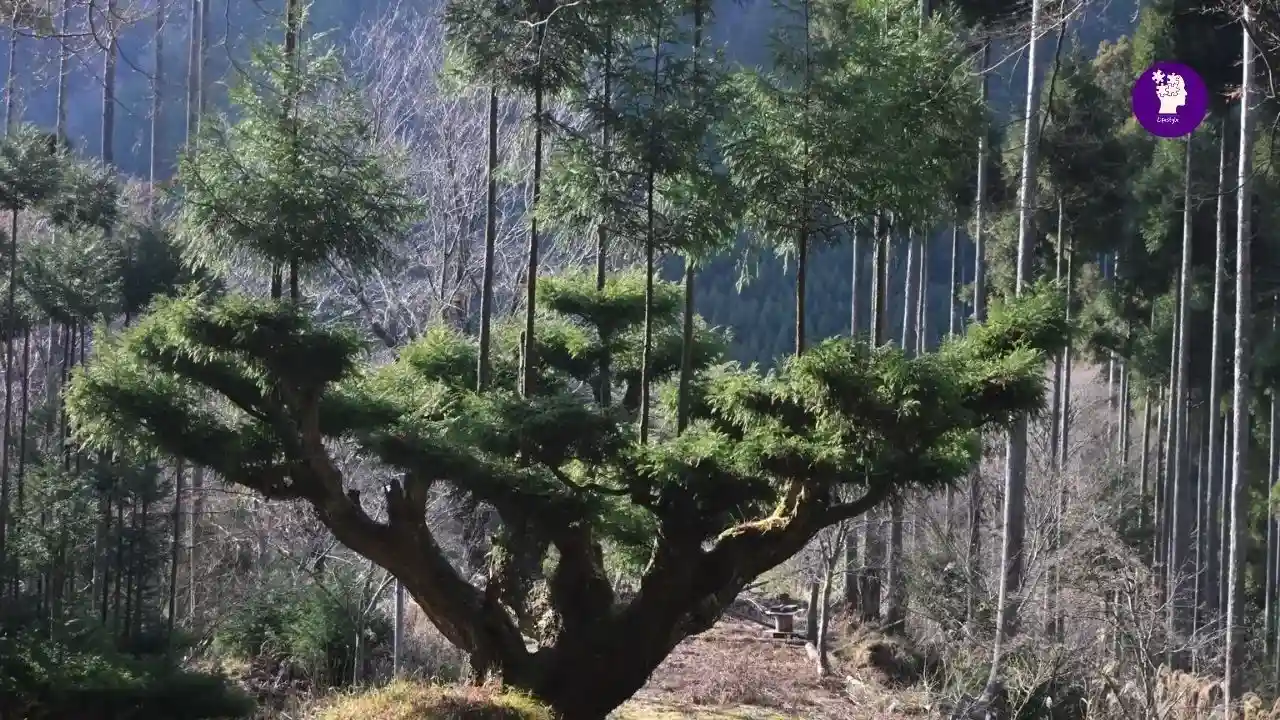

Imagine walking through a quiet forest in Japan and spotting a cedar tree that looks completely impossible.
Instead of one trunk, dozens of perfectly straight trees appear to be growing from its top—as if someone balanced an entire miniature forest on a single tree.
At first glance, many people think the images are fake or AI-generated. They aren’t.
This remarkable technique is called Daisugi, a centuries-old Japanese forestry practice that has quietly existed for hundreds of years. Today, as photos continue circulating online, millions of people are discovering this hidden piece of Japanese history for the first time.
But the real story behind these extraordinary trees is even more fascinating than their appearance.
What Exactly Is Daisugi?
Centuries ago, Japanese foresters faced a difficult problem.
High-quality cedar wood was in enormous demand, yet cutting down mature trees faster than forests could recover threatened long-term supplies.
Rather than harvesting entire trees, skilled foresters developed an ingenious solution.
They carefully pruned the upper branches of mature cedar trees so that dozens of perfectly straight shoots would emerge from the top. These shoots could later be harvested for timber while the original tree remained alive and continued producing new growth.
The result was something that almost looks impossible—a living platform supporting an entirely new forest.
Why Was Daisugi Invented?
Long before the world talked about sustainability, the people of Japan had already found an ingenious way to harvest wood without sacrificing their forests.
The story of Daisugi begins in the hills surrounding Kyoto, Japan’s imperial capital for more than a thousand years. During the 14th and 15th centuries, Kyoto experienced a flourishing of art, culture, and architecture. As elegant residences, temples, and traditional tea houses became increasingly popular, builders needed one very specific type of timber: perfectly straight, knot-free cedar poles.
These poles were essential for Sukiya architecture, an architectural style that emphasized simplicity, natural beauty, and refined craftsmanship. Inspired by the aesthetics of Japanese tea ceremonies, Sukiya buildings featured exposed wooden beams and columns where every piece of timber was visible. Even slight bends or imperfections could disrupt the clean, balanced appearance that defined the style.
This growing demand created a serious problem.
The mountains around Kyoto did not have unlimited forests. Cutting down mature cedar trees to meet construction needs would eventually deplete valuable woodland, while newly planted trees required decades before they could produce timber of comparable quality.
Rather than accepting this cycle of continuous logging, foresters in the Kitayama region north of Kyoto developed an extraordinary solution.
Instead of felling an entire cedar tree, they carefully pruned its upper branches, leaving the trunk alive and healthy. Over time, dozens of new vertical shoots emerged from the top of the tree. Because these shoots grew upward with little competition, they developed into exceptionally straight, uniform poles—exactly what builders of tea houses and Sukiya-style buildings required.
When the poles matured, they could be harvested individually while the original tree remained standing. The same living tree would continue producing new shoots for future generations, turning a single cedar into a long-term source of premium timber.
This technique became known as Daisugi, meaning “platform cedar.” Over decades—and sometimes centuries—one carefully managed tree could provide multiple harvests without being cut down entirely.
The system offered several remarkable advantages. It conserved limited forest land around Kyoto, supplied craftsmen with consistently high-quality cedar, reduced the need for constant replanting, and allowed forests to remain productive for generations. In an era without modern forestry science, Daisugi demonstrated an advanced understanding of renewable resource management.
Today, historians often point to Daisugi as one of the earliest examples of sustainable forestry. What began as a practical response to scarce timber and architectural demand has become a symbol of Japanese craftsmanship, patience, and respect for nature.
More than 600 years later, these extraordinary trees continue to amaze visitors—not only because they look unlike any other forest, but because they embody an idea that feels strikingly modern: meeting human needs while allowing nature to endure.
Why Does the Daisugi Tree Look Like a Giant Broccoli?
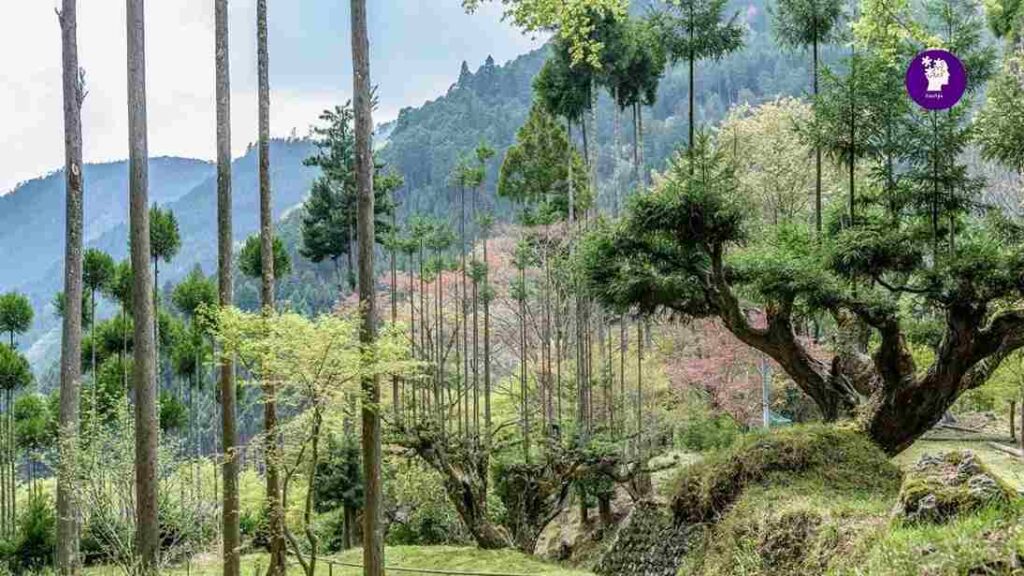
If you’ve ever seen a photo of a Daisugi tree online, your first thought was probably, “That can’t be real.” With its massive trunk topped by a dense cluster of perfectly straight green shoots, the tree resembles an enormous head of broccoli balanced on a wooden stem. It’s such an unusual sight that many people assume the images have been edited or created with AI.
The truth is even more remarkable. The broccoli-like appearance isn’t natural—it’s the result of centuries of careful pruning by skilled Japanese foresters.
1. The Thick Trunk: A Living Foundation
Unlike ordinary cedar trees that are harvested once they mature, a Daisugi tree is allowed to grow for decades before it becomes a “mother tree.” Over time, its trunk becomes exceptionally thick and strong, creating a stable living base that can support dozens of new shoots.
Think of it as the trunk of a giant tree transformed into a natural platform. Instead of cutting it down, foresters preserve it for generations, allowing it to keep producing valuable timber.
2. The Flat Crown: Nature’s Living Platform
The top of the tree doesn’t become flat on its own. Foresters carefully prune the upper branches, creating a broad, level crown. This acts almost like a wooden terrace where new shoots can emerge.
Because the crown is kept relatively even, all the new shoots receive similar amounts of sunlight, helping them grow straight and uniformly. From a distance, this flat surface gives the illusion that a miniature forest is growing on top of a single tree.
3. Perfectly Straight Vertical Shoots
The most striking feature of Daisugi is the dozens of tall, straight shoots rising vertically from the crown.
These shoots are not separate trees planted on top of the trunk—they’re new stems that sprout directly from the living cedar. Regular pruning removes competing branches, allowing each shoot to grow upward with very few knots or bends. This produces exceptionally straight timber that has been prized in Japan for centuries.
Their vertical arrangement creates the “spikes” that make the tree resemble a giant broccoli stalk.
4. Dense Green Foliage Creates the Broccoli Effect
At the top of every shoot is a cluster of bright green cedar needles. When dozens of shoots grow close together, their foliage merges into one large, rounded canopy.
From a distance, the thick green canopy closely resembles the tightly packed florets of a broccoli head. Combined with the sturdy trunk below, the overall shape is surprisingly similar to the vegetable, which is why the comparison has become so popular on social media.
Quick Comparison
| Feature | Ordinary Cedar Tree | Daisugi Tree |
|---|---|---|
| Trunk | Single trunk | Thick, long-lived mother trunk |
| Crown | Natural branching | Carefully pruned, flat crown |
| Growth | One main stem | Dozens of vertical shoots |
| Foliage | Wide canopy | Dense, rounded cluster resembling broccoli |
| Appearance | Typical conifer | Looks like a giant broccoli or miniature forest |
Fun Fact: The “broccoli tree” nickname isn’t an official Japanese term. It’s a comparison made by internet users around the world after photos of Daisugi trees began spreading online, proving just how extraordinary this ancient forestry technique looks to modern eyes.
Is Daisugi Good for the Environment? An Ancient Idea With Modern Lessons
At first glance, Daisugi looks like an unusual gardening technique. In reality, it represents a centuries-old approach to forestry that prioritized using natural resources carefully rather than exhausting them. While it was originally developed to produce high-quality cedar timber, many of its principles align with ideas that are central to sustainable forest management today.
1. Sustainable Forestry Without Cutting Down the Entire Tree
Traditional timber harvesting often involves felling mature trees and replanting new ones, a process that can take decades before the next harvest. Daisugi follows a different philosophy.
Instead of cutting down the entire cedar tree, foresters carefully prune it so that multiple straight shoots grow from the top. These shoots can be harvested when mature while the original tree continues living and producing new growth for generations.
This practice reduces the need to replace trees after every harvest and demonstrates how forests can remain productive over long periods with careful management.
2. Keeping More Carbon Locked Away
Trees naturally absorb carbon dioxide from the atmosphere and store it in their trunks, branches, and roots. Because the original Daisugi tree remains alive for decades—or even centuries—it continues capturing and storing carbon instead of being removed after a single timber harvest.
Although researchers have not identified Daisugi as a dedicated climate-change solution, keeping mature trees alive generally allows forests to retain more stored carbon than systems that rely on frequent clear-cutting.
3. Preserving Living Trees Instead of Starting Over
One of the most remarkable features of Daisugi is that the “parent” tree is treated as a long-term living resource rather than disposable timber.
Some Daisugi trees have survived for hundreds of years while producing multiple generations of straight cedar shoots. This approach reflects a forestry tradition built around stewardship—maintaining healthy trees instead of replacing them whenever wood is needed.
4. Reducing Pressure on Forest Resources
During periods when demand for high-quality cedar poles was extremely high, cutting down large numbers of mature trees could have placed significant pressure on nearby forests.
By harvesting only the vertical shoots and leaving the original tree intact, Daisugi allowed skilled foresters to produce valuable timber from the same tree repeatedly. This efficient use of limited forest land helped reduce the need to harvest additional mature trees.
5. Supporting Long-Term Forest Health
Unlike intensive logging methods that dramatically change a landscape, Daisugi maintains a continuous forest canopy because the original trees remain standing.
Living forests provide habitat for insects, birds, fungi, and countless microorganisms that contribute to healthy ecosystems. While Daisugi plantations are managed forests rather than untouched wilderness, preserving mature trees can help maintain ecological stability over long periods.
6. Producing Premium Timber for Generations
Perhaps the greatest environmental lesson from Daisugi is its focus on longevity rather than short-term production.
A single well-managed cedar tree can continue producing straight, high-quality shoots for many decades. This long-term approach reduces waste, maximizes the value of each tree, and demonstrates that economic needs and careful resource management do not always have to compete.
What Can Modern Forestry Learn From Daisugi?
Daisugi is not a universal replacement for modern forestry, nor can it solve global deforestation on its own. It requires specialized knowledge, careful pruning, and many years of patience.
However, its underlying philosophy remains remarkably relevant today: protect mature trees whenever possible, harvest resources responsibly, and think in terms of generations rather than immediate profits.
As the world searches for more sustainable ways to manage forests, Daisugi stands as a powerful reminder that some of the most innovative environmental ideas are not new at all—they have simply been quietly thriving for centuries.
Could Daisugi Help Fight Climate Change? An Ancient Idea With Modern Relevance
More than 700 years ago, Japanese foresters developed Daisugi to solve a practical problem: how to produce high-quality timber without repeatedly cutting down entire forests. They probably weren’t thinking about climate change—but their approach raises an interesting question for today’s world.
As governments and scientists search for ways to make forestry more sustainable, Daisugi highlights a simple but powerful principle: keep healthy trees alive for as long as possible while continuing to harvest useful wood.
A Different Way to Produce Timber
Traditional logging often involves harvesting mature trees and planting new ones. While responsible forestry can be sustainable, newly planted trees take decades to replace the carbon stored by older forests.
With Daisugi, the original cedar tree remains alive while producing straight, harvestable shoots over many decades. In theory, this means fewer mature trees need to be removed to obtain quality timber, allowing the original tree to continue growing and storing carbon.
That doesn’t mean Daisugi could replace modern forestry—but it demonstrates that productive forests don’t always require cutting down the entire tree.
Lessons for Regenerative Forestry
Around the world, regenerative forestry is gaining attention. Instead of focusing only on timber production, it aims to improve soil health, biodiversity, and the long-term resilience of forests.
Daisugi reflects many of these same ideas:
- Harvesting renewable growth instead of removing the whole tree
- Extending the productive life of mature trees
- Reducing unnecessary disturbance to the forest
- Managing forests with a long-term perspective rather than short-term yields
These principles align surprisingly well with today’s conversations about sustainable land management.
What About Carbon Capture?
Trees naturally remove carbon dioxide from the atmosphere as they grow. Mature trees also store significant amounts of carbon in their trunks, roots, and surrounding soil.
Because a Daisugi tree remains alive for centuries while continuing to produce usable timber, it may continue storing carbon for much longer than a tree that is harvested and replaced.
However, it’s important not to overstate this benefit. Scientists have not identified Daisugi as a standalone climate solution, and its overall carbon impact depends on many factors, including forest management practices, harvested wood use, and local ecosystems.
Rather than seeing Daisugi as a cure for climate change, it’s better viewed as an example of how thoughtful forest management can balance environmental protection with human needs.
Could Cities Learn From Daisugi?
Urban forests are becoming increasingly important as cities try to reduce heat, improve air quality, and create greener neighborhoods.
Although Daisugi itself isn’t designed for city streets or parks, its underlying philosophy—maintaining healthy trees for generations instead of treating them as disposable resources—offers a valuable perspective for urban planners.
The lesson isn’t necessarily to plant Daisugi trees everywhere. It’s to ask whether modern landscapes can be managed with the same patience and long-term thinking.
What Modern Forestry Researchers Can Learn
Today’s forestry faces challenges that medieval Japan never imagined, from climate change to biodiversity loss and growing demand for sustainable building materials.
Researchers continue to explore methods such as selective harvesting, continuous-cover forestry, agroforestry, and regenerative forest management to reduce environmental impacts while maintaining timber production.
Daisugi reminds us that innovation doesn’t always mean inventing something entirely new. Sometimes, centuries-old practices can inspire fresh ideas for managing forests more sustainably.
An Ancient Technique That Still Sparks New Questions
Daisugi isn’t a blueprint for solving climate change, and it won’t replace modern forestry. But its enduring success demonstrates that humans have long experimented with ways to work alongside nature instead of simply exploiting it.
In a time when the world is searching for more sustainable solutions, perhaps the greatest lesson of Daisugi isn’t the unusual shape of its trees—it’s the mindset behind them.
Sometimes, the future of forestry begins by looking hundreds of years into the past.
Can Anyone Grow a Daisugi Tree?
The short answer is yes—but it isn’t a weekend gardening project. Daisugi is a centuries-old forestry technique that requires the right tree species, years of careful maintenance, and a great deal of patience. While enthusiastic gardeners can experiment with the method on a small scale, producing the iconic “living platform” seen in Japan takes decades of dedicated care.
1. Choose the Right Tree Species
Traditional Daisugi is almost exclusively practiced on Japanese cedar (Cryptomeria japonica), a tree prized for its straight grain, fast vertical growth, and ability to respond well to repeated pruning. These characteristics allow the tree to produce multiple tall, uniform shoots that can later be harvested for timber.
Although some gardeners have experimented with other conifers, they rarely produce the same elegant structure or high-quality wood. If your goal is to recreate authentic Daisugi, Japanese cedar remains the best choice.
2. Understand That It’s a Long-Term Commitment
One of the biggest misconceptions is that Daisugi produces dramatic results within a few years. In reality, it is a technique measured in decades, not seasons.
The parent tree must first become well established before the upper branches are trained. Even after the initial pruning, new shoots require many years of growth before they develop into long, straight stems suitable for harvesting. Historic Daisugi trees in Japan have been managed continuously for generations, with some remaining productive for hundreds of years.
3. Master the Art of Pruning
Daisugi is much more than simply cutting branches. The technique involves carefully selecting which shoots to keep, removing weaker growth, and pruning at the correct time so that the tree channels its energy into producing strong vertical stems.
Poor pruning can weaken the tree, create uneven growth, or permanently alter its shape. Traditional foresters developed these skills over many years, passing the knowledge from one generation to the next. Even experienced arborists often describe Daisugi as both a science and an art.
4. Patience Is the Most Important Tool
Unlike many gardening projects that produce visible results within a single growing season, Daisugi rewards those willing to think in decades. Each year of careful maintenance contributes to the tree’s unique form, gradually transforming it into a living platform that can continue producing new timber without being cut down.
This long-term perspective reflects the philosophy behind the technique itself: rather than seeking immediate results, Daisugi focuses on sustainability, stewardship, and creating something that future generations can continue to benefit from.
Can You Try Daisugi at Home?
If you live in a region where Japanese cedar can thrive, you can certainly study and experiment with Daisugi-inspired pruning techniques. However, achieving the spectacular, multi-stemmed appearance seen in Japan requires ideal growing conditions, expert pruning, and decades of consistent care.
For most people, Daisugi is less about growing an unusual tree and more about appreciating an extraordinary example of how traditional knowledge can work with nature instead of against it. It serves as a reminder that some of the world’s most remarkable innovations are built not on speed, but on patience.
Daisugi vs. Traditional Forestry: Which Approach Is More Sustainable?
| Feature | Traditional Forestry | Daisugi Forestry |
|---|---|---|
| Primary Goal | Harvest entire trees for timber | Produce high-quality timber while preserving the original tree |
| Tree After Harvest | Usually cut down | Remains alive and continues growing |
| Timber Harvest | One major harvest per tree | Multiple harvests over many decades |
| Need for Replanting | Yes, after logging | Not immediately required because the parent tree survives |
| Forest Recovery Time | Can take decades | Existing tree continues producing new shoots |
| Land Efficiency | Requires larger areas for continuous planting | Maximizes timber production from a smaller footprint |
| Timber Quality | Varies depending on tree growth | Produces straight, knot-free cedar shoots valued for construction |
| Waste Generation | More branches, stumps, and unused material after felling | Less waste because only selected shoots are harvested |
| Carbon Storage | Carbon storage is interrupted when mature trees are removed | Mature trees continue storing carbon while producing timber |
| Biodiversity Impact | Depends on harvesting practices; clear-cutting can reduce habitat | Lower-impact harvesting can help preserve existing forest structure |
| Maintenance Required | Moderate | High—requires skilled pruning and long-term care |
| Time Before First Harvest | Several decades | Several decades, followed by repeated harvest cycles |
| Historical Origin | Practiced worldwide in many forms | Developed in Japan over 600–700 years ago |
| Best Use Cases | Large-scale commercial lumber production | Premium cedar poles for traditional Japanese architecture |
| Long-Term Productivity | Ends when the tree is harvested | The same tree can remain productive for generations with proper care |
Key Takeaways
- Daisugi is not a replacement for all forestry. It was developed to solve a specific problem: producing exceptionally straight cedar timber without repeatedly cutting down mature trees.
- Traditional forestry is still essential for meeting global demand for construction wood, paper, and engineered timber.
- Daisugi demonstrates an early form of sustainable forest management, showing how careful pruning can extend the productive life of a tree for centuries.
- Rather than competing with conventional forestry, Daisugi highlights how innovative management techniques can reduce waste, improve resource efficiency, and preserve valuable trees.
Wisdom Imbibe Insight
Daisugi is often described as an ancient tree-growing technique, but its real significance lies in how it challenges modern assumptions about forestry. Instead of treating trees as single-use resources, it demonstrates that careful management can extend the productive life of a living tree for generations. That perspective makes Daisugi feel surprisingly relevant in today’s discussions about sustainability and climate-conscious resource use.